
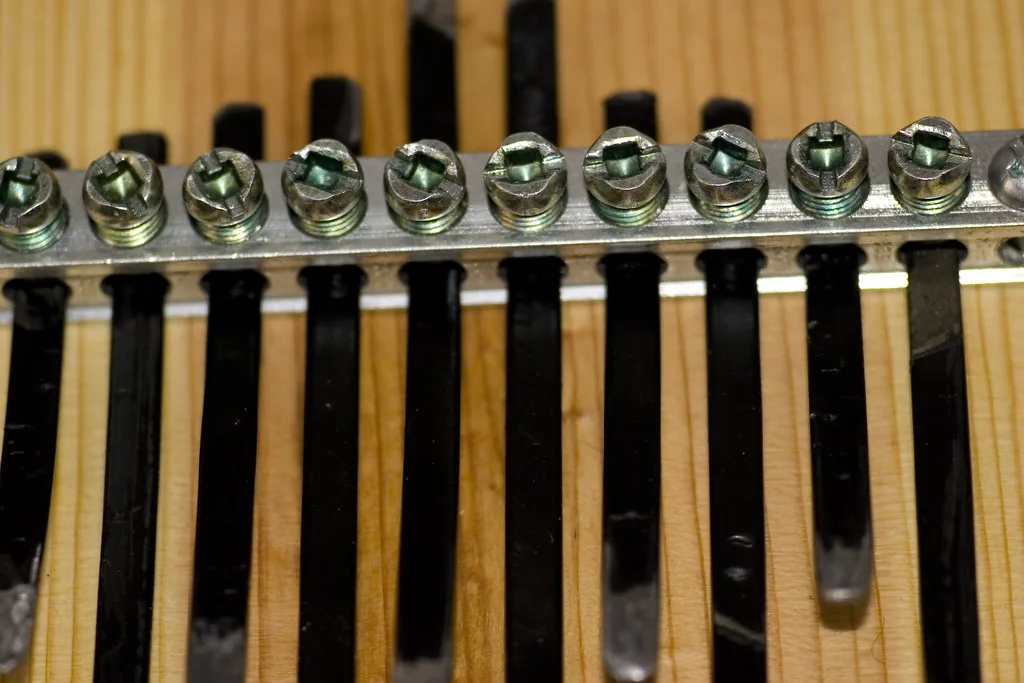
The kalimba is a musical instrument that originated in Africa. It belongs to the lamellophone family and is also known as a thumb piano or mbira. This instrument has several metal tines attached to a wooden resonator body. The musician plucks the tines with their thumbs to produce sound. However, sometimes some tines do not sound right. If you are experiencing this problem, this article explains why the tines on your kalimba may sound bad.
Sommaire
Out-of-tune or poorly adjusted tines
One reason the tines on your kalimba may not sound right is that they are out of tune or poorly adjusted. If a tine is not tuned correctly to the desired note, it will produce a discordant sound.
How can you check the tuning?
To check whether your tines are properly tuned, you can use an electronic tuner or a mobile app made for musical instruments. Simply pluck each tine individually and check whether the frequency matches the expected note.
How can you adjust the tines?
If you find that a tine is out of tune, you can adjust it by sliding it inward or outward with needle-nose pliers. Make sure it stays properly aligned horizontally to avoid any imbalance in the sound.
Damaged or worn tines
Another explanation for poor sound from your kalimba tines is that they are damaged or worn. Over time and with use, some tines may break, bend, or wear out prematurely, which will affect their sound quality.
How can you detect damaged tines?
Visually inspect each tine to check for signs of damage, such as cracks, warping, or corrosion. You can also tap each tine lightly with a metal object and listen to the sound it produces: if it differs from the sound of the other tines, it may be damaged.
What should you do if the tines are damaged?
If you find that one or more tines are damaged, we recommend replacing them. It is best to contact the manufacturer or a specialist shop to get replacement tines suited to your kalimba model.
Improper playing technique
Finally, the problem may come from the way you play the kalimba. Improper playing technique can cause a poor sound, even if the tines are in good condition and correctly tuned.
How should you pluck the tines?
For the best sound, it is advisable to pluck the tines with the tips of your thumbs, avoiding the use of your nails. The tip of the thumb should rest on the tine, then lift quickly to produce the desired sound. Also make sure you do not press down on the other tines while playing, as this could create unwanted sound interference.
How should you position your hands?
The position of your hands is also important for getting a good sound. Hold the kalimba firmly with both hands, without gripping too tightly. The fingers of your left hand should be placed under the resonator body, while the fingers of your right hand should sit on its right side. This way, the tines will be easy for your thumbs to reach.
A few tips for improving the sound of your kalimba
- Tune your kalimba regularly: a well-tuned instrument will allow you to play and listen to pleasant melodies.
- Maintain your kalimba: clean the tines regularly with a soft, dry cloth, and check their condition for any possible damage.
- Practice: as with any musical instrument, practice is essential for mastering the kalimba and achieving a satisfying sound. Do not hesitate to spend time learning different playing techniques.
In short, several factors can influence the sound quality of your kalimba tines: poor tuning or adjustment, damaged or worn tines, or an unsuitable playing technique. By taking the time to check each of these points and applying our advice, you should be able to improve the sound of your kalimba and fully enjoy this unique and endearing instrument.
To deepen your artistic knowledge of the kalimba, we invite you to discover a list of well-known artists who play it. You certainly know them, but you may not know that at some point they used the thumb piano in their songs.