

The tongue drum is a metal percussion instrument that needs reliable tuning to sound “pro” solo, in a duo, or in a group. This article is designed to guide your purchase in 2026.
We compare three common approaches using concrete criteria: accuracy, resistance to ambient noise, tuning speed and ergonomics. You will find measurable reference points for the Hz range, battery life and compatibility.
Typical use cases: checking a note after transport, tuning before playing at home, or securing a set in rehearsal and on stage. The guide also offers practical recommendations and a focus on a very compact clip-on model, with quantified data.
To go further, see useful accessories and care tips in this companion guide: essential accessories. The rest will explain why tuning shifts and how to choose the best solution for your environment and your need for precision.
Sommaire
Why a tuner is essential for a tongue drum in 2026
Good tuning reduces uncertainty and quickly becomes essential for any serious practice in 2026. In a few seconds, you save time and secure pitch accuracy, even without perfect pitch.
Save time and tune more accurately
Checking a note often takes less than a minute. This simple step improves the consistency of repetitive patterns and the harmony of your playing.
What affects pitch accuracy
Climate factors, such as temperature and humidity, alter the tension and resonance of the metal. Transport and light knocks can also create small deviations.
Use cases depending on context
Home: quiet, a mobile app is often enough. Outdoors: wind and noise call for a contact device. Rehearsal: several sound sources → a fast and reliable solution. Stage: priority goes to robustness and repeatability.
Concrete advantage in 2026: compact tools make use accessible to every level.
Recommended system: check regularly and correct with magnets or light adjustments rather than putting up with approximate tuning. For practical advice on choosing, see our tuning guide.
Tuner for tongue drum: app, clip-on tuner, or microphone, which should you choose?
Depending on how you use it, each solution offers distinct strengths in accuracy and practicality.
Smartphone — the app often fits in your pocket and remains free. Its main advantage is immediate availability, but detection depends on ambient noise and the quality of the phone’s microphone. It works well if you play alone at home.
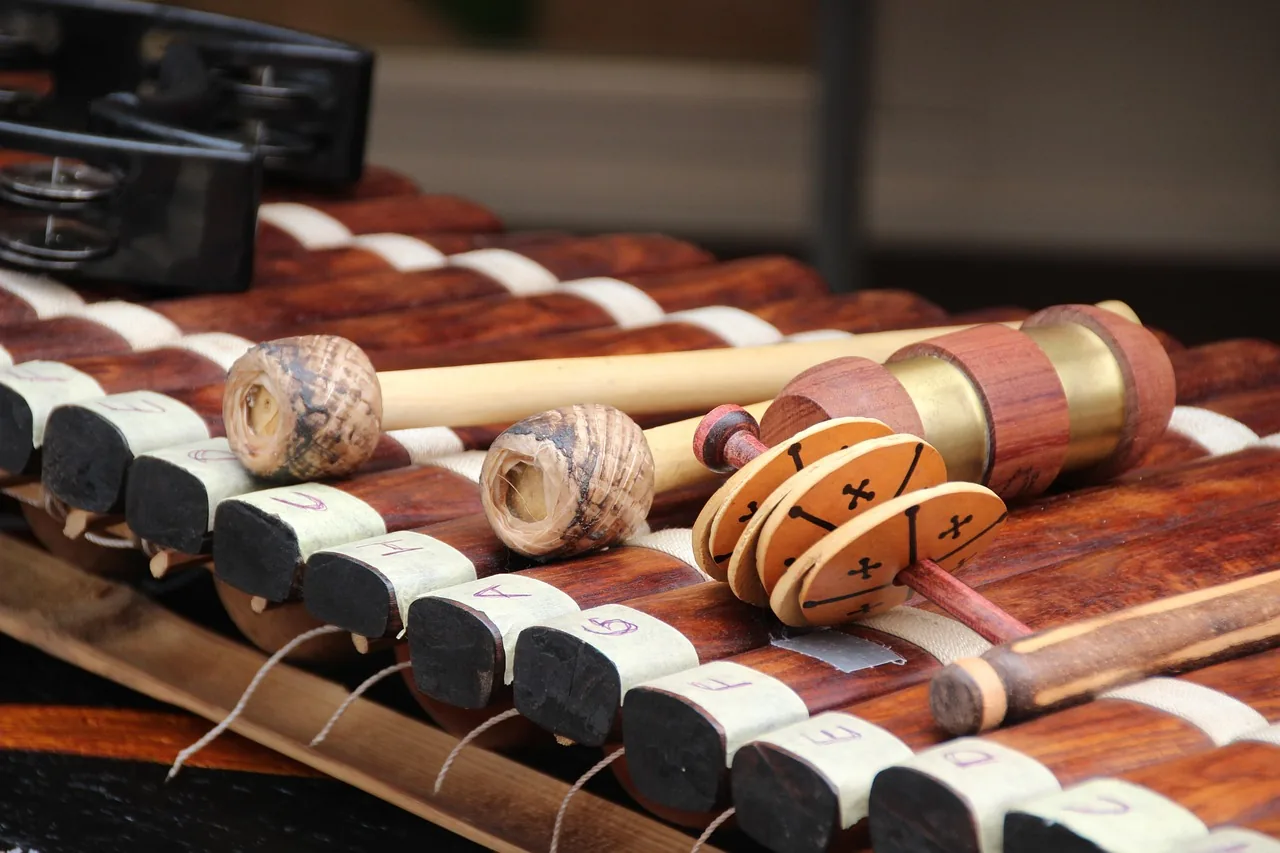
The clip-on device
The clip captures vibrations and gives a fast, stable reading. Its rotation and hinge make it easy to handle. It is the best compromise for mobility: reliable in rehearsal and outdoors.
External pickup
A microphone becomes relevant as soon as you amplify or record. There are four types: contact pickup, dynamic, condenser and ribbon. The pickup limits ambient noise by capturing the metal’s vibrations directly.
Mini decision method: if you play alone indoors → app; if you move around often → clip-on tuner; if you play on stage or in the studio → microphone, often as a complement.
The rest structures the purchase with concrete criteria for comparing models without getting lost in marketing. Also see our tuning guide to go further.
Buying criteria to consider before comparing models
Before buying, identify the features that truly affect pitch accuracy and daily use.
Accuracy and calibration
Check the Hz range (e.g. 430-450 Hz) and whether the reference can be set around 440 Hz. Check the tolerance in cents (0.5 c is a good benchmark) and the stability of the reading.
Readability and ergonomics
A color screen, contrast and a rotating hinge prevent awkward angles when the instrument is set down. Look for a fast, discreet interface.
Battery life and connectivity
Compare batteries and charging, the presence of automatic shutoff and the announced lifespan. Then check compatibility with recording or amplification depending on your setup.
Level, budget and reviews
A beginner will prioritize simplicity. A regular musician will require robustness and accuracy. Read customer reviews while looking for detailed feedback on accuracy, responsiveness and durability: more than 400 reviews are useful only if the feedback is consistent.
| Criterion | What to look at | Real impact |
|---|---|---|
| Accuracy (Hz / cents) | Adjustable range, tolerance <= 0,5 cent | Pitch accuracy and fast tuning |
| Ergonomics | Color screen, 180° hinge | Ease of use |
| Battery life | Batteries or rechargeable, auto shutoff | Useful lifespan |
| Connectivity | Jack/XLR/USB output depending on use | Studio/stage compatibility |
Focus on the electronic clip-on tuner for tongue drum: what the specifications say
Compact and fast, this model is aimed at players who need an immediate check. This standard tool remains independent of ambient noise and slips easily into a case.

Key technical specifications
The adjustable 435-445 Hz range allows fine calibration suited to local references. The CR2032 3V battery (not included) powers a 5.7 x 2.7 x 0.8 cm body; weight: 25 g.
Ease of use
The color screen and intuitive interface make reading easier in low light. The 180° rotating hinge lets you adjust the viewing angle according to playing position.
Energy savings and trust
Eco mode and automatic shutoff reduce waste and extend battery life.
- France indicators: 4.6/5 rating based on more than 400 reviews.
- Shipping within 48 h, returns within 14 days, 2-year legal warranty, SSL payment.
Tip: look for detailed reviews. Mentions of “very good” are useful, but prioritize feedback on responsiveness and the strength of the clip. In practice, this product is an advantage if you often play away from home.
Microphone option: when a microphone is better than a clip-on tuner or an app
Live or in the studio, choosing the right pickup changes the sound. A sound-capture device becomes relevant if you amplify in public, record seriously, or want to isolate the instrument in a noisy environment.

Contact microphone (pickup)
The pickup captures the metal’s vibrations directly. It rejects most ambient noise, reduces feedback and makes placement easier. It is ideal on a percussion instrument thanks to mechanical transmission.
Dynamic microphone
Robust and simple to use, a dynamic microphone handles noisy places well. It offers less detail than sensitive models, but remains reliable in concert and inexpensive.
Static / condenser microphone
In the studio, this type of microphone gives a faithful result and a wide frequency response. It is sensitive and often requires 48V power. Pay attention to placement to avoid unwanted sounds.
Ribbon microphone
For a soft, natural color, a ribbon microphone is excellent for recording. However, it is fragile equipment that requires care and controlled use.
Combining several sensors
A multi-microphone system offers the best quality, but requires budget, time and good phase management. Also think about effects: EQ, reverb and delay help shape the sound on stage, without being mandatory.
Conclusion
Here is a practical summary to help you decide quickly according to your use and budget.
In short: app = simplicity at home; clip-on tuner = versatility and speed on the move; external sensor = essential for stage and studio.
Start progressively: a good clip-on model covers most needs. Move to sound capture (contact or condenser) if you record or amplify often.
Check before buying: Hz calibration, screen readability, battery life and automatic shutoff, durability and compatibility with your equipment. Read customer reviews looking for concrete feedback on accuracy, responsiveness and durability, not just “very good”.
Mini-checklist: Where do I play? How many times per week? Do I want to record? Answer these questions to guide your choice.
If you want to learn more, see our practical guide on how to tune a kalimba and explore settings and accessories in more depth.