
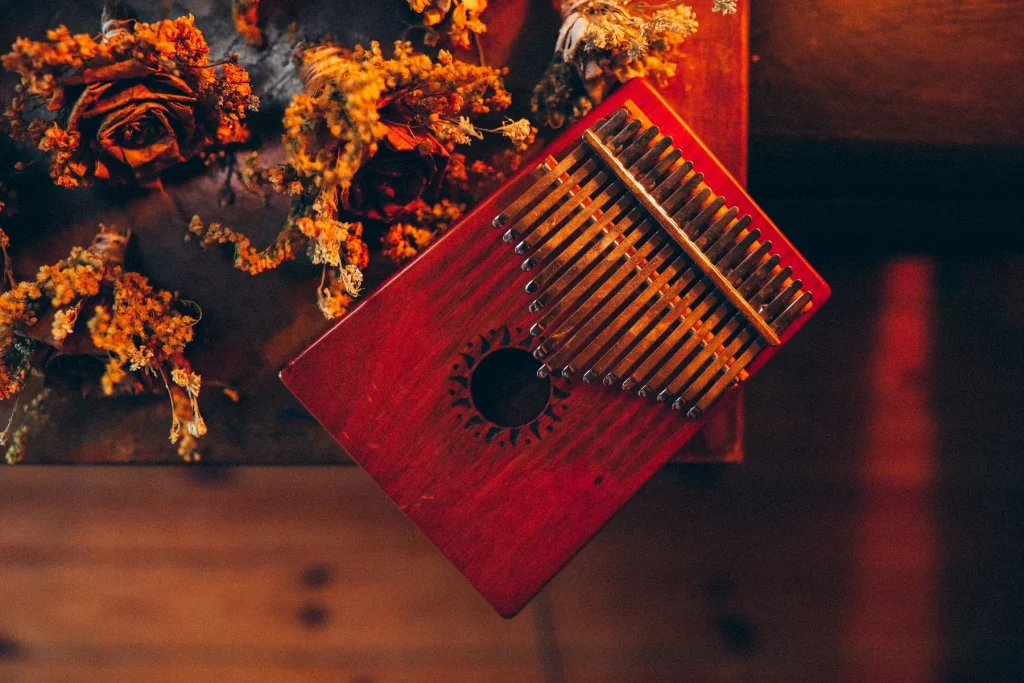
Choosing the wood for a kalimba is an important decision that will affect the instrument’s tone. Each wood species has distinct characteristics that influence how sound vibrations travel and how long notes sustain. Some woods are harder and produce a more resonant sound, while others are softer and offer gentler, more diffuse notes. It is also important to consider the wood’s design, scent, and aesthetic appearance. The woods most commonly used for kalimbas are spruce, mahogany, and sandalwood. Choosing high-quality solid wood is recommended to ensure the instrument’s durability and sound quality.
Sommaire
The effect of wood on the sounds produced by the kalimba
The choice of wood used to make a kalimba has a significant impact on the instrument’s tone. Wood hardness is a determining factor in how sound vibrations travel and how long notes sustain. Harder woods have a more pronounced resonance, while softer woods offer gentler, more diffuse notes. Each wood species has distinct tonal characteristics, allowing you to explore a range of sounds depending on the wood chosen for your kalimba.
The different types of wood used for kalimbas offer unique tonal possibilities. Here are a few examples of how wood influences the sound of the kalimba:
Spruce, for example, is a wood that offers warm, harmonious tones, ideal for soft and soothing melodies.
Mahogany, meanwhile, produces rich, melodic tones, perfect for lively rhythms and improvisation.
Sandalwood, in addition to releasing a pleasant fragrance, creates soft, deep tones, adding a mystical dimension to your playing.
By exploring the tonal characteristics of different woods, you can choose the one that best matches your musical preferences and the atmosphere you want to create with your kalimba. It is also worth noting that the wood used can influence the instrument’s durability and its resistance to changes in humidity and temperature.
Trying different woods is recommended so you can discover the subtle nuances of their tones and find the one that suits you best. Keep in mind that choosing the wood for your kalimba is a personal decision and that no wood is inherently better than the others. The key is to find the one that resonates with your musical style and tonal preferences.
| Wood | Tones |
|---|---|
| Spruce | Warm and harmonious |
| Mahogany | Rich and melodic |
| Sandalwood | Soft and deep |
The characteristics of the woods most often used for kalimbas
The woods most commonly used for kalimbas are spruce, mahogany, and sandalwood. Each of these species has unique characteristics that influence both the sound and the look of the instrument.
Spruce is a resinous wood valued for its warm, gentle tones. It offers pleasant resonance and great tonal clarity. Spruce is often used in the construction of string instruments such as guitars and violins.
Mahogany is a tropical wood known for its beauty and its rich, melodious notes. It offers a balanced and powerful tone, with deep bass and clear treble. Mahogany is also valued for its resistance to humidity, making it an ideal choice for kalimbas.
Sandalwood is valued not only for its tonal characteristics, but also for its pleasant fragrance. It offers soft, soothing tones, with a balanced and subtle voice. Sandalwood is often used in perfumery, but it is also highly prized in musical instrument making.
Each wood species has its own grain and visual qualities, offering a wide range of design choices for the kalimba. Whether you prefer a light, smooth wood like spruce, a dark, rich wood like mahogany, or a captivatingly scented wood like sandalwood, there is a wood species that will match your tastes and preferences.
| Wood species | Tonal characteristics | Aesthetic appearance |
|---|---|---|
| Spruce | Warm and gentle tones | Light wood with fine grain |
| Mahogany | Rich and melodious notes | Dark wood with pronounced veins |
| Sandalwood | Soft and soothing tones | Brown wood with golden nuances |
In addition to their tonal characteristics, it is important to take the wood’s aesthetic appearance into account. Each species offers a variety of unique designs that can add beauty and personality to your kalimba.
In conclusion, the choice of wood for your kalimba is a key element that will influence both the sound and the appearance of your instrument. Whether you choose spruce, mahogany, or sandalwood, you can be sure of getting a high-quality kalimba with unique tones. Consider your tonal and aesthetic preferences when choosing the wood species that best matches your playing style and personality.
The mistake to avoid when choosing wood for your kalimba
When choosing the wood for your kalimba, it is crucial to avoid one common mistake: opting for reconstituted or particle wood. These types of wood are made from wood chips mixed with chemical glues. Unfortunately, these glues can release harmful particles into the air, which may lead to long-term health problems.
To guarantee your kalimba’s sound quality and protect your safety, it is better to choose high-quality solid wood. Solid wood, unlike reconstituted wood, comes directly from sawing the tree. It is not mixed with glues or other dangerous chemicals.
Choosing reconstituted wood can compromise your kalimba’s durability and alter the instrument’s sound quality. The chemical composition of the glues used in particle wood can also affect kalimba players’ health, especially if they are regularly exposed to emitted particles.
By choosing solid wood, you ensure that you get the authentic, high-quality tones you are looking for in a kalimba. You also gain extra peace of mind, knowing that your instrument will not release substances that are harmful to your health.
Do not make the mistake of choosing the wrong wood for your kalimba. Choose wisely and favor solid wood so you can fully enjoy your musical experience.
Choosing the right wood for your kalimba is essential for getting the sound and quality you are looking for.
Choosing between wood and acrylic for your kalimba
The choice between wood and acrylic for your kalimba will depend on each player’s personal preferences and musical needs. Wooden kalimbas offer warm, gentle tones, while acrylic kalimbas have a modern, appealing design.
Acrylic kalimbas are often more affordable, while wooden kalimbas offer a wide variety of species and designs. If you prefer a warmer, more traditional sound, wood is a wise choice. However, if you are looking for an instrument with a contemporary, trendy design, acrylic may suit you better.
It is also important to consider the style of music you want to play with the kalimba. Wood may be preferred for soft, soothing melodies, while acrylic can suit more modern, punchy rhythms. Take time to think about the atmosphere you want to create with your kalimba so you can choose the material that best fits your artistic needs.
Whatever you choose, make sure you take your personal preferences into account and let your intuition guide you. The most important thing is to choose a kalimba that inspires you and allows you to express your musical creativity.
Advantages and disadvantages of wood and acrylic for kalimba:
- Wood:
- Advantages:
- Warm and gentle tones
- Wide variety of species and designs
- Disadvantages:
- Can be more expensive
- Less impact-resistant
- Advantages:
- Acrylic:
- Advantages:
- Modern and attractive design
- More affordable
- Disadvantages:
- Less warm tones
- Less variety of species
- Advantages:
The different characteristics of materials for kalimba
Kalimbas are made from different materials, each offering unique tonal characteristics and a distinct aesthetic. Understanding the differences between wood, metal, bamboo, and acrylic can help you choose the kalimba that best matches your preferences and playing style.
Wood
Wooden kalimbas offer a wide variety of species and colors, with warm and gentle tones. The different types of wood used to make kalimbas can influence the instrument’s timbre and resonance. For example, an ebony kalimba can produce a darker, deeper sound, while a maple kalimba can offer brighter, more lively tones. Wooden kalimbas are often preferred for their natural aesthetic and warm sound.
Metal
Metal kalimbas offer a clearer tone and sharper sounds, suited to contemporary playing. The metal tines of kalimbas produce a brighter sound with longer resonance. Metal kalimbas also offer greater resistance to changes in temperature and humidity, making them ideal for outdoor use.
Bamboo
Bamboo kalimbas are valued for their subtle tone and more traditional experience. Bamboo is a light and durable material that offers a soft, soothing sound. Bamboo kalimbas have an elegant, natural appearance, and their light weight makes them easy to carry and play.
Acrylic
Acrylic kalimbas come in a variety of models, colors, and sizes, offering a playful design and a longer lifespan. Acrylic is a transparent and resistant material that offers great stability and increased impact resistance. Acrylic kalimbas are often chosen for their modern aesthetic and durability.
Each material has its own advantages and disadvantages, so it is important to choose the one that best matches your preferences and playing style. Explore the different materials available and try several kalimbas to find the one that suits you best.

Reference: https://en.wikipedia.org/wiki/Mbira
Conclusion
Choosing the wood for a kalimba is an important decision that will influence the instrument’s tone. Each species has its own acoustic and aesthetic characteristics, offering a variety of choices in terms of design and sound.
Choosing high-quality solid wood is recommended to ensure the instrument’s durability and sound quality. Wooden kalimbas offer warm and gentle tones, creating a soothing and melodious atmosphere.
However, the choice between wood and acrylic will depend on each player’s personal preferences and musical needs. Acrylic kalimbas have a modern and attractive design, ideal for players who want a contemporary style. You can find tips for personalizing and decorating your kalimba at this link.
Ultimately, it is important to consider the style of music you want to play with the kalimba and choose the material that best suits your needs. Whatever you choose, the most important thing is to have fun and create beautiful melodies with your kalimba!