

When you want to play the kalimba, it is essential to know how to read sheet music or tablature. This will allow you to interpret the melodies you want to play. Scores may be made up of letters, numbers, or parallel vertical lines, while tablatures are generally represented by numbers indicating the notes to play on the kalimba tines. In this article, we will explain in detail how to read and interpret these notations so you can play your favorite pieces on the kalimba.
Learning to read kalimba sheet music has many advantages. First, it allows you to play an endless variety of melodies with your musical instrument. You will no longer need to memorize every song you love, because you can simply read the scores and reproduce the notes in the indicated order. In addition, sheet music is a universal notation system, which means you will be able to communicate and play music with other musicians around the world. Finally, knowing how to read kalimba sheet music will help you improve your visual memory and musical knowledge, as well as gain credibility as a musician.
If the kalimba score uses letters instead of numbers, the reading method remains similar. Each letter corresponds to a specific musical note, and you must play the notes in the order shown on the score. There may also be additional indications, such as signs indicating higher or lower octaves. It is important to know the correspondence between the letters and the notes on your kalimba so you can read the score correctly.
When reading kalimba tablature, it can be helpful to follow a few tips for better understanding. First, become familiar with the tines of your kalimba and how they correspond to the numbers or letters in the tablature. Use stickers or engravings on your instrument to help you identify the notes. Then take the time to understand the tablature indications, such as glissandos or simultaneous notes. Practice regularly, starting with simple pieces, then move on to more complex pieces as you learn.
Learning to read kalimba sheet music or tablature may seem complex at first, but with practice and perseverance, you will be able to master this art and play your favorite pieces on your kalimba. It is important to understand the symbols and notation indications used in scores and tablatures, and to know the correspondences between numbers, letters, and notes on your instrument. By following the right tips and techniques, you can progress in your learning and fully enjoy the beauty and melody of the kalimba.
Sommaire
Why should you learn to read kalimba sheet music?
Learning to read kalimba sheet music has many advantages. First, it allows you to play an endless variety of melodies with your musical instrument. You will no longer need to memorize every song you love, because you can simply read the scores and reproduce the notes in the indicated order. In addition, sheet music is a universal notation system, which means you will be able to communicate and play music with other musicians around the world. Finally, knowing how to read kalimba sheet music will help you improve your visual memory and musical knowledge, as well as gain credibility as a musician.
To deepen your understanding of kalimba sheet music reading, you can consult online resources.
Learning to read kalimba sheet music is a valuable skill for any player of this instrument. It opens up a world of musical possibilities and allows you to play a wide range of pieces, from popular classics to original compositions. Take the time to become familiar with the symbols and kalimba sheet music reading techniques, and you will see your playing level improve considerably.
How do you read kalimba sheet music with numbers?
When reading kalimba sheet music with numbers, it is important to understand the meaning of each number. In general, each number corresponds to a specific musical note. There may be additional indications, such as “°” signs to indicate higher octaves, or parentheses to indicate notes played simultaneously.
For example, if you see the number “1” on the score, it means you should play the first note on your kalimba. If you see the number “2”, it indicates the second note, and so on. The numbers may be aligned vertically to indicate the order in which the notes should be played.
It is important to note that the meaning of the numbers may vary slightly depending on the notation method used in the score you are reading. Therefore, it is recommended that you carefully read any indication or legend provided with the score so you fully understand the symbols used.
In addition to numbers, you may also find other symbols on kalimba sheet music. For example, a “°” sign above a number indicates that the note should be played one octave higher. Parentheses around numbers indicate that the notes should be played simultaneously.
It is also important to check that your kalimba is properly tuned to play the score. If your instrument is not tuned correctly, the notes you play may differ from those indicated on the score.
It is advisable to read the entire score carefully before you begin playing. This will help you understand the different numbers and symbols present, as well as the order in which the notes should be played. Take the time to become familiar with the score before you start playing.
When you read kalimba sheet music with numbers, remember that it is essential to follow the provided indications carefully. Each number represents a specific note, and the order of the numbers determines the order of the notes to play. By reading the score carefully, you will know which keys to play and in what order in order to reproduce the desired melody.
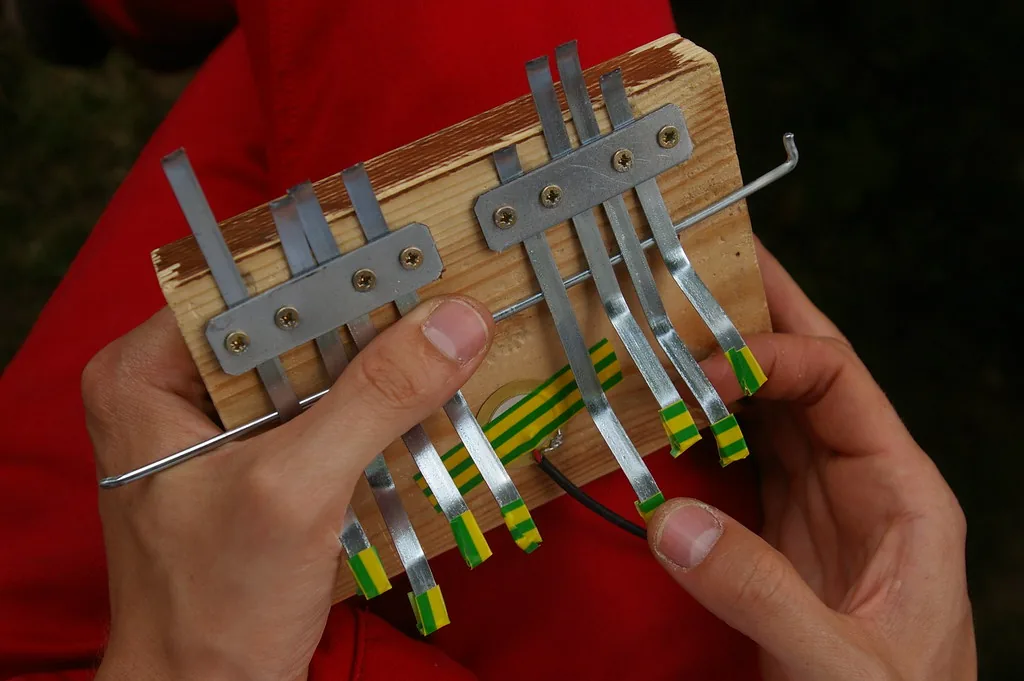
Feel free to refer to additional resources to deepen your knowledge of reading kalimba sheet music with numbers. For example, you can consult the article on Wikipedia to learn more about the different symbols used in kalimba sheet music notation.
How do you read kalimba sheet music with letters?
If the kalimba score uses letters instead of numbers, the reading method remains similar. Each letter corresponds to a specific musical note, and you must play the notes in the order shown on the score. There may also be additional indications, such as signs indicating higher or lower octaves. It is important to know the correspondence between the letters and the notes on your kalimba so you can read the score correctly.
When you read kalimba sheet music with letters, it is useful to understand the specific score symbols. Here are some common examples:
- Capital letter: Each capital letter represents a note in the scale. For example, “A” may be the note A, “B” may be B, and so on.
- Higher octave: A “+” sign above the letter indicates that the note should be played in the higher octave. For example, “A+” means you should play the note A in the higher octave.
- Lower octave: A “-” sign below the letter indicates that the note should be played in the lower octave. For example, “A-” means you should play the note A in the lower octave.
- Chords: Letters grouped in parentheses indicate chords. You will need to play these notes simultaneously.
To read kalimba sheet music with letters correctly, it is recommended that you take the time to become familiar with the symbols used and practice regularly by playing simple pieces. With practice, you will be able to play your favorite pieces on your kalimba using scores with letters.
Example of kalimba sheet music with letters:
Here is an example of kalimba sheet music with letters to help you visualize the concept:
| Note | Octave |
|---|---|
| A | |
| B | + |
| C | – |
| (A C E) |
This score represents a sequence of notes to play on the kalimba. You will first play the note A, then the note B in the higher octave, then the note C in the lower octave, and finally the notes A, C, and E simultaneously to create a chord. By following the letters and octave indications, you will be able to play the desired melody.
By understanding kalimba score symbols and reading the letters on a score, you can fully use the potential of this fascinating instrument. Reading kalimba sheet music with letters is a valuable skill that every kalimba player should acquire to expand their musical repertoire and flourish in their practice.
Tips for reading kalimba tablature better
When you learn to read kalimba tablature, it is important to adopt certain tips to make it easier to understand and improve your playing. Here are some practical suggestions:
- Become familiar with the tines of your kalimba: Before you start reading tablature, take the time to get to know the tines of your instrument and how they correspond to the numbers or letters used in the tablature. You can place stickers on the tines or have them engraved to help you identify the notes more easily.
- Understand the tablature indications: Each kalimba tablature may include specific indications, such as glissandos or simultaneous notes. Take the time to understand these indications so you can interpret them correctly when you play.
- Practice regularly with simple pieces: To become comfortable reading kalimba tablature, start with simple pieces, then gradually move on to more complex pieces as you learn. Regular practice will help you develop your reading skills and play more smoothly.
By following these tips, you will be able to read and interpret kalimba tablatures better, allowing you to play your favorite pieces with ease and precision.
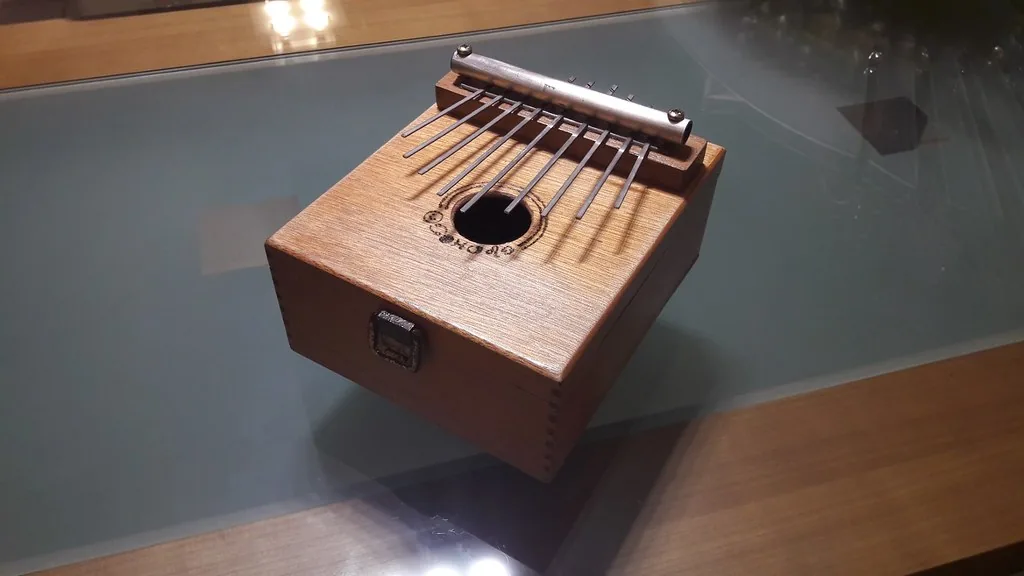
Example of kalimba tablature:
| Note | Number | Octave |
|---|---|---|
| C | 1 | – |
| D | 2 | – |
| E | 3 | – |
| F | 4 | – |
| G | 5 | – |
| A | 6 | – |
| B | 7 | – |
| C | 8 | + |
Conclusion
Learning to read kalimba sheet music or tablature may seem complex at first, but with practice and perseverance, you will be able to master this art and play your favorite pieces on your kalimba. It is important to understand the symbols and notation indications used in scores and tablatures, and to know the correspondences between numbers, letters, and notes on your instrument. By following the right tips and techniques, you can progress in your learning and fully enjoy the beauty and melody of the kalimba.
To learn more about the kalimba and its music, consult the article on El Cóndor Pasa. You will find detailed information on the history of this magnificent instrument, as well as examples of scores and tablatures to help you in your learning. Feel free to explore different online resources to discover new pieces and continue developing your sheet music and tablature reading skills.
In conclusion, reading sheet music and tablature is an essential skill for all kalimba enthusiasts. With practice and a little patience, you can progress and play beautiful melodies on this unique instrument. So get started and let the magic of the kalimba carry you into a world of music and creativity.