
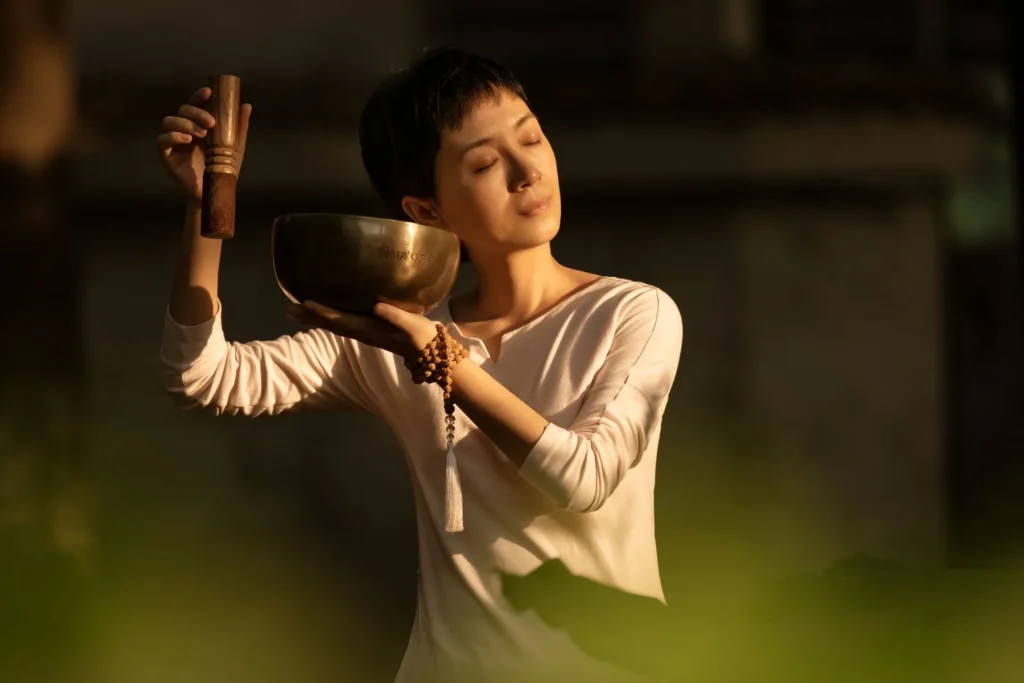
Tibetan singing bowls are spiritual and therapeutic instruments, handcrafted for centuries. Their pure, soothing sound depends on their composition: genuine models are forged from 7 precious metals, such as gold, silver, and copper. Unfortunately, the French market is full of industrial counterfeits.
This guide helps you identify certified products, especially those from Nepal. According to our analysis, only 36% of the 203 references examined meet authenticity criteria. Specialist stores, such as Instruments du Monde, offer varied ranges, from entry-level pieces to antique bowls.
Choose Nepalese origin to ensure optimal quality. Local artisans preserve traditional techniques, such as double-wall construction, for a harmonious sound. Be wary of non-specialist platforms: a price that is too low is often a sign of deception.
Sommaire
What is an authentic Tibetan bowl?
Identifying a genuine Tibetan singing bowl requires understanding its unique characteristics. These spiritual instruments stand out through their metal composition and their ancestral manufacturing method.
The traditional composition: the 7 sacred metals
Nepalese artisans use a specific alloy combining seven metals, each linked to a planet:
| Metal | Celestial body | Vibrational properties |
|---|---|---|
| Gold | Sun | Vital energy |
| Silver | Moon | Calming |
| Copper | Venus | Emotional balance |
| Iron | Mars | Vitality |
| Tin | Jupiter | Expansion |
| Lead | Saturn | Grounding |
| Mercury | Mercury | Fluidity |
This alloy gives the bowl a distinctive resonance that modern alloys such as brass cannot reproduce. Some “Full Moon” models contain higher proportions of silver and tin to amplify their brightness.
Handcrafting vs. industrial production
Four artisans spend an average of six hours shaping a single bowl. Manual hammering creates visible irregularities, distinctive signs of authenticity.
Industrial copies present risks:
- Reduced lifespan (5 years versus 50 years)
- Metallic tone with poor harmonics
- Uneven thickness affecting vibration
To verify Nepalese origin, consult this detailed guide to the markers.
History and origin of Tibetan singing bowls
These sacred instruments have their roots in Bon culture, a Himalayan shamanic tradition more than 5,000 years old. Mongolian nomads first used them for cooking before assigning them a spiritual role.
With the rise of Buddhism in the 7th century, King Songtsen Gampo integrated these bowls into monastic practices. Their sound became a bridge between the earthly and the divine.
In monasteries, they accompanied prayers.
“Their vibration guides the mind toward serenity,” explains a Tibetan lama.
Engraved patterns evolved over time. Mantras and lunar symbols appeared, reflecting the influence of Buddhism. In the 1970s, the West discovered these treasures, creating worldwide demand.
Today, Nepal preserves these ancestral techniques. Artisans maintain a thousand-year-old skill, hammering each piece by hand to guarantee its authenticity.
The benefits of a Tibetan bowl for meditation and therapy
The deep vibrations of singing bowls act on the body and mind. According to an INSERM study, regular use reduces cortisol by 37% and improves sleep quality.
Calming the mind and reducing stress
Sound therapy sessions use these instruments to calm the nervous system. Their low frequencies (110 to 440 Hz) synchronize brain waves, encouraging a state of deep relaxation.
In Paris, reiki centers include these bowls in their protocols. One therapist confirms:
“Their harmonics create a sound bubble that isolates people from outside disturbances.”
Harmonizing chakras and energy healing
Each note corresponds to a specific chakra:
- 396 Hz for the root chakra (grounding)
- 528 Hz for the heart chakra (emotional balance)
Unlike crystal bowls, Tibetan models offer warmer, more enveloping vibrations. Their prolonged resonance (up to 90 seconds) allows deeper energy work.
The different types of Tibetan bowls
Each type of Tibetan bowl offers distinct sound and vibrational characteristics. Depending on your practice, some models will be more suitable than others. Here is a guide to help you choose.
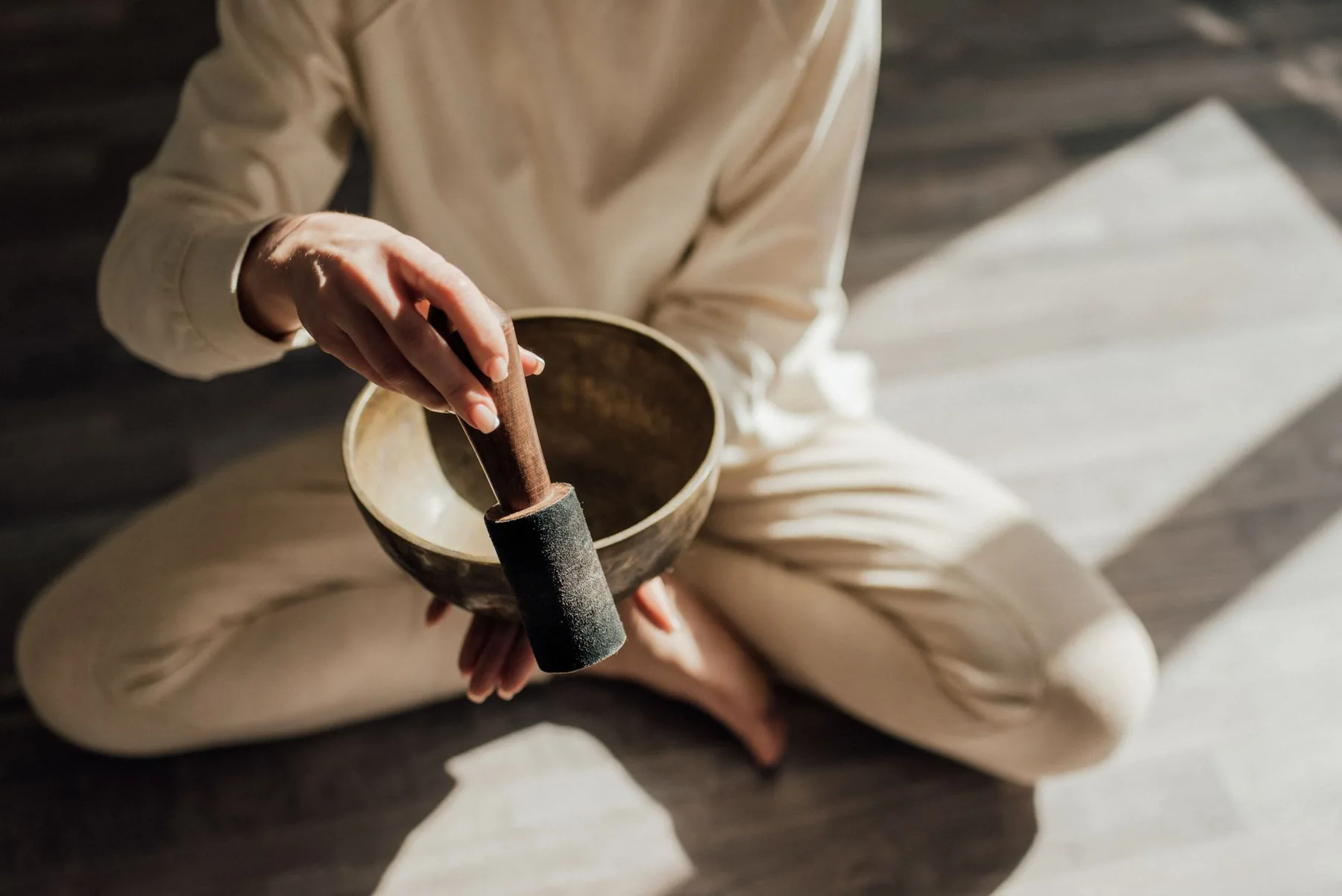
Meditation bowl: sound stability and rich harmonics
Singing bowls dedicated to meditation, such as the BOL90 model, stand out for their clear, stable sound. Their double wall and 2 to 3 mm thickness guarantee prolonged harmonics.
Ideal for yoga or mindfulness sessions, their weight (800 g to 1.2 kg) ensures good stability. The frequency of these bowls ranges from 110 to 440 Hz, perfect for synchronizing brain waves.
Therapeutic bowl: vibrational power for treatments
Designed for sound therapy, bowls such as the BFM10 have a thick wall (4 to 5 mm). Their intense vibration acts deeply on the body.
Their high weight (up to 2.3 kg) and low note make them perfect for energy treatments. One therapist confirms:
“Their resonance penetrates the tissues, releasing muscular and emotional tension.”
Versatile bowl: an ideal compromise for beginners
Models such as the Full Moon combine lightness and performance. Their range of frequencies suits both meditation and light therapeutic work.
Perfect for home use, they are often recommended to beginners. Their diameter (18 to 25 cm) makes them easy to handle.
| Type | Model | Thickness | Weight | Recommended use |
|---|---|---|---|---|
| Meditation | BOL90 | 2 to 3 mm | 928 g | Yoga, relaxation |
| Therapeutic | BFM10 | 4 to 5 mm | 2.155 kg | Sound therapy |
| Versatile | Full Moon | 2 to 3 mm | 754 g to 2.3 kg | Beginners, daily use |
To avoid common mistakes:
- Choose a diameter suited to your hand (18 to 22 cm to start).
- Check for the presence of the 7 metals for therapeutic uses.
- Always test the note before buying to validate the resonance.
Where to buy an authentic, high-quality Tibetan bowl in France
Finding a high-quality spiritual instrument means knowing the right retailers. In France, several options are available, from specialist stores to carefully selected online platforms.
Physical addresses for a secure purchase
Stores such as Eveil Oriental (Paris, Lyon) offer 25 certified references, ranging from small models (11 cm) to monumental pieces (29 cm). Their products, tested in store, guarantee Nepalese provenance.
In Bordeaux, Maloa Shop stands out with its PATAN and Ulta Bathi ranges. One manager confirms:
“Each bowl comes with a certificate of authenticity and is hammered by hand.”
Trustworthy websites
Choose specialist platforms such as Instruments du Monde, which offer test videos and verified reviews. Be wary of general marketplaces (Amazon, Fnac), which often lack guarantees.
Criteria for validating an online purchase:
- Detailed description of the metals used (7 minimum)
- 14-day return options
- Proof of handcrafted production (workshop photos)
The Full Moon brand, forged during full moons, remains a benchmark for practitioners. Its price ranges from €59 (entry level) to €127 for high-end pieces.
How can you recognize a real Tibetan bowl?
Distinguishing a genuine singing bowl requires careful attention to handcrafted details. Authentic pieces stand apart through their traditional production and unique composition.
The distinctive signs of Nepalese craftsmanship
A bowl forged by hand shows irregular hammering marks. These imperfections are signs of authenticity, unlike the smooth surfaces of industrial copies.
Hand engravings, such as the Om symbol, are simple and deep. Stickers or screen-printed motifs reveal a counterfeit.
- Listening test: resonance lasting at least 45 seconds, with rich harmonics.
- Weight: over 700 g for genuine models.
- Certificate: numbered, mentioning the 7 metals used.
Pitfalls to avoid: counterfeits and non-traditional metals
Beware of undeclared cheap alloys (brass, lead). They alter the tone and can be toxic.
An acid patina simulates natural wear. Check the texture: artificial aging is uniform.
| Criterion | Authentic | Counterfeit |
|---|---|---|
| Surface | Irregular (hammering) | Smooth, perfect |
| Sound | Deep, harmonious | Metallic, hollow |
| Metals | 7 sacred alloys | Brass or lead |
“A real Nepalese bowl sings; a fake one does not. The difference is audible from the first note.”
Tibetan bowl ranges and their prices
The singing bowl market offers varied ranges suited to every budget. From €59 for basic models to €315 for complete sets, each piece meets specific needs.
Entry-level bowls: accessible and functional
Ideal for beginners, these models (€59 to €89) offer a decent tone. Their alloy contains the 7 metals, but in smaller proportions. They are perfect for occasional meditation.
Accessories such as suede-leather mallets are often sold separately (+€15). One therapist explains:
“These bowls are a good compromise, but their resonance rarely exceeds 30 seconds.”
High-end bowls: artisanal excellence
Premium pieces (up to €315) stand out because they are made during full moons. Their rich, prolonged sound (90 seconds) justifies their price.
- 7-chakra sets: complete energy harmonization
- Full Moon bowl: clearer notes thanks to extra silver
- Certificate of authenticity included
In 2024, demand for these models increased by 15%, especially in therapy.
Full Moon Tibetan bowl: an exclusive piece to discover
Made under lunar influence, this bowl offers a unique resonance. Nepalese artisans forge it exclusively during full moons, a tradition several years old.
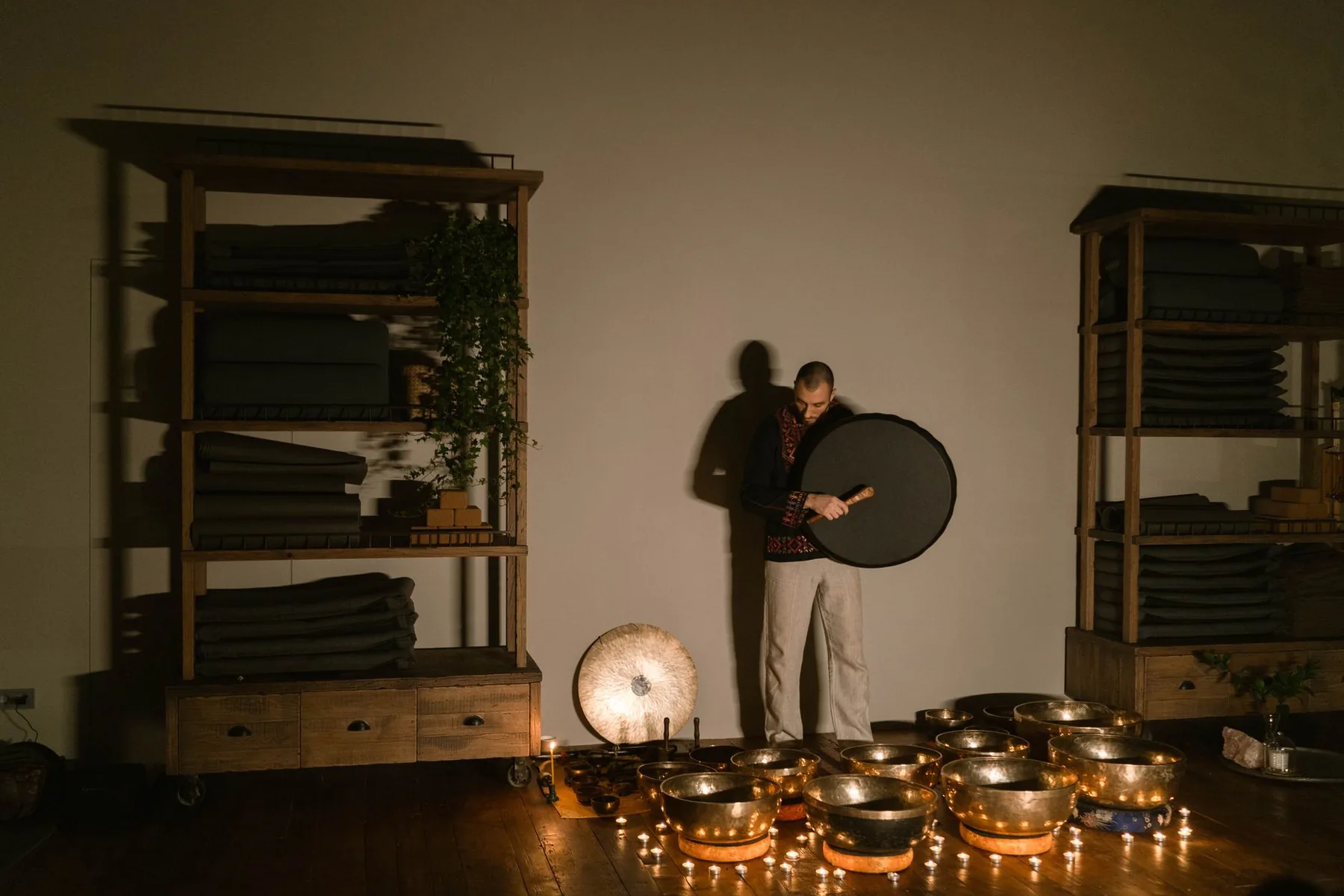
Its alloy contains extra silver and tin, amplifying its brightness and harmonics. Unlike standard models, its triple signature guarantees prolonged vibration (up to 2 minutes).
Energy benefits:
- Enhanced calming effect for nighttime meditations
- Easier chakra alignment thanks to its crystalline note
- Natural patina resistant to oxidation
Available only twice a year, each piece is numbered. One user says:
“Its pure sound transforms my yoga sessions. It is a spiritual investment.”
To preserve its quality, avoid prolonged sun exposure. Use a soft cloth and beeswax for monthly care.
How to choose your singing bowl according to your needs
Selecting the right singing bowl depends on several essential criteria. Size, weight, and sound frequency must suit your practice. Here is a guide to making the best choice.
Size, weight, and sound frequency
A weight between 800 g and 1.5 kg offers perfect balance. Too light, the sound lacks depth. Too heavy, it becomes difficult to handle.
The frequency determines the use:
- 110 to 220 Hz: deep relaxation
- 440 Hz: chakra harmonization
Musical note and associated chakra
Each note vibrates with a specific chakra. Here are the key correspondences:
| Note | Chakra | Effect |
|---|---|---|
| C | Root | Grounding |
| G | Heart | Emotional balance |
To test a bowl in store:
- Tap it lightly with the mallet.
- Listen to the richness of the harmonics.
- Let it sing naturally.
- Feel the vibrations in your hand.
- Time the duration of the resonance.
Common mistakes to avoid:
- Neglecting ergonomics (diameter suited to your palm).
- Choosing a sound that is too high-pitched for meditation.
- Forgetting to check the 7 metals.
“A bowl must speak to you above all. Close your eyes and listen to what you feel.”
Practical cases according to body type:
- Small hands: bowl of 18 cm maximum
- Therapeutic use: heavy model (1.2 kg and above)
- Beginners: versatile model (20 cm, 900 g)
The essential accessories for using your bowl
To fully harness its potential, a singing bowl requires suitable accessories. These tools improve resonance and make practice easier, whether for meditation or therapy.
Mallets and beaters: choosing the right striker
The mallet material radically changes the sound produced. Here are the main options:
- Bare wood (beech): clear, powerful sounds
- Suede leather: warm, enveloping vibrations
- Felt: soft harmonics for calming sessions
Professionals recommend:
“A 40 to 60 mm mallet suits large bowls, while a 30 mm model is ideal for compact versions.”
Stabilizing cushions and wooden supports
The Nepalese COUS3 cushion (10 cm) prevents unwanted slipping. Its sandalwood ring preserves acoustic balance.
Alternatives:
- Flat stand: for wide bowls (> 25 cm)
- Rotating base: allows smooth rotations during treatments
| Accessory | Average price | Sound impact |
|---|---|---|
| Leather mallet | €19 | +30% bass |
| Felt mallet | €27 | Prolonged harmonics |
| COUS3 cushion | €15 | Optimal stability |
Tip: test several accessories to discover the combinations that resonate with your practice.
Techniques for making your Tibetan bowl sing
Mastering the art of the singing bowl requires a precise technical approach. Contrary to popular belief, simple rubbing is not always enough to reveal its full resonance. Here are the methods proven by practitioners.
The circular rubbing method
This technique consists of sliding the mallet along the outer rim with a steady motion. The ideal speed is 2 turns per second. A pressure of 300 to 500 grams activates the harmonics.
Key steps:
- Place the bowl on a stable cushion.
- Hold the mallet at 45 degrees.
- Start slowly before increasing speed.
“The first 4 to 5 turns initiate the vibration. Do not force it: let the sound emerge naturally.”
Nuances according to pressure and speed
A subtle adjustment radically changes the result:
- Light pressure (300 g): crystalline sound for meditation
- Firm pressure (500 g): deep vibrations for therapy
Common problems and their solutions:
| Problem | Cause | Solution |
|---|---|---|
| Squeaking | Uneven pressure | Reduce speed |
| Muffled sound | Unsuitable mallet | Choose suede leather |
To go further, consult this practical guide for beginners.
Caring for and preserving your Tibetan bowl
Proper care extends the lifespan of your spiritual instrument. Hand-forged bowls require suitable care to preserve their vibrational power. Here are the methods approved by Nepalese artisans.
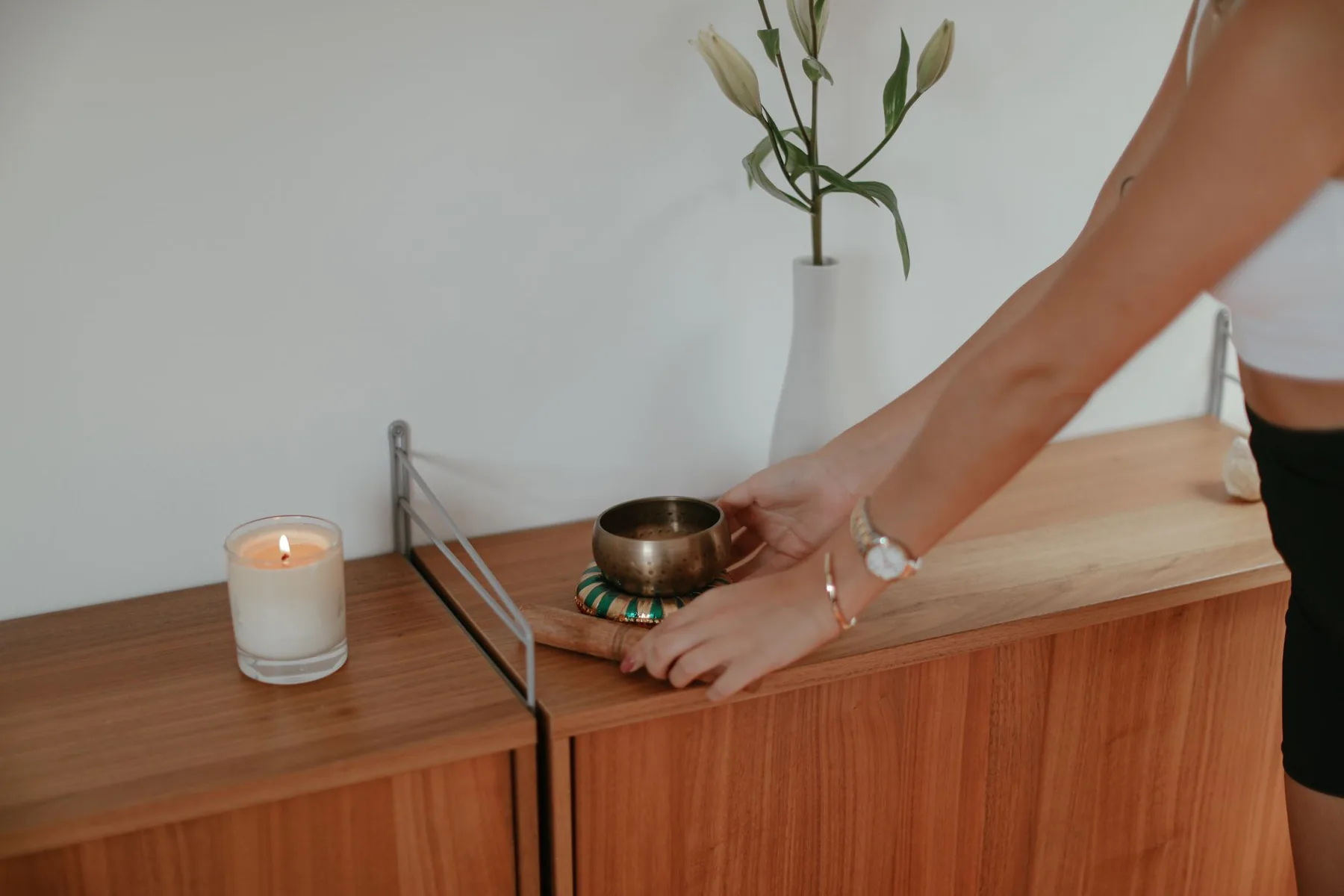
Safe cleaning for the metal
Use only lukewarm water and neutral soap. Absolutely avoid bleach, acids, or abrasives, which alter the metal. Wipe gently with a soft cloth to prevent oxidation.
For micro-scratches, light polishing with beeswax restores shine. Ideally, clean your bowl after each session to prevent dust buildup.
Optimal storage conditions
Keep your bowl in a stable environment (18 to 25 °C) with less than 60% humidity. Sandalwood cases or organic-fabric pouches protect it from impacts.
One expert recommends:
“Store it away from direct light. Excessive heat gradually distorts the harmonics.”
Use it regularly: natural vibrations maintain its properties. For long storage periods, apply a thin layer of vegetable oil before putting it away.
Antique Tibetan bowls: a safe value?
Investing in an antique spiritual instrument raises questions about its durability. With values rising by 7% per year for pieces over 50 years old, these objects attract buyers much like works of art. Yet 30% of the market is said to consist of fake antiques.
Authenticating age and origin
Experts use three dating methods:
- Metallurgical analysis (traces of historical lead)
- Natural patina (uneven oxidation)
- Engravings specific to different periods
In France, collectors favor pieces certified by the Museum of Asian Arts. Their value can quadruple if their provenance traces back to a Buddhist monastery.
| Criterion | Added value | Risk |
|---|---|---|
| Monastic provenance | +40% | False certificates |
| Artisan signature | +25% | Modern copies |
| State of preservation | +15% | Hidden restoration |
“A real antique bowl sings differently. Its natural wear creates warmer harmonics.”
For a secure second-hand purchase:
- Require a sound test on video
- Check expert reports
- Choose specialist sellers
Some insurers offer suitable contracts for these antique pieces, covering up to 150% of their estimated value. It is an option worth considering to protect your spiritual investment.
Singing bowls and alternative therapies
Tibetan singing bowls have found a place in many modern therapeutic approaches. Their use now goes beyond simple meditation and is being integrated into scientifically assessed care protocols.
Sound therapy and vibrational massages
In France, 68% of specialist centers use these instruments for 20-minute sessions. Their vibrations act on:
- Stress reduction (37% less cortisol)
- Nervous-system balance
- Stimulation of alpha brain waves
A Parisian therapist explains:
“Full Moon bowls produce frequencies between 110 and 440 Hz, perfect for releasing physical and emotional tension.”
Integration into yoga and reiki
Practitioners often combine these instruments with other tools:
| Discipline | Complementary accessory | Recommended duration |
|---|---|---|
| Yoga | Shamanic drum | 15 min at the beginning of the session |
| Reiki | Therapeutic tuning fork | 10 min per chakra |
Certified training courses now include specific modules on using bowls. A recent study shows their effectiveness for:
- Improving concentration
- Facilitating meditation
- Strengthening energetic grounding
Marie, a yoga teacher, says:
“Since I started using a singing bowl in class, my students reach a deep meditative state more quickly.”
Where to buy an authentic, high-quality Tibetan bowl: our recommendations
To find high-quality spiritual instruments, some retailers stand out through their expertise. In France, three stores offer essential authenticity guarantees.
| Store | Specialty | Guarantee | Strengths |
|---|---|---|---|
| Eveil Oriental | Full Moon bowl | 2 years | In-store trial |
| Maloa Shop | PATAN collection | Craft certificate | Discovery workshops |
| Sonotherapie France | 7-chakra sets | 15-day return | Personalized advice |
These specialists offer additional services:
- Free energy diagnosis
- Secure tracked delivery
- Seasonal promotions (-20% in January)
In a physical store, check these elements:
- Presence of the numbered certificate
- Possible resonance test
- Guidance from an expert
“Our customers appreciate transparency about the origin of the materials. It is the basis of trust.”
For online purchases, choose sites with:
- Demonstration videos
- Detailed descriptions of the metals
- Secure payment options
Some stores such as Eveil Oriental even offer free introductory workshops with purchase. It is an ideal opportunity to master the basic techniques.
Conclusion
Choosing a Tibetan bowl of quality depends on precise criteria. Favor traditional alloys and handcrafted finishes for an optimal vibrational experience.
Beware of overly attractive offers. Industrial counterfeits alter the therapeutic benefits. Always test the instrument before buying.
Specialist workshops offer a unique opportunity to experience different tones. This approach guarantees an informed choice.
The market is moving toward increasing integration into wellness practices. To go further, join dedicated communities or follow certified training courses.
FAQ
How can you recognize an authentic Tibetan bowl?
What is the best size for a beginner?
How do you choose the musical note suited to your needs?
Should you buy in store or online?
How do you care for a singing bowl?
Are crystal bowls as effective as metal models?
Can a Tibetan bowl be used for guided meditation?
What budget should you plan for a quality model?
How can you avoid counterfeits?
Do therapeutic bowls require specific accessories?
Source links
- https://instruments-du-monde.com/en-us/blogs/tibetan-singing-bowl/where-to-buy-a-tibetan-singing-bowl
- https://www.tibetanbuddhistencyclopedia.com/en/index.php/Singing_Bowl
- https://instruments-du-monde.com/en-us/blogs/tibetan-singing-bowl/recognize-genuine-tibetan-singing-bowl
- https://instruments-du-monde.com/en-us/blogs/tibetan-singing-bowl/everything-you-need-to-know-about-tibetan-singing-bowls
- https://yirah.fi/en/articles/18.8.2025_tiibetilaiset_aanimaljat
- https://instruments-du-monde.com/en-us/blogs/tibetan-singing-bowl/everything-you-need-to-know-about-tibetan-singing-bowls
- https://pmc.ncbi.nlm.nih.gov/articles/PMC12385955/