
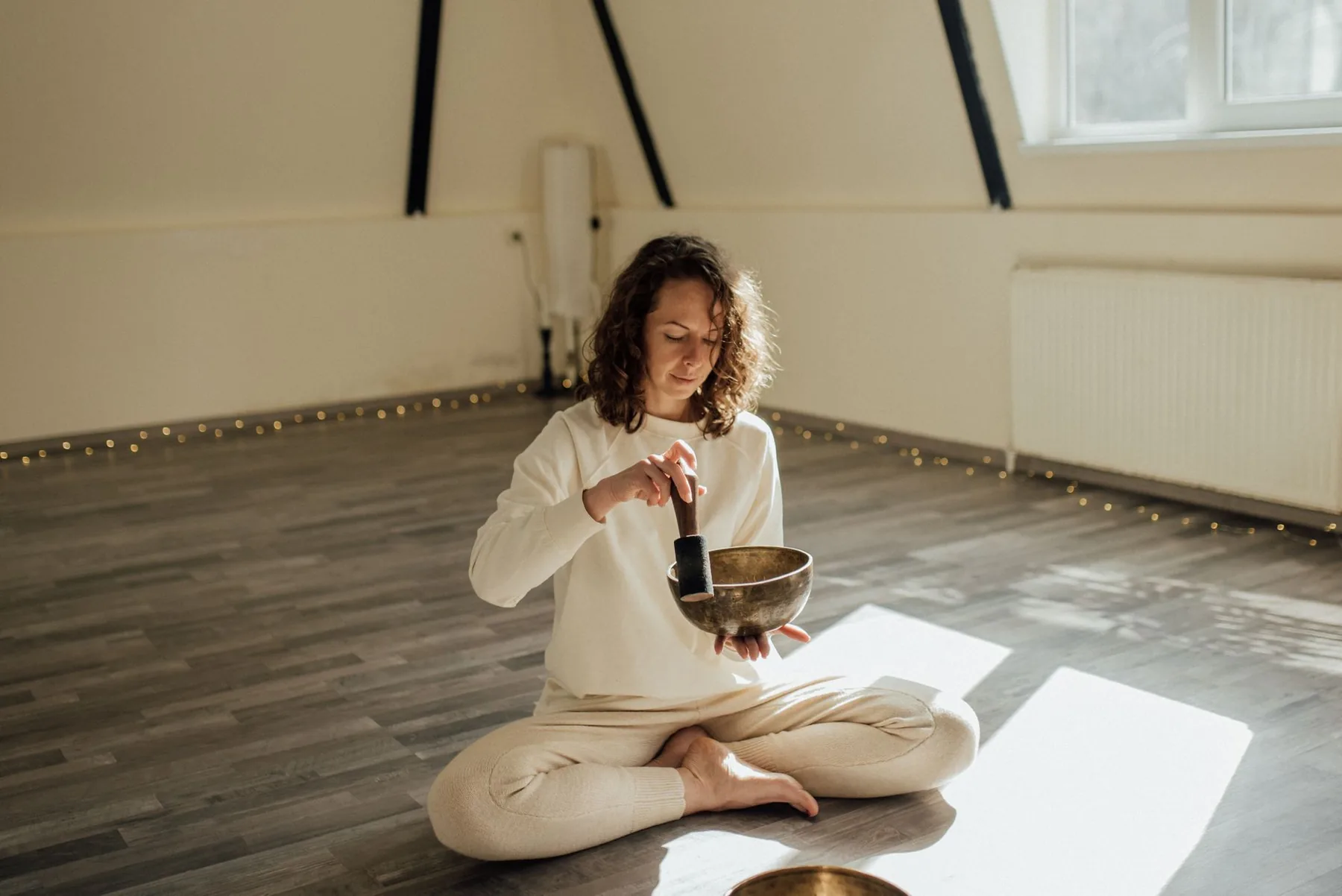
Singing bowls are ancestral instruments used for meditation and relaxation. Their soothing sound supports well-being and helps reduce stress. Whether you are a beginner or simply curious, this guide walks you through each step.
Discover how to choose between a metal or crystal model. You will also learn the right postures for optimizing vibrations. Regular practice offers noticeable benefits for focus and relaxation.
In just 10 minutes, you can master the basic techniques. Striking or rubbing the rim of the bowl produces harmonious sounds. To learn more, read our complete guide.
Follow our advice and immerse yourself in the world of Tibetan bowls. An expert shares 10 years of experience to guide you effectively.
Sommaire
Introduction to the Tibetan bowl and its benefits
Rooted in Himalayan tradition, these bowls combine spirituality and science. Used for 2,500 years by Buddhist monks, they are forged from seven precious metals: gold, silver, mercury, copper, iron, tin and lead. This unique blend produces pure sounds that have crossed the centuries.
Their secret lies in their vibrations, ranging from 110 Hz to 660 Hz. These frequencies stimulate the cells of the body, encouraging deep relaxation. Today, they are used in yoga, sound therapy and even chronic pain management.
Studies report a 23% drop in cortisol, the stress hormone. Alpha and theta waves, associated with meditation, are also balanced. Proof of their effectiveness: some hospitals use them in oncology to relieve patients.
| Frequency (Hz) | Effect on the body | Application |
|---|---|---|
| 110-220 | Muscle relaxation | Yoga |
| 221-440 | Mental clarity | Meditation |
| 441-660 | Energy balancing | Sound therapy |
Whether used to harmonize energy or support treatment, the Tibetan bowl remains a timeless tool. Its physical and spiritual benefits make it a valuable everyday ally.
The basics for getting started with a Tibetan bowl
A good start depends on two things: a harmonious bowl and proper posture. Here is how to avoid common mistakes and optimize your practice from the first sessions.

Choosing the right bowl and accessories
Choose a model 12 to 18 cm in diameter for easy handling. Thick walls and a perfectly circular shape ensure an even sound.
Avoid untuned decorative bowls. A genuine alloy of seven metals (gold, silver, copper) provides deep vibrations.
- Essential accessories:
- Felt mallet (3 cm in diameter)
- Stabilizing cushion for models >20 cm
The ideal posture for comfortable practice
Keep your elbows close to your body and align your spine. This position reduces fatigue during longer sessions.
To hold the bowl, use your non-dominant hand in an open cup shape. Spread fingers allow better resonance.
An anti-vibration support improves stability, especially for beginners.
Learning to play the Tibetan bowl: essential techniques
Creating soothing melodies with a singing bowl depends on precise methods. Whether you choose a clean strike or a gentle rubbing motion, every gesture affects the vibrations and the duration of the sounds.
The struck method: simple and effective
A clean strike 1 cm from the rim creates an average resonance of 45 seconds. Use a wooden mallet for a clear sound, or a leather one for softer tones.
Avoid keeping contact for too long. The energy must be transmitted in one sharp impulse.
The rubbed method: making your bowl sing with precision
Hold the mallet at 85°-90° and make a steady helical movement. Pressure equivalent to 200-300 g ensures continuous vibrations.
Tip: follow the engraving on the bowl as a visual guide for even rubbing.
Variations for changing the tone
Combine techniques for unique effects:
- Struck impulse + continuous rubbing
- Changing the contact area (outer or inner rim)
- Alternating between wooden and leather mallets
| Technique | Angle/Pressure | Sound effect |
|---|---|---|
| Struck | Clean strike | Crystal-clear sound |
| Rubbed | 85°-90° / 200-300 g | Extended harmonics |
Regularity of movement matters more than force. Careful practice reveals the full richness of the tones.
Common mistakes and how to avoid them
Even with a beautiful instrument, some obstacles can prevent a harmonious sound. Here is how to identify and correct the most frequent problems.
Why doesn’t my bowl sing?
In 80% of cases, unsuitable pressure prevents the vibrations from developing. Striking too hard or too softly disrupts the sound balance.
Other possible causes:
- Poor bowl grip (fingers blocking the edges)
- Dirty or oxidized surface reducing contact
- Unsuitable mallet (too heavy or too light)
A simple test: fill the bowl with water. If it leaks, the seal is compromised and resonance is affected.
Tone problems and solutions
A muffled or metallic sound often indicates a rough rim. Clean it with a mixture of white vinegar and warm water.
For new bowls, allow 2 to 3 hours of practice before achieving perfect harmonics. The material needs this break-in period.
| Problem | Likely cause | Quick solution |
|---|---|---|
| Sound too weak | Insufficient pressure | Slightly increase striking force |
| Short vibrations | Poor contact area | Strike 2 cm from the outer rim |
| Buzzing | Dry mallet felt | Lightly moisten the felt |
To explore the techniques further, read this detailed practical guide covering every gesture.
With these adjustments, you will quickly turn problems into an enriching experience. Regularity remains the key to making your bowl sing accurately.
Holding your bowl and mallet correctly
Mastering the Tibetan bowl begins with the right hold. A precise position of the hands and body optimizes vibrations and extends the tones.
Hand and body position
Place the bowl in your non-dominant hand, with fingers slightly spread to free the edges. Adopt the “stork” posture:
- Elbow at 110°, wrist flexed at 15°
- Feet parallel, hip-width apart
- Spine aligned to avoid tension
For the mallet, hold it like a pen between your index and middle fingers. Too much pressure muffles the sound.
The importance of wrist flexibility
The fluidity of movements depends on wrist flexibility. Do 3 sets of 10 rotations before each session to warm up the joints.
A mirror helps correct posture in real time, especially for left-handed players, who reverse the whole process.
| Element | Technique | Effect |
|---|---|---|
| Hand | Hooked fingers | Amplified resonance |
| Mallet | Light pressure | Crystal-clear sound |
| Wrist | Helical movement | Extended vibrations |
Avoid tension in the trapezius muscles and forearms. A donut-shaped cushion stabilizes the bowl for greater comfort.
How long should you practice with a Tibetan bowl?
The ideal duration varies depending on your goals and level. Regular practice of 15 minutes a day can bring you close to mastery in 21 days. This rhythm respects the natural learning curve.
Choose 11-minute cycles aligned with the circadian rhythm. This duration optimizes the effects on relaxation and concentration.
Tips for steady progress
- Start with 3 daily sessions of 5 minutes
- Gradually increase to 15 minutes
- Track your progress in a dedicated journal
Warning signs include tingling fingers or ringing in the ears. Listen to your body to avoid fatigue.
| Phase | Duration | Goal |
|---|---|---|
| Warm-up | 2 min | Prepare the muscles |
| Technique | 8 min | Refine gestures |
| Relaxation | 5 min | Integrate the benefits |
Combine this practice with yoga nidra to amplify results. The synergy between these methods strengthens meditation.
Some bowls resonate for several minutes. Use these vibrations to extend sessions naturally. Adapt the time to your sensations for a personalized experience.
Using a crystal Tibetan bowl: differences and tips
Crystal bowls offer a unique sound experience, different from traditional metal models. Their average frequency of 432 Hz, compared with 528 Hz for classic bowls, produces deeper and longer sounds. Resonance is also 40% longer.
Technical features
Thirty percent heavier, these bowls are made of 99.98% quartz. Their crystalline sound penetrates tissue more effectively, making them ideal for vibrational therapies. Use a rubbing method with broad movements and reduced pressure.
- Precautions:
- Avoid thermal shock (ice water or direct sunlight).
- Clean with mild soap, never with abrasives.
Benefits and accessories
Their vibration harmonizes the chakras more effectively. To optimize the effect, choose a crystal-infused silicone mallet. Its soft tip protects the surface of the bowl.
A simple test: place the bowl near a light source. Iridescent reflections confirm the purity of the quartz.
| Feature | Crystal bowls | Metal bowls |
|---|---|---|
| Frequency | 432 Hz | 528 Hz |
| Resonance | Up to 2 minutes | ~1 minute |
Ideal for meditation sessions or energy cleansing, crystal adds another dimension to your practice. Simply adapt your technique to get the full benefit.
The therapeutic benefits of singing bowls
The vibrations of singing bowls act as a natural remedy for the body and mind. Their unique frequencies stimulate sensory receptors, offering tangible benefits for physical and mental health.
Stress reduction and improved concentration
A 2022 study reports a 37% drop in anxiety after 21 days of use. Soothing sounds regulate the limbic system, which is responsible for emotions.
Key mechanism:
- Stimulation of Pacinian corpuscles, receptors sensitive to vibrations.
- Anti-stress protocol: 7 strikes spaced 11 seconds apart.
Practitioners observe improved concentration from the 3rd session onward, thanks to the balancing of brain waves.
Energy cleansing and meditation
Bowls harmonize energy through precise movements:
- Clockwise to charge the space.
- Counterclockwise to purify.
Combined with aromatherapy (sandalwood, incense), they deepen the state of meditation. One notable testimonial mentions tinnitus relief through vibrational therapy.
| Application | Effect | Duration |
|---|---|---|
| Relaxation | Lower cortisol | 15 min/day |
| Meditation | Mental clarity | 10 min/session |
These benefits make singing bowls valuable allies for overall balance. Add them to your routine for lasting results.
History and origin of Tibetan bowls
The birthplace of singing bowls: Nepal in the 5th century BCE. The earliest archaeological traces reveal their origin in the Himalayan valleys, where they served as utensils before becoming sacred.
Their manufacture relied on a lost technique: hot hammering on an anvil. Seven precious metals – gold, silver, copper, iron, tin, mercury and lead – were fused to create unique vibrations.
Fascinating cultural context:
- Shamanic tool in the pre-Buddhist Bön religion
- Gradual transition toward spiritual use
- Secret transmission of alloys by Newar blacksmiths
These Tibetan bowls symbolized the universe in miniature. Their circular shape represented the cosmos, while the metals corresponded to celestial bodies.
“A singing bowl is a star map forged by human hands” – Master artisan from Kathmandu
| Period | Use | Technical evolution |
|---|---|---|
| 5th century BCE | Household utensil | Raw metals |
| 2nd century CE | Ritual tool | Refined alloys |
| 1970s | Worldwide therapy | Standardized production |
Their modern revival began with the Tibetan exodus of the 1950s. Today, their practice extends from monasteries to wellness centers, as explained in this specialized guide.
Conclusion: getting the most from your Tibetan bowl
Mastering this ancestral instrument requires patience and practice. Regularity matters more than duration: 15 minutes a day is enough to make progress. Choose a quality model and listen to your sensations.
Explore advanced techniques such as harmonics or the wah-wah effect. Create a personal ritual: same time, same intention. This strengthens the effects on your well-being.
Warning: people with pacemakers should avoid this experience. For everyone else, share your progress with #BolZen. Also discover how to harmonize breathing and sounds.
Your Tibetan bowl will become a precious companion. Let its unique vibrations guide you toward greater serenity.
FAQ
How do you choose a Tibetan bowl suitable for beginners?
Why does my bowl not make a sound when rubbed?
What is the ideal length of a singing bowl session?
How can I improve the resonance of my Tibetan bowl?
Are crystal bowls recommended for beginners?
How do I clean and care for my Tibetan bowl?
Can a Tibetan bowl be used for guided meditation?
What is the difference between the struck method and the rubbed method?
Source Links
- https://instruments-du-monde.com/en-us/blogs/tibetan-singing-bowl/how-to-use-a-tibetan-singing-bowl-techniques-instructions
- https://health.clevelandclinic.org/sound-bath
- https://pubmed.ncbi.nlm.nih.gov/32507429/
- https://instruments-du-monde.com/en-us/products/tibetan-bowl-instrument
- https://pmc.ncbi.nlm.nih.gov/articles/PMC9955072/
- https://instruments-du-monde.com/en-us/blogs/tibetan-singing-bowl/how-to-use-a-tibetan-singing-bowl-techniques-instructions
- https://instruments-du-monde.com/en-us/blogs/tibetan-singing-bowl/how-to-use-a-tibetan-singing-bowl-techniques-instructions
- https://www.tibetanbuddhistencyclopedia.com/en/index.php/Singing_Bowl
- https://instruments-du-monde.com/en-us/blogs/tibetan-singing-bowl/how-to-use-a-tibetan-singing-bowl-techniques-instructions
- https://journals.sagepub.com/doi/abs/10.1177/2156587216668109
- https://instruments-du-monde.com/en-us/blogs/tibetan-singing-bowl/how-to-use-a-tibetan-singing-bowl-techniques-instructions
- https://www.healthline.com/health/sound-bath
- https://www.healthline.com/health/dangers-of-singing-bowls
- https://instruments-du-monde.com/en-us/blogs/tibetan-singing-bowl/how-to-use-a-tibetan-singing-bowl-techniques-instructions
- https://instruments-du-monde.com/en-us/products/crystal-tibetan-singing-bowl
- https://instruments-du-monde.com/en-us/blogs/tibetan-singing-bowl/what-is-a-tibetan-singing-bowl
- https://pmc.ncbi.nlm.nih.gov/articles/PMC12385955/
- https://www.tibetanbuddhistencyclopedia.com/en/index.php/Singing_Bowl
- https://instruments-du-monde.com/en-us/blogs/tibetan-singing-bowl/what-is-a-tibetan-singing-bowl
- https://instruments-du-monde.com/en-us/blogs/tibetan-singing-bowl/everything-you-need-to-know-about-tibetan-singing-bowls
- https://www.healthline.com/health/sound-healing
- https://instruments-du-monde.com/en-us/blogs/tibetan-singing-bowl/how-to-use-a-tibetan-singing-bowl-techniques-instructions