
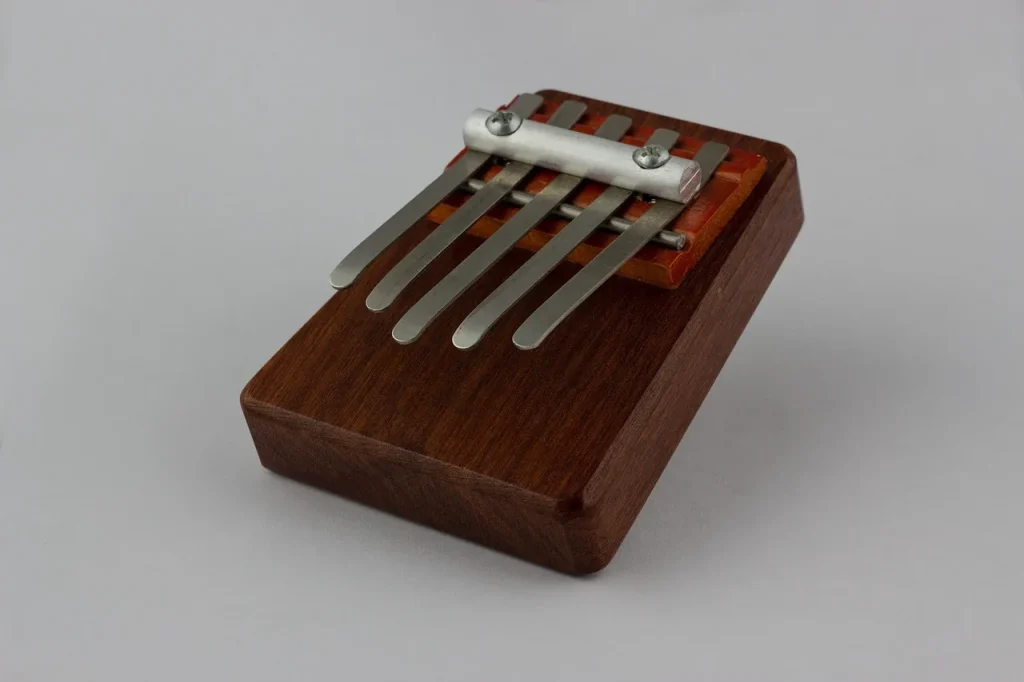
The kalimba, also known as a thumb piano or mbira, is a traditional African musical instrument that is gaining popularity around the world. With its soft, melodic sound, it allows musicians to create unique and captivating arrangements. In this article, we will explore the different steps involved in arranging a song for the kalimba.
Sommaire
Understanding the Basics of the Kalimba
Before you start arranging a song for the kalimba, it is essential to understand how this instrument works. The kalimba consists of a wooden board fitted with metal tines, called lamellae, of different lengths. Each tine corresponds to a specific note, and they are generally arranged in an alternating pattern, with the lower notes in the center and the higher notes on the sides.
To play the kalimba, you simply pluck the tines with your thumbs, producing its characteristic sound. Most kalimbas have between 10 and 17 tines, though some versions have more, offering a wider range of notes.
Choosing a Song Suited to the Kalimba
Not every song is necessarily well suited to the kalimba, especially because of the instrument’s limited range. For this reason, it is best to choose a song whose main melody can be easily adapted to the kalimba’s note range.
Simple, Melodic Songs
Simple songs with a clear melody are often the best place to start. Nursery rhymes, traditional songs, and even some pop songs can be excellent choices for a successful kalimba arrangement.
Avoiding Complex Pieces
Pieces of classical music or jazz can be more difficult to adapt to the kalimba because of their complex structure and frequent changes in key or rhythm. Likewise, songs built around complex chords may not sound as good on this instrument.
Adapting the Melody to the Kalimba
Once you have chosen a song suited to the kalimba, the next step is to adapt the melody to the instrument. Here are a few tips to help you do that:
Identifying the Key Notes of the Melody
Start by listening carefully to the song and identifying the main notes of the melody. You can also refer to sheet music if you have it. The goal is to determine which notes are essential for recreating the melody on the kalimba.
Finding the Matches on the Kalimba
Next, try to find the same notes on the kalimba by plucking the different tines. Feel free to use a tuner or an app to help you identify the correct notes.
Transposing the Melody if Necessary
In some cases, the original melody may be too high or too low to be played on the kalimba. You will then need to transpose it, meaning shift all the notes by a certain interval, so that it can be adapted to the instrument. Transposition can also be useful if the song includes notes that are not available on your kalimba.
Adding Embellishments and Variations
Once you have adapted the main melody to the kalimba, you can begin adding embellishments and variations to enrich your arrangement. Here are a few ideas:
- Play with rhythms: Vary the rhythmic patterns to bring more energy to your performance. You can try emphasizing certain notes, adding pauses, or playing sixteenth notes to create an interesting effect.
- Add harmonies: If your kalimba has enough notes, you can try adding harmonies by playing two tines at the same time. This can add depth and richness to your arrangement.
- Improvise: Feel free to improvise and add your own personal touches to the melody. This might include arpeggiated passages, glissandos, or other techniques you enjoy.
To arrange a song for the kalimba, you therefore need to choose a suitable song, adapt the melody to the instrument, and possibly add embellishments and variations. With practice and creativity, you can create unique and captivating arrangements on this fascinating instrument, the kalimba.
Depending on the song you want to adapt for your kalimba, you will need to choose a specific number of tines. The best option is to choose a chromatic model, which will give you every possibility.