
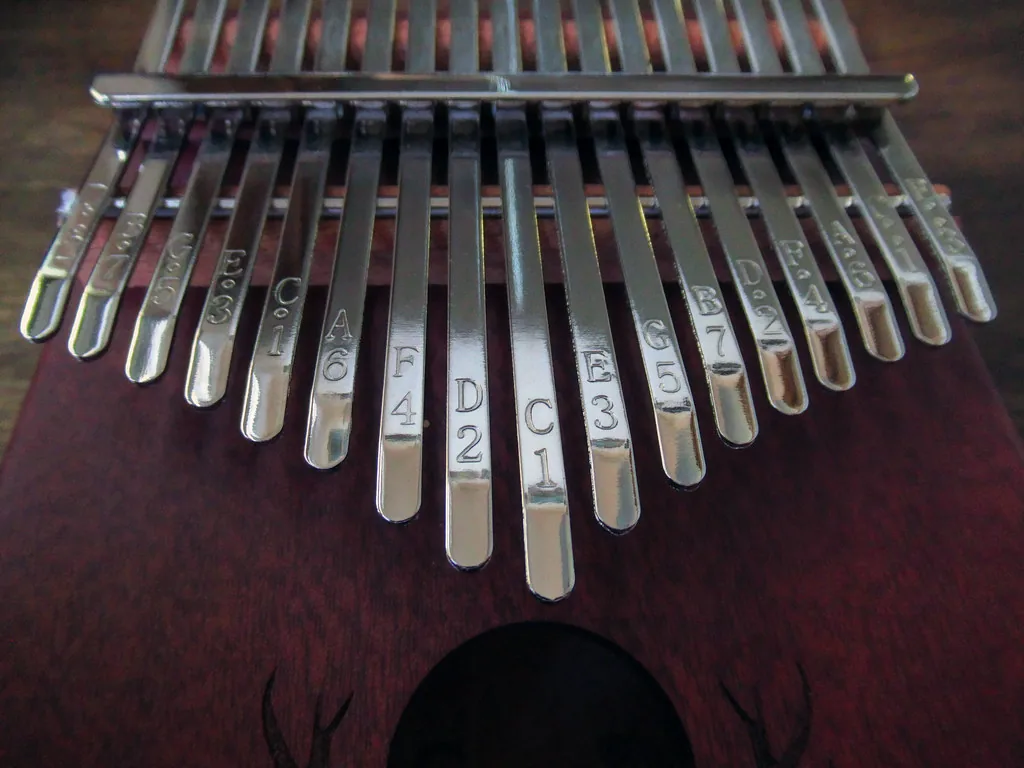
To make your kalimba sound right, the most important thing is to learn how to tune it. After that, you need to know how to correct the buzzing that some tines can produce, so that every note on the instrument rings true. These different tips show you how to eliminate that buzz and restore a clear sound to your kalimba.
When listening to other people’s kalimba recordings, you may often notice small, unpleasant rattles. Fortunately, they are easy to get rid of.
Before recording a piece on the kalimba, check the tuning and make sure none of the tines is buzzing. If one tine, or several, is producing a metallic buzz, you can use one of the following five techniques to fix it.
- First reflex: move the tine to the left or to the right. In many cases, this simple adjustment eliminates the buzz. However, it will probably come back if the tine is returned to its original position.
So if you move a tine fairly far from its original place, you will probably need to move the neighboring tines so that they are all evenly spaced again.
- Second method: cut a piece of ordinary office paper into a strip about 2 x 0.5 cm, lift the problem tine and separate it from the metal bridge rod, then slide the end of your paper strip between the tine and the bridge rod. Lower the tine until it traps the paper, then tear off the excess.
This works very well on all the notes in the lower two thirds of the kalimba, but less well on the higher notes, with their shorter tines, because this method seems to compromise their sound too much.
- On rare occasions, it is necessary to apply a strip of paper between the tine and the “Z bracket.”
- The hold-down bar, located at the top of your instrument, is a half-round strip of wood on which the tines rest. The tension is very high at this point, and the tines can compress part of the wood. If the tine rests partly on compressed wood and partly on uncompressed wood, it can end up slightly tilted, which means it does not sit perfectly flat on the bridge.
If the previous solutions did not do the job, take a pair of pliers, grip the end of the buzzing tine, meaning the end you play, and, if possible, force it in the opposite direction from the way it is currently leaning. This compresses part of the wood against the rear stop and lets you try to level the tine again. Play the note and listen. If turning the tine makes the buzz worse, turn it the other way, and do not be afraid to turn it more than once.
- Another way to help a buzzing tine stay flat and sound clearly is to smooth the surface of the bridge, meaning the silver metal rod on which the tines rest.
Cut a small piece of fine sandpaper, lift the buzzing tine, and slide the sandpaper between it and the bridge, grit side down: do not sand the tine. If you let the tine come all the way down, the sandpaper will tear when you pull it. Instead, lift the tine slightly so that it still holds the sandpaper in place. Then pull on the sandpaper: it will remove imperfections from the bridge surface.
This method is more effective for eliminating the buzz from one of the high notes.
To avoid future problems with your African instrument as much as possible, it is strongly recommended that you maintain and clean it as often as possible. That way, your kalimba will always play pure notes.