
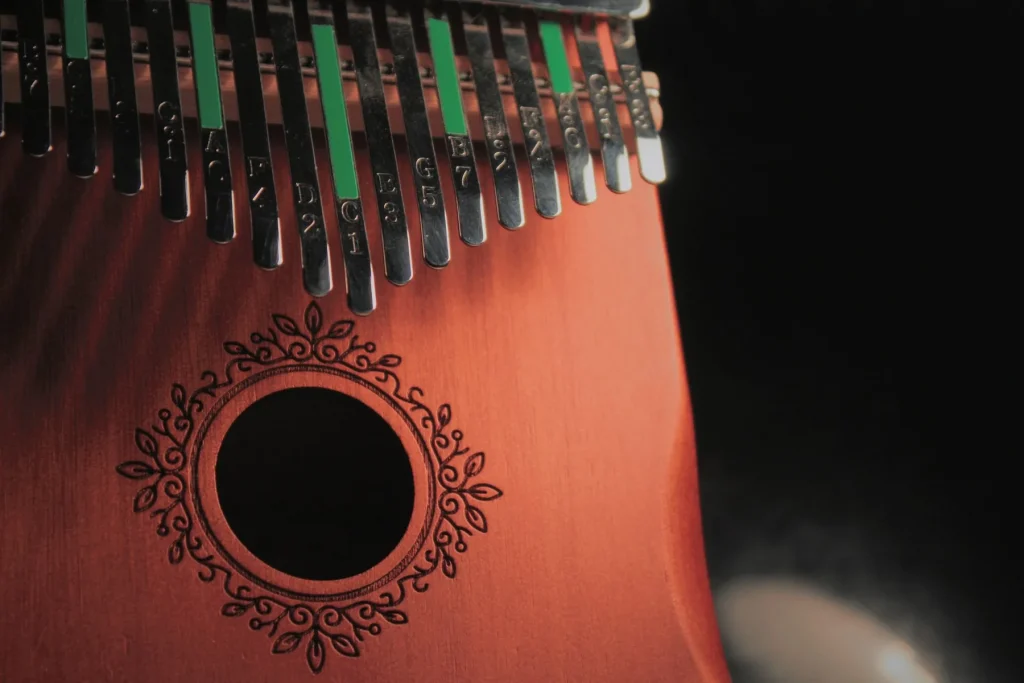
The kalimba, also known as the thumb piano, is a musical instrument originating in Africa that has won the hearts of millions of people around the world. Thanks to its compact size and gentle melodies, this instrument is not only easy to learn and play, but also proves highly beneficial for older adults. In this article, we will explore the benefits of the kalimba for seniors and how it can help improve their quality of life.
Sommaire
A reminder of what the kalimba is and how it works
The kalimba is a traditional African musical instrument made up of a wooden or resin body fitted with metal tines of different lengths. Each tine produces a distinct note when plucked with the thumbs. The variety of notes and ease of use make the kalimba an excellent means of musical expression for all ages, including older adults and seniors.
How do you choose a kalimba suited to older adults?
For seniors, it is recommended to choose a kalimba with a limited number of tines, generally between 8 and 17, to make it easier to handle and coordinate. In addition, choose a model with thick, well-spaced tines to avoid difficulties related to dexterity. Finally, favor a kalimba with an ergonomic, lightweight body, allowing easy and comfortable handling.
The cognitive benefits of the kalimba for older adults
Playing the kalimba offers many cognitive benefits for older adults. First, learning this instrument stimulates their intellectual abilities and strengthens their concentration. With regular practice, seniors develop their memory by remembering melodies and associating each note with a specific tine. In addition, the music produced by the kalimba promotes relaxation and emotional well-being, which helps reduce the stress and anxiety often experienced by older adults.
Language stimulation through the kalimba
One of the notable benefits of playing the kalimba among older adults is language stimulation. Playing this instrument requires a certain coordination between the hands and fingers, and this synchronization has a positive impact on neural connections. This stimulation can therefore help seniors with language disorders or difficulties articulating certain words.
The kalimba: a driver of social and intergenerational connection
Playing the kalimba is not limited to cognitive and emotional benefits alone; it is also a genuine driver of social connection for older adults. The accessibility of this instrument allows everyone, whatever their musical level, to take part in workshops or group sharing sessions. In addition, the kalimba lends itself to interaction and intergenerational exchange, thereby encouraging the transmission of know-how and musical traditions between different generations.
Kalimba workshops: an activity that brings people together
Kalimba workshops organized in retirement homes, leisure centers, or community associations are an excellent opportunity for older adults to come together around a shared passion. These workshops not only encourage the learning of new skills, but also the development of friendly and supportive relationships between participants. In addition, these special moments can be an opportunity to create or strengthen bonds with loved ones, who are often invited to attend rehearsals and performances.
In summary
The kalimba is a multifaceted musical instrument that offers many advantages for older adults. Easy to learn and play, it contributes to seniors’ cognitive and emotional development while providing a wonderful medium for language stimulation. Moreover, practicing this instrument in a group encourages social and intergenerational interaction, allowing older adults to enjoy enriching and fulfilling experiences.
Do you really know how a kalimba works? To be sure, read our article on the origins and workings of the thumb piano. You will then be able to fully understand how the kalimba produces sound.