
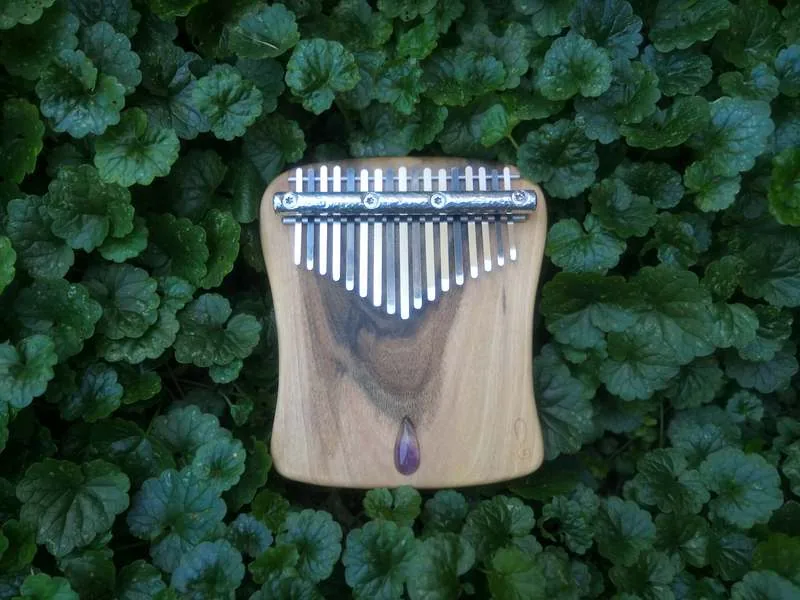
The kalimba, also known as the thumb piano, is a unique and captivating musical instrument. But where exactly does it come from? In this article, we will explore the origin of the kalimba and its evolution over the centuries.
Sommaire
The African roots of the kalimba
Located at the heart of Africa, the kalimba has its origins in a rich musical history that stretches back thousands of years. In fact, the presence of instruments similar to the kalimba can be traced as far back as 3000 years before our era. These instruments belonged to the family of lamellophones, characterized by metal or wooden tines fixed to a resonating body.
The first lamellophones
These ancestors of the kalimba were generally made from a wooden board to which tines were attached and plucked to produce sounds. The tines were often made from bone, bamboo, or metals such as copper or iron. Several African cultures developed their own variants of these instruments, such as the likembe, mbira, sanza, and karimba.
The cultural role of lamellophones
Over the centuries, lamellophones have held an important place in the lives of various African cultures. They were used to accompany songs, dances, and religious ceremonies. Some instruments, such as the mbira of the Shona people in Zimbabwe, were even considered sacred and were used to communicate with ancestral spirits.
The evolution of the kalimba toward its modern form
The kalimba we know today is the result of several centuries of evolution and adaptation of African lamellophones. Here are a few key stages that marked this transformation:
- European colonization: During the 19th century, European colonists discovered African lamellophones and began importing them into Europe. This led to a wider spread of these instruments across the continent, as well as cultural and musical exchanges between the two regions.
- Technical innovations: Over time, musicians and instrument makers sought to improve lamellophones by changing their design and materials. The shift to metal tines became widespread, providing a better tone and greater durability. The resonating body also became more sophisticated, with the introduction of cavities and cutouts to strengthen low frequencies.
- Standardization: In the early 20th century, a more standardized form of kalimba emerged, with a fixed number of tines and a preset tuning. This standardization made the instrument more accessible and easier to play for musicians around the world.
The role of Western instruments in the evolution of the kalimba
The encounter between African and Western cultures also played a decisive role in transforming lamellophones into modern kalimbas. Keyboard instruments, such as the piano and organ, influenced the design and layout of the kalimba’s tines, giving rise to a broader and more varied range of notes.
The kalimba today: a globalized and beloved instrument
Today, the kalimba is a popular and beloved instrument around the world, valued both for its unique sound and for its ease of use. It has become a symbol of African musical history, as well as a bridge toward other cultures and musical styles.
The different shapes and sizes of kalimbas
The modern kalimba comes in several shapes and sizes, ranging from small 7-tine models to larger, professional versions with 17 or 21 tines. Some kalimbas are even electric, allowing them to be connected to amplifiers or effects to explore new sonic possibilities.
The importance of the kalimba in today’s music
The kalimba has found its place in different musical genres, from traditional African music and world music to jazz, pop, and electronic music. Many contemporary artists and composers incorporate this instrument into their sound palette, helping to preserve and enrich the kalimba’s musical heritage.
Learning and playing the kalimba
Thanks to its simplicity and ease of use, the kalimba is an ideal instrument for beginners who want to get started with music. In addition, there are many educational resources and online tutorials that make it possible to learn to play the kalimba quickly and effectively, whatever your level.
In short, the history of the kalimba reflects Africa’s cultural and musical richness, as well as the intercultural exchanges that have shaped our world over the centuries. This unique instrument continues to captivate music lovers, offering the chance to discover and explore a fascinating sound.
Did you know that the kalimba can be a remarkable ally in helping improve quality of life for older adults? Discover this aspect of the musical instrument right here. You will be surprised by all the benefits seniors can get from the kalimba.