
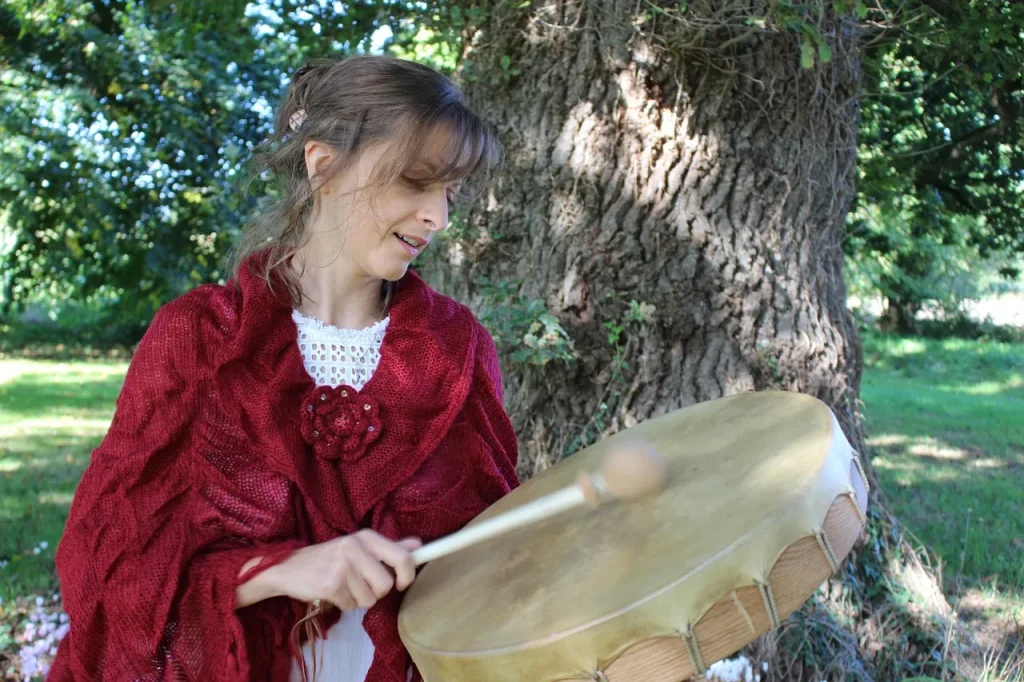
Many people discover a round, melodic object and wonder whether it is a distinct model.
In this article, we clarify the names: steel tongue drum, tank, hank, or zen drum. The goal is simple: to explain whether these names refer to different instruments or only to material-based variants.
A tongue drum remains a melodic percussion instrument with cut tongues that produce clear notes. The term “steel tongue drum” often specifies that the object is made of steel, without necessarily changing its playing principle.
I will then present concrete comparison criteria: sound, resonance, volume, number of notes, construction, price, and maintenance. This analysis is meant to help you choose according to your use case (meditation, yoga, music therapy, performance) and your budget.
For a complete guide and technical details, see this dedicated resource: everything you need to know about the tongue drum.
Sommaire
Steel tongue drum, tongue drum, tank drum, hank drum: are we talking about the same instrument?
On the market, several names often refer to the same family of instruments. The name used often depends on context, history, and marketing.
Origins and emergence of the terms
In 2007, Dennis Havlena published a prototype called the “Propane Tank Drum,” made from a gas cylinder. The word tank comes directly from that container transformed into an instrument.
Why the word “tongue” became standard
The term “tongue” describes the tongue-shaped cuts that produce the notes. When you see these tongues, it is the same principle, whatever the commercial name.
Hank drum: contraction and confusion
On some forums, the name “hank drum” arose as a contraction of handpan and tank. It popularized the name without changing the structure.
Names in France and a common mistake
In France, you may see “tambour zen,” “zen drum,” or “tambour à langues.” Brands often invent names to make the instrument easier to sell.
If you see cut tongues, you are in the tongue drum family, whatever the commercial label.
| Term | Origin | Visual clue |
|---|---|---|
| tank drum | 2007 prototype (gas cylinder) | Round surface, blade-like cuts |
| hank drum | Handpan + tank contraction (forum) | Like the tank, with the same cuts |
| zen drum | Marketing name in France | Often sold for meditation |
Steel tongue drum vs classic tongue drum: what is the difference?
Specifying the material clarifies the real scope of the commercial name. Often, adding the word “steel” simply means that the instrument is made of steel, without changing how it works.
The role of steel: when “steel” simply specifies the material
Steel offers greater projection and a brighter attack. The sound feels more percussive and carries better outdoors.
“Classic” tongue drum: steel, wood, or everyday use of the term
In everyday language, the term “tongue drum” refers to all models, whether metal or wooden. The materials can differ and influence the sound color.
What does not change: the tongue principle and cut notes
The principle remains identical: cut and tuned tongues produce the notes. Depending on the number of notes and the scale, the instrument can guide a beginner or give a composer more freedom.
The real major difference is not between metal and “classic”: it is mainly between this instrument and the handpan, in structure, playing style, and price.
Tongue drum vs handpan (Hang drum): two instruments, two philosophies
Two instrument families share a round silhouette, but pursue very different sound approaches.
Origins and development
The handpan was born within PANArt in 1999, thanks to Felix Rohner and Sabina Schärer. This Swiss invention launched the handpan lineage.
The second model appeared later through Dennis Havlena, who proposed a DIY and more accessible version. These paths explain why people sometimes describe them as two related but distinct instruments.
Structural difference
The handpan is based on precisely hammered and tuned dimples. Each hollow responds like a refined note.
The other family uses cut tongues; the mechanics are simpler. Visually, the shape can be misleading, but the construction is different.
Playing style and philosophy
On a handpan, the angle and flexibility of the hand strongly affect dynamics and expressiveness. Handpans offer harmonic richness sought after by musicians.
The tongue version favors robustness and accessibility. In short: two philosophies, two paths for producing sounds and exploring musicality.
Sound and resonance: how to distinguish the sounds in just a few notes
By playing three notes, you immediately perceive the sound texture. An ear test often lets you classify the instrument: low and muted, or clear and rich.
Steel tongue drum: low, soft, more “muted” sound
The tongue model offers sounds that are generally lower and softer. The attack remains less defined; the timbre feels slightly hazy.
The resonance shows moderate sustain and enough stability for relaxation.
Handpan: clearer, richer, more enveloping sound
The handpan offers a clearer timbre rich in harmonics. The note fills the space and creates an enveloping feeling.
Its resonance is often longer and more complex, ideal for composition and solo playing.
Wood vs steel: natural warmth or metallic brightness
Wood brings organic warmth. Steel produces greater brightness and presence.
Choose according to the use: meditation favors a muted sound; for expressive music, prefer a richer timbre. To compare, listen to excerpts recorded with a neutral microphone and without reverb.
- Tip: test clean recordings and listen for sustain and attack definition.
- To learn more, see our complete guide.
Notes, scales, and musical variety: what you can really play
The choice of scale directly shapes the melodic palette available to you.
On compact models, you generally find 6 to 9 notes. This setup favors simplicity.
With few notes, it is easy to improvise without theory. Implied chords and rhythmic patterns quickly sound good.
Handpan and sound fields
The handpan generally offers 7 to 10 main notes. Some models provide an extended field of up to 21 sound zones.
This surplus allows more expressiveness and finer modulations for advanced musicians.
Diatonic vs chromatic
Many instruments are diatonic. This limits some modulations, but helps beginners avoid wrong notes.
Educational advantage: fewer notes = more landmarks and more immediate enjoyment.
| Type | Typical number of notes | Main advantage |
|---|---|---|
| Tongue instrument (6-9) | 6–9 | Simplicity, fast learning |
| Handpan (7-10 + fields) | 7–10 (up to 21 zones) | Expressiveness, harmonic palette |
| Scale | Diatonic / Chromatic | Security for beginners / freedom for pros |
To choose, favor a scale according to the emotion you want (melancholic, bright, meditative). To explore the options, see our page on scale and key.
Volume and projection: discreet instrument or stage-ready?
Projection capacity often determines the choice according to the intended use. For outdoor playing or performing for an audience, projection matters as much as timbre.
Why the handpan carries farther
The handpan benefits from a larger body and joined shells that amplify resonance. Its design favors greater reach and clarity, useful indoors or outdoors.

When a steel tongue drum can be enough (or be amplified)
Tongue models often remain more discreet. They are perfect for an apartment, meditation, or daily practice without disturbing others.
However, some models can be fitted with a jack or microphone for the stage. Amplification compensates for projection and makes it possible to play with other instruments.
Do not confuse “louder” with “better”: the right choice depends on your use.
| Context | Advantage | Recommendation |
|---|---|---|
| Meditation / solo practice | Discretion | Tongue instrument |
| Stage / outdoors | Projection | handpan or amplification |
| Recording | Control | Plan for a microphone or pickup |
Construction and materials: thick steel, nitrided steel, stainless steel, solid wood
Sound quality often begins with the choice of materials and the care put into construction. For metal instruments, the tongues are cut from a plate or shell: the thickness of the steel determines robustness and note stability.
Cuts, thickness, and robustness
On tongue models, the cuts must be clean and the edges polished. A thicker steel plate gives better tuning stability and resists impacts more effectively.
Two shells and hand craftsmanship
Handpans are made from two joined shells. The hammered zones are tuned through fine adjustment.
This process requires time and expert technique to guarantee accuracy and durability.
Solid wood: species and sound identity
Wooden models often use bamboo, maple, or other species. Tongue size influences response and sound identity.
Industrial vs handmade
Mass production reduces cost, but can affect quality and note consistency. Handmade work prioritizes timbre and tuning precision.
Check tuning stability, note consistency, cut finish, and anti-corrosion protection.
To explore the technical vocabulary further, see this specialized dictionary.
Price and value: what to expect by instrument type
Understanding what an instrument really costs helps refine your choice. The price often reflects labor, tuning, and rarity.
Price ranges observed in France
Handpans generally range from €999.90 to €2,999. This is the range where specialized labor weighs heavily.
Tongue models range from about €22.90 to €499 in the entry and mid-range segments. Large metal versions or better-tuned models can go higher.
Wood vs metal: differences by size and construction
A handmade wooden instrument can cost from €290 to €1,490 depending on the species and size. Metal offers very affordable options in industrial production.
Why the price gap exists
Tuning complexity, workshop time, and consistency explain the major differences. Fine tuning increases quality and immediate enjoyment.
Tip: define an “all-in” budget (instrument, case, mallets, maintenance) before comparing.
Playing and learning: hands, mallets, technique, and getting started
The gesture and the tool deeply change how you play and learn.
Steel model: precision with mallets, feeling with the hand
On the steel tongue drum, mallets bring precision and consistency. They even out the volume between notes and make the attack easier.
Playing by hand gives more physical feedback. Contact reveals the vibrations and makes inner listening richer. You need to adjust the strike to avoid muffled sounds.
Handpan: hand playing and subtle nuances
The handpan is played exclusively with the hands. Touch, rebound, and strike zone modulate dynamics.
This technique takes time, but offers great expressiveness. It is not just “tapping”; nuance preserves the timbre.
Beginner landmarks: numbering, patterns, and progression
Many tongue instruments are numbered to guide beginners. Start with simple patterns and alternate right hand and left hand.
- Short exercise: 5 minutes a day on 2 patterns.
- Use mallets to work on precision, then switch to hands for feeling.
- Vary tempo and accents to develop musicality.
“For quick relaxation, the instrument + mallets combo is very accessible; for the stage, prioritize hand-training.”
To go further with practice and usage tips, see our vibration tips.
Maintenance, durability, and everyday use: which instrument for which context?
Practical durability should weigh as much as sound color in your choice. Transport, frequent sessions, and storage all affect longevity.
Tongue model: solid and easy to adjust
Thick steel versions resist everyday knocks and mistakes well. They handle transport and regular use better.
Practical point: in case of slight detuning, an adjustment can be attempted with a magnet, which may avoid a visit to a repairer.
Handpan sensitivity: care and specialist intervention
The handpan remains more fragile: an impact or prolonged heat can detune a note. Retuning often requires expert intervention.
In short: less autonomy, more precautions.
Common uses and recommendations
- Meditation, yoga, music therapy: the tongue model is often preferred for its simplicity and stability.
- Musical performance: the handpan may be preferable for its projection and expressiveness, if you accept the maintenance.
Choose according to your real context: home, studio, or outdoors; the time you can devote to maintenance will guide your decision.
For a detailed comparison between the two families, see this steel vs handpan comparison.
Conclusion
Here is the practical summary for choosing the instrument suited to your needs.
The term “steel tongue drum” and the common name often refer to the same family: tongue instruments (tank, hank, zen drum). These synonyms are mostly marketing; the material mainly specifies the sound color and resonance.
Compared with the handpan, the differences between the two families involve structure (cut tongues vs hammered dimples), harmonic richness, number of notes, maintenance needs, and price.
To choose: consider the price, desired volume, musical goal (simplicity vs expressiveness), and maintenance time. If you want an accessible, robust entry point, choose a tongue instrument; for a richer palette, move upmarket toward the handpan.
Listen to demos, compare scales and notes, and test the model that truly serves your practice. For a wood vs metal guide, see choosing wood vs metal.