
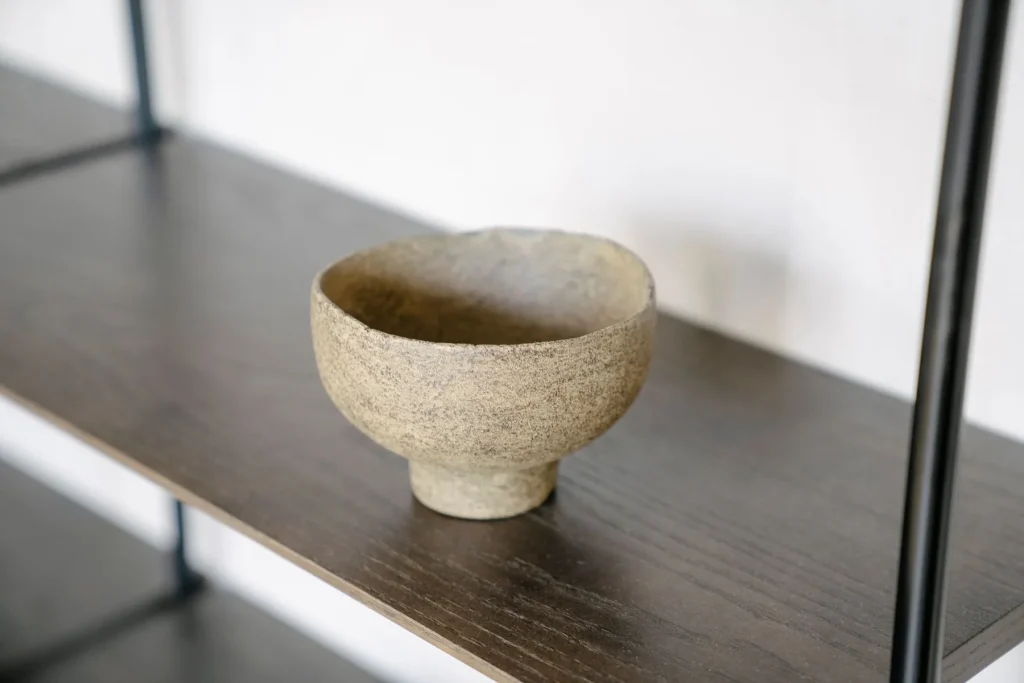
Singing bowls are ancient instruments used for their soothing properties. Their harmonious sound relies on two main techniques: rubbing and striking. With a little practice, these methods produce deep, relaxing vibrations.
Mastering posture and movement is essential for the best result. The right pressure and a steady rhythm release sound waves that support meditation. These sounds act on the body and mind, encouraging relaxation and concentration.
Whether you want to reduce stress or explore sound meditation, this article will guide you step by step. Also enjoy our exclusive offer with the code BLOG10 when purchasing an artisanal model.
Sommaire
Understanding the Tibetan singing bowl and how it works
The secret behind harmonious sounds lies in the physics of stick-slip. This phenomenon, studied by researchers Inácio and Antunes, occurs when the mallet rubs against the bowl’s rim. Friction creates vibrations that turn into sound waves.
Traditionally, these musical instruments are made from an alloy of seven metals: copper, tin, iron, silver, gold, mercury and lead. Each metal influences resonance and produces unique tones.
Nearly 80% of the vibrations are concentrated on the bowl’s rim. This area acts as a natural amplifier, comparable to the strings of a violin.
“The beating effect is essential for producing rich, lasting sounds.”
The quality of the materials is crucial. An artisanal Tibetan singing bowl, like those shown here, provides better resonance than an industrial model.
Note the difference between “making it sing” (continuous rubbing) and “making it ring” (a sharp strike). The first method generates prolonged sounds, ideal for meditation.
Finally, room temperature (20 to 25°C) optimizes performance. Cold reduces the metal’s flexibility, slightly altering the tones.
How to make a Tibetan singing bowl sing effortlessly: the rubbing method
Learn how to release its sonic power with a suitable mallet. This rubbing method relies on a fluid movement and controlled pressure to produce deep vibrations.

Step 1: give the bowl an initial impulse
Start with a light strike using the mallet on the outer rim. This “starting tap” activates the first vibrations. Keep a 45° angle to avoid scraping sounds.
Step 2: rub the outer rim steadily
Apply a continuous circular motion. Your shoulders and elbows should stay relaxed for optimal range of movement. The speed should be constant, neither too fast nor too slow.
Step 3: maintain the movement with your arm
Use your whole arm, not only your wrist. A position at heart height (20 to 30 cm from the body) supports endurance and sound quality.
| Mallet angle | Sound effect | Recommended duration |
|---|---|---|
| 30° | Soft but limited sound | 30 seconds |
| 45° (ideal) | Rich vibrations | 1 to 2 minutes |
| 60° | Risk of saturation | Avoid |
With 2 to 3 weeks of practice, this rubbing method will become natural. Clean your bowl regularly to preserve the purity of its sounds.
The striking method for instant sound
The percussion technique offers a quick alternative for generating deep vibrations. Unlike rubbing, it produces clear sounds in a single movement, perfect for beginning a relaxation session.
How to strike the bowl to get a harmonious sound
Use a wooden or suede-covered mallet, depending on the effect you want. The movement should swing naturally, avoiding any abrupt angle. Pressure of 300 to 500 grams is enough to activate the resonance.
- Position the mallet 5 cm from the rim to obtain a balanced sound.
- Keep your wrist flexible to create a natural rebound.
- The resonance lasts from 15 seconds to 1 minute.
When to use this technique
Ideal at the beginning of a meditation or yoga session, this method immediately creates a suitable atmosphere. Four-strike rhythms are recommended for dispersing energy.
“The instant sound acts as a signal to calm the mind before practice.”
Choose larger models for lower tones, which are better suited to deep relaxation.
Tips for optimizing your bowl’s sound
Refining your instrument’s sound quality requires a few precise adjustments. Suitable pressure and a careful choice of rubbing zones transform the acoustic experience.

Vary the speed and pressure of the mallet
Experiment with the speed of the circular movement. A moderate pace (1 rotation per second) encourages stable harmonics. To obtain deep lows, increase the pressure slightly.
Manually warming the bowl extends resonance by 30%. Rub it gently with your hands before starting.
Choose the right rubbing area
Focus on the upper third of the rim to obtain a clear sound. Smooth surfaces, like those on artisanal bowls, reduce squeaking.
- Isolate high harmonics with the wooden part of the mallet.
- Partially dampen low tones by lightly touching the bottom with your palm.
Avoid the saturation point
Detect the saturation point through the vibrations you feel in your fingers. If the sound becomes metallic, reduce the speed or the contact surface.
For advanced techniques, let the natural weight of the mallet guide the pressure. This prevents jerky movements.
How to hold your Tibetan singing bowl correctly
Holding your instrument correctly amplifies its sound waves. The position of your fingers and hand determines the clarity of the vibrations. Here are the techniques to master.
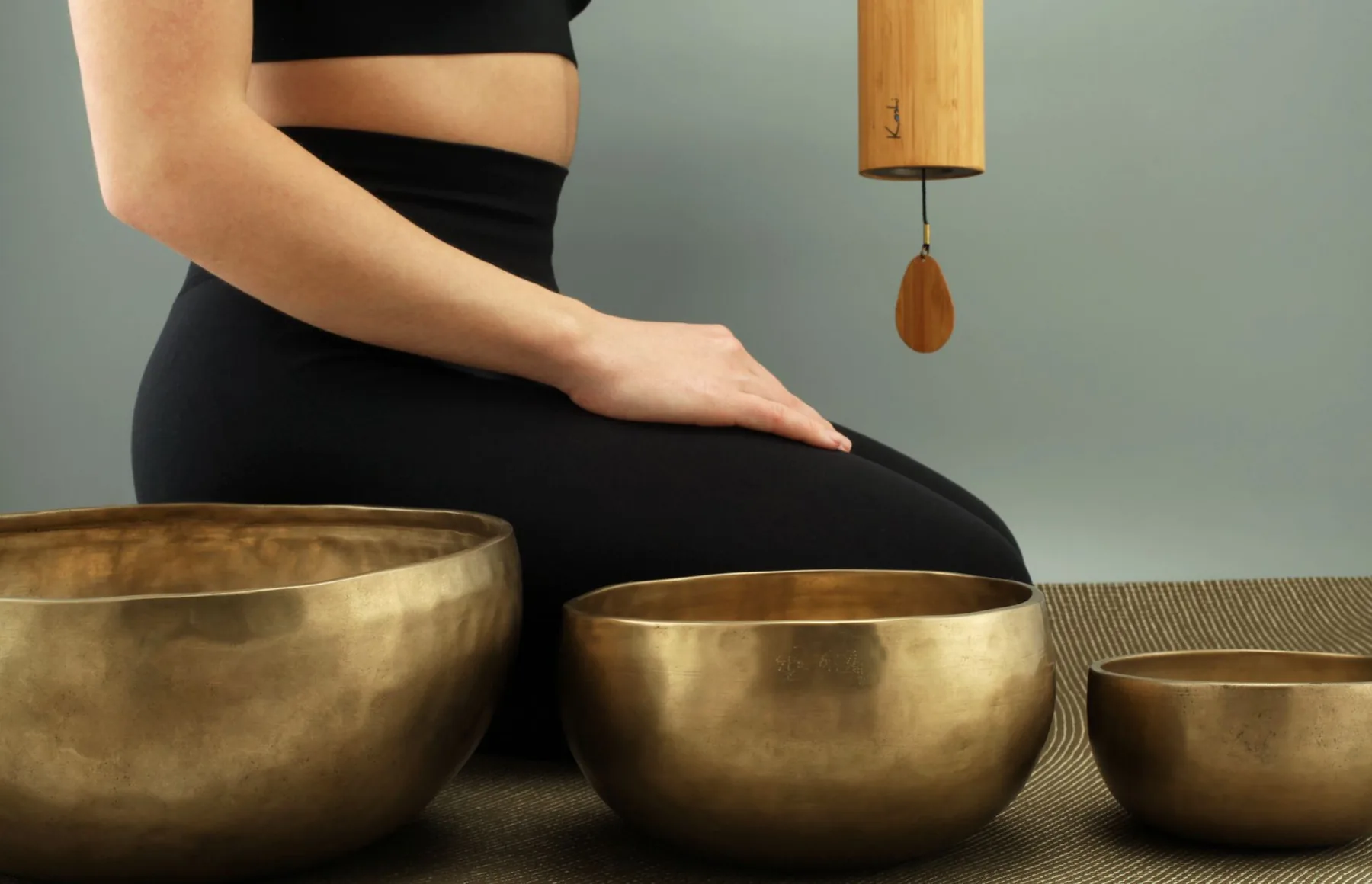
- Cupped hold: open palm, fingers spread to balance the weight.
- Fingertips: ideal for light bowls, allowing sound to spread evenly.
For heavy models (over 1 kg), anchor the bowl against a silicone cushion. This stabilizes the instrument without muffling low frequencies.
“Too much pressure alters the purity of the harmonics. Let the bowl breathe.”
Avoid these mistakes:
- Gripping the sides too tightly.
- Placing it directly on a hard surface (use a flat cushion).
- Keeping the wrist rigid during movements.
For longer sessions, align your shoulder, elbow and wrist. See this complete guide to explore the techniques in greater depth.
Common mistakes to avoid with a singing bowl
To preserve the life of your instrument, avoid these common mistakes. Poor practice can irreversibly damage its acoustic properties.
- Neglecting cleaning (residue alters vibrations).
- Using the wrong mallet angle (90% of sound problems).
- Overuse (metal fatigue).
- Uncontrolled reverse circular movements.
- Exposure to extreme temperatures.
“A maximum of three weekly sessions is enough to preserve the integrity of the metal.”
| Problem | Symptom | Solution |
|---|---|---|
| “Silent” bowl | Weak resonance | Energetic recharge in sunlight |
| Surface defects | Squeaking | Diagnosis with a wooden stick |
| Overuse | Metallic sound | 48-hour rest |
In some cases, a simple posture adjustment solves the difficulty. Test different positions to find the one that optimizes your experience.
To detect imperfections:
- Rub gently with a wooden mallet.
- Listen for variations in tone.
- Identify areas with irregular vibrations.
Regular care extends your instrument’s lifespan. Avoid harsh chemicals that alter its natural harmonics.
Conclusion
Mastering this ancestral art requires patience and technique. When well executed, rubbing and striking methods release soothing vibrations.
With regular practice, you will develop harmony between movement and sound. The benefits, such as stress reduction, strengthen over time.
Share your experience and discover our artisanal bowls. Enjoy 10% off with the code ANNIVERSAIRE to begin your sound journey.
FAQ
How does a Tibetan singing bowl work?
What is the best technique for beginners?
How can you avoid unpleasant squeaking?
Can you use your fingers instead of a mallet?
Why won’t my bowl sing?
What size bowl should you choose for a deep sound?
How should you care for a Tibetan singing bowl?
Source Links
- https://en.wikipedia.org/wiki/Standing_bell
- https://instruments-du-monde.com/en-us/blogs/tibetan-singing-bowl/how-to-use-a-tibetan-singing-bowl-techniques-instructions
- https://www.healthline.com/health/sound-healing
- https://instruments-du-monde.com/en-us/blogs/tibetan-singing-bowl/how-does-a-tibetan-singing-bowl-work
- https://instruments-du-monde.com/en-us/blogs/tibetan-singing-bowl/everything-you-need-to-know-about-tibetan-singing-bowls
- https://www.verywellmind.com/tibetan-singing-bowls-for-healing-89828
- https://instruments-du-monde.com/en-us/blogs/tibetan-singing-bowl/how-to-use-a-tibetan-singing-bowl-techniques-instructions
- https://pmc.ncbi.nlm.nih.gov/articles/PMC5871151/
- https://instruments-du-monde.com/en-us/blogs/tibetan-singing-bowl/tibetan-singing-bowl-sound-therapy
- https://www.masterclass.com/articles/singing-bowl-guide
- https://www.nccih.nih.gov/health/music-and-health-what-you-need-to-know
- https://www.mindbodygreen.com/articles/sound-healing
- https://instruments-du-monde.com/en-us/blogs/tibetan-singing-bowl/how-to-use-a-tibetan-singing-bowl-techniques-instructions
- https://instruments-du-monde.com/en-us/blogs/tibetan-singing-bowl/how-to-use-a-tibetan-singing-bowl-techniques-instructions
- https://en.wikipedia.org/wiki/Standing_bell
- https://en.wikipedia.org/wiki/Standing_bell
- https://www.britannica.com/art/bell-musical-instrument
- https://www.learnreligions.com/tibetan-singing-bowls-449830
- https://en.wikipedia.org/wiki/Standing_bell