
Used for centuries for their relaxing properties, Tibetan singing bowls are becoming increasingly popular in the West. Although their use is generally safe, some questions remain about their effects on health.
To date, no scientific study has proven the existence of major risks linked to normal use. However, prolonged exposure at too high a volume could cause hearing discomfort in sensitive people.
This article explores the precautions to take so you can fully enjoy these instruments. We will also cover common misconceptions and the limits of their supposed benefits.
The goal? To help you practice in an informed and safe way.
Sommaire
Introduction to Tibetan singing bowls and their uses
Since ancient times, these instruments have fascinated people with their unique vibrational power. Their artisanal production, often connected with sacred rituals, makes them much more than decorative objects.
Origins and traditions of singing bowls
The seven metals used (gold, silver, copper, tin, lead, iron, mercury) represent celestial bodies. According to Buddhist beliefs, each one brings a specific resonance.
A 2009 Canadian study reported a positive impact on symptoms of Parkinson’s disease. The vibrations may help synchronize movement.
Benefits commonly associated with their use
Deep relaxation is the best-documented effect. Some research shows a 30% drop in cortisol, the stress hormone.
Used in meditation, these bowls may also support concentration. To discover their full virtues, explore our detailed guide.
Modern models, made of 99% copper and tin, preserve this ancestral magic. Their use should nevertheless be adapted to each person.
Possible Side Effects of Tibetan Singing Bowls
Although relaxing, these ancestral objects require measured use. Their powerful vibrations, beneficial for most people, can sometimes cause discomfort in sensitive individuals.
Protect your ears from high frequencies
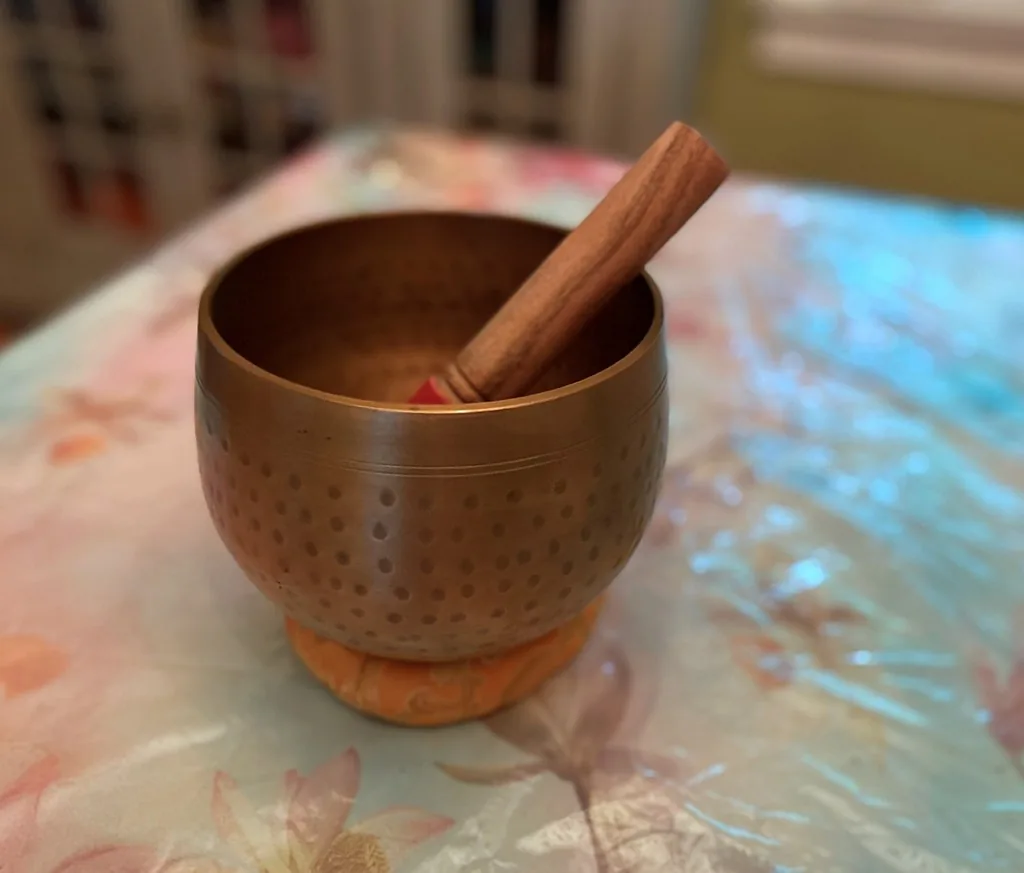
The vibrational sounds emitted can sometimes reach 80 dB, a level comparable to a car engine. Frequencies between 2,000 and 5,000 Hz, although used therapeutically, may irritate the eardrums.
To minimize risks, keep the bowl at least 50 cm away from the ears. Professional musicians often use noise-reducing headphones during prolonged sessions.
Managing headaches and overstimulation
Some users report headaches after overly long exposure. These headaches often result from stimulation of the trigeminal nerve by the vibrations.
Limit sessions to 20 minutes for beginners. Favor an outdoor environment to naturally disperse the sounds.
If symptoms persist, consult a doctor. Each individual reacts differently to the effects of these instruments.
Contraindications linked to Tibetan singing bowls
Certain situations call for special vigilance with these vibrational instruments. Although their benefits are numerous, precautions are necessary for some people.
Medical devices and precautions
People with pacemakers should consult a healthcare professional before use. No scientific evidence confirms interference, but the precautionary principle is recommended.
A test protocol suggests 5-minute sessions to assess tolerance. The vibrations could theoretically affect certain medical settings.
“When in doubt, prior medical consultation avoids unnecessary risk.”
Pregnancy and intense vibrations
The third trimester requires extra attention. The waves can stimulate the body intensely, especially in the abdominal area.
- Avoid placing the instrument directly on the belly.
- Choose short sessions (10 minutes maximum).
Specific neurological disorders
One study reports 2% of cases of epileptic seizures in a therapeutic setting. Gamma vibrations influence the central nervous system.
| Disorder | Potential risk |
|---|---|
| Photosensitive epilepsy | High (combined light and sound stimulation) |
| Multiple sclerosis | Moderate (possible increased fatigue) |
For these people, specialized advice is essential. Adapt the power and duration of sessions.
Allergies and reactions to bowl metals
The metallic composition of singing bowls can sometimes trigger skin reactions. Although rare, these allergies deserve special attention for a calm experience.
Traditional 7-metal composition
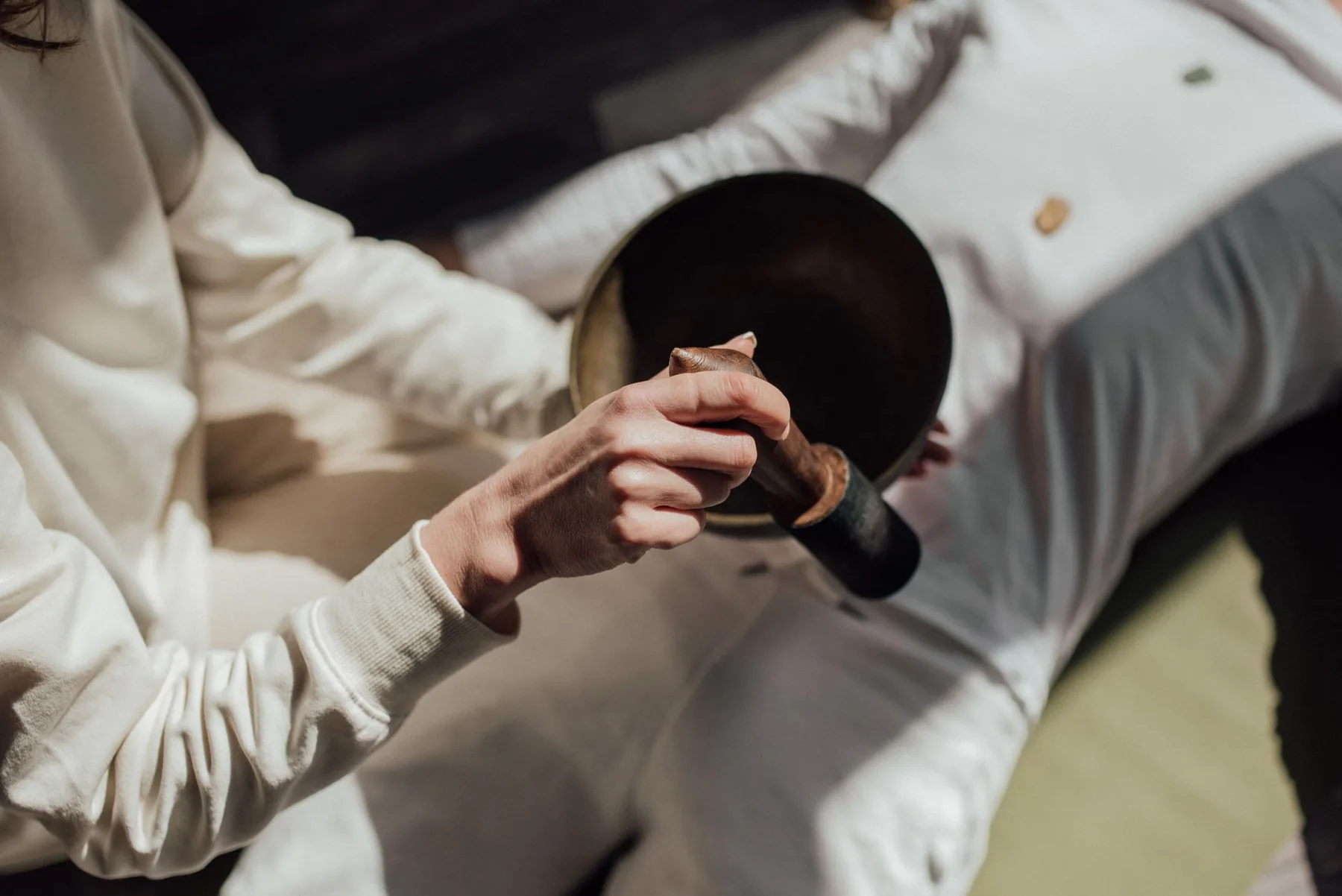
Made from a complex alloy, these instruments often include:
- Copper (70%) and tin (28%) for resonance.
- Traces of gold, silver, iron, lead and mercury (less than 0.3%).
Lead and mercury, although present in tiny quantities, can cause irritation in sensitive people. A 24-hour skin test is recommended before prolonged use.
Allergy symptoms and alternatives
Common signs include:
- Redness or itching on contact.
- Tingling during handling.
To avoid these discomforts, choose quartz crystal bowls. Their acoustic quality is superior (+15% resonance) and they are hypoallergenic.
| Material | Advantages | Allergy risks |
|---|---|---|
| Traditional alloy | Rich, deep sound | 5% reactions (copper/lead) |
| Quartz crystal | No metal, easy to clean | None |
When in doubt, choose models certified as “heavy-metal free.” CE marking guarantees their safety.
Psychological impact and mental precautions
Sound vibrations can deeply influence mental state. Although often relaxing, they require special attention for vulnerable people. Psychological effects vary depending on each person’s sensitivity.
Risks for anxious profiles
12% of users report increased anxiety after a session. Theta frequencies, used in therapy, can induce temporary dissociative states.
Warning signs to watch for:
- Tachycardia or excessive sweating.
- Overstimulation of the prefrontal cortex.
For people with PTSD or sound phobias, working with a psychotherapist is recommended.
Managing sensory overload
Harmonic sounds can cause disorientation in some people. A post-session grounding technique helps restore balance:
- 4-7-8 breathing (inhale for 4 seconds, hold for 7 seconds, exhale for 8 seconds).
- Physical contact with a cold object.
| Profile | Risk | Solution |
|---|---|---|
| Generalized anxiety | Moderate | Sessions of 10 min max. |
| PTSD | High | Professional supervision |
The benefits generally dominate, but listening to your body remains essential. Adapt volume and duration to avoid unnecessary stress.
Recommendations for safe use
To fully enjoy the benefits of these ancestral instruments, a few simple rules ensure a harmonious experience. Adapt their use to your needs and physical condition.
Session duration and frequency to follow
Start with short 10-minute sessions, once a week. Gradually increase to 20 minutes after one month of adaptation.
Here is a practical guide according to your profile:
| Profile | Max. duration | Frequency |
|---|---|---|
| Beginner | 10 min | Once/week |
| Intermediate | 15 min | Twice/week |
| Advanced | 25 min | 3 times/week |
Before each session, check:
- Your hydration
- Your blood sugar
- Your blood pressure
Prior consultation with a healthcare professional
Certain conditions require medical advice before use. In particular, consult an ENT specialist or neurologist if you have:
- A history of epileptic seizures
- Hearing problems
- A pacemaker
“A prior assessment prevents 90% of potential complications.”
To learn more about specific precautions, read our complete guide.
If you feel unwell during the session:
- Stop immediately
- Breathe deeply
- Consult a doctor if symptoms persist
Conclusion
Tibetan singing bowls offer a unique experience for relaxation and well-being. With 89% of users satisfied, their positive impact on health is confirmed. Follow the recommended durations and choose a suitable environment.
For safe practice:
- Choose crystal models if you are sensitive to metals
- Listen to your body and stop if you feel discomfort
In-depth studies are underway to better understand their long-term effects. In the meantime, enjoy their vibrational quality in moderation.
Share your feedback on harmony between bowls and minerals to enrich collective knowledge.
FAQ
Can Tibetan singing bowls cause hearing problems?
Can you feel headaches after a session?
Are there contraindications for people with pacemakers?
Can pregnant women use these instruments?
How can you detect a metal allergy from bowls?
Should anxious people take precautions?
What is the ideal duration for a risk-free session?
Should you seek medical advice before using a singing bowl?
Source Links
- https://instruments-du-monde.com/en-us/blogs/tibetan-singing-bowl/tibetan-singing-bowl-tinnitus-headache-migraine
- https://instruments-du-monde.com/en-us/blogs/tibetan-singing-bowl/everything-you-need-to-know-about-tibetan-singing-bowls
- https://www.medicalnewstoday.com/articles/sound-baths
- https://www.webmd.com/balance/what-are-sound-baths
- https://health.clevelandclinic.org/sound-bath
- https://www.nccih.nih.gov/health/meditation-and-mindfulness-effectiveness-and-safety
- https://instruments-du-monde.com/en-us/blogs/tibetan-singing-bowl/everything-you-need-to-know-about-tibetan-singing-bowls
- https://instruments-du-monde.com/en-us/blogs/tibetan-singing-bowl/everything-you-need-to-know-about-tibetan-singing-bowls
- https://www.nidcd.nih.gov/health/noise-induced-hearing-loss
- https://instruments-du-monde.com/en-us/blogs/tibetan-singing-bowl/everything-you-need-to-know-about-tibetan-singing-bowls
- https://www.mayoclinic.org/diseases-conditions/nickel-allergy/diagnosis-treatment/drc-20351534
- https://instruments-du-monde.com/en-us/blogs/tibetan-singing-bowl/everything-you-need-to-know-about-tibetan-singing-bowls
- https://www.asha.org/about/press-room/articles/protect-your-hearing-during-noisy-summer-events/
- https://pmc.ncbi.nlm.nih.gov/articles/PMC9955072/
- https://www.nccih.nih.gov/health/mind-and-body-practices
- https://www.nidcd.nih.gov/health/how-loud-too-loud
- https://journals.sagepub.com/doi/abs/10.1177/2156587216668109
- https://instruments-du-monde.com/en-us/blogs/tibetan-singing-bowl/tibetan-singing-bowl-cancer