
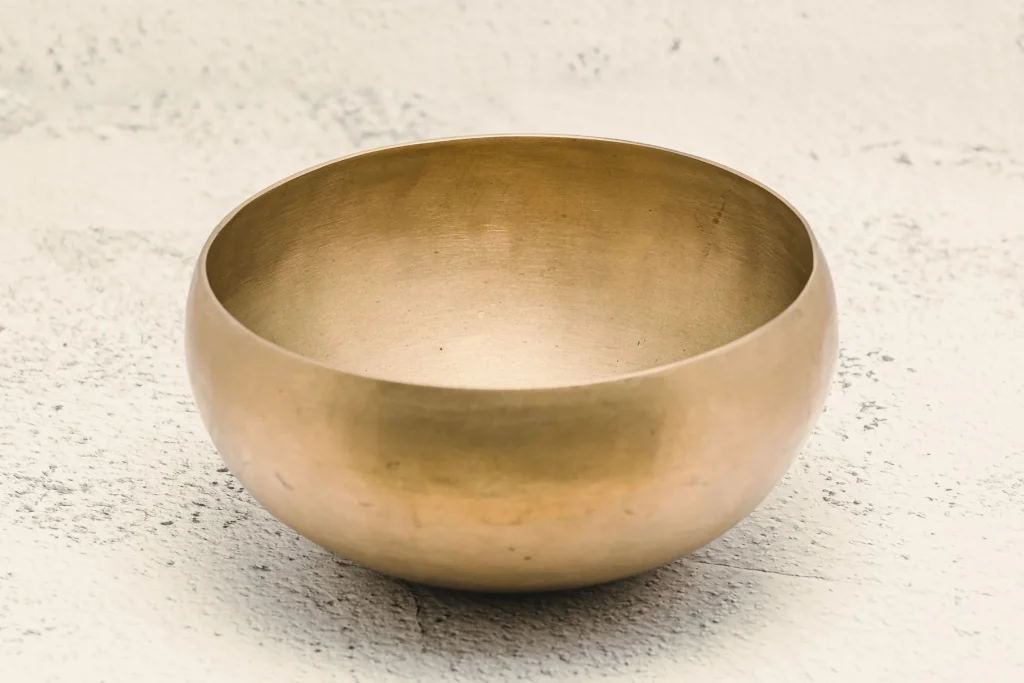
For more than ten years, I have been studying Tibetan singing bowls and their traditional manufacture. These unique objects, rich in history, are now threatened by a wave of industrial counterfeits. In fact, nearly 50% of the models available on the market are imitations.
Why is it so important to distinguish the authentic from the fake? Beyond the financial aspect, these handmade pieces play a key role in well-being and cultural preservation. Their deep tone and unique harmonics are the result of ancestral know-how.
In this article, I offer you a complete analysis grid based on nine precise criteria. We will cover the manufacturing method, metal composition, geographic origin, and even sound tests to guide you.
Ready to discover the secrets of these treasures from the Himalayas? Follow the guide.
Sommaire
Introduction: what is a genuine Tibetan singing bowl?
Step into the fascinating world of singing bowls, these sonic treasures from the Himalayan mountains. Their history dates back to the 8th century, when they were used in Buddhist monasteries for meditation and tantric rituals.
A debate still persists today: should priority be given to age (more than 50 years), the traditional manufacturing technique, or the composition of seven metals? Each criterion has its supporters.
Legitimate production areas include:
- Tibet, the original cradle
- Nepal and Bhutan, guardians of artisanal techniques
- Northern India, where the last family workshops can be found
Their spiritual origin is linked to tantric practices and Ayurvedic medicine. The bowls were often engraved with mantras when they were created.
| Metal | Symbolism | Percentage in the alloy |
|---|---|---|
| Copper | Vital energy | 70-75% |
| Tin | Mental clarity | 20-25% |
| Other metals | Chakra balance | 5% max |
After 1960, industrialization changed the situation. Many modern pieces are mass-produced with simplified alloys. Beware of “antique” bowls with artificial patina, aged with acid.
How to recognize a genuine handmade Tibetan singing bowl: the key criteria
Knowing how to identify a handmade object depends on concrete, verifiable elements. Here are the four pillars for assessing the authenticity of a piece.
Manufacturing method: the art of hammering
A traditional bowl is always hammered by hand. This technique leaves irregular marks on the surface. Molded copies, which are too smooth, reveal industrial production.
Metal composition: the sacred alloy
Genuine models use a blend of seven metals, including copper and tin. Beware of brass or steel, signs of poor quality. The alloy directly influences the vibrations.
Geographic origin: a question of terroir
Only a few regions preserve ancestral know-how:
- Tibet, the historical cradle
- Nepal, for family workshops
- Bhutan, rare but authentic
Sound and vibrations: the acoustic fingerprint
A yak-felt mallet reveals complex harmonics (5-7 frequencies). Steel imitations emit shrill sounds (110-150 Hz). The resonance should last at least 45 seconds.
To go further, consult our complete authenticity criteria.
The distinctive signs of an authentic Tibetan singing bowl
The authenticity of a singing bowl is revealed through precise details. These unique characteristics are the result of ancestral know-how and cannot be reproduced industrially.
Surface imperfections caused by hammering
A handmade object always has irregular marks. These visible striations are the signature of manual hammering. Molded copies have a surface that is too smooth.
Genuine models show:
- Asymmetrical patterns
- Slight deformations
- Variations in thickness
No fanciful engravings
Traditional pieces rarely carry complex ornaments. Only certain spiritual symbols may appear, often worn down by time.
Beware of:
- Overly modern patterns
- Excessively precise details
- Contemporary writing
The weight and thickness of the metal
A good ratio helps assess authenticity. For a 10 cm diameter, count about 1 kg. A 20 cm model should weigh close to 2 kg.
| Diameter | Ideal weight | Average thickness |
|---|---|---|
| 15 cm | 1.5 kg | 3-4 mm |
| 20 cm | 2 kg | 4-5 mm |
| 25 cm | 2.5 kg | 5-6 mm |
Watch out for counterfeits made artificially heavier. Some contain sand or lead to mislead buyers about quality. To learn more, consult our complete authentication guide.
Traps to avoid: recognizing counterfeits
The singing bowl market is full of deceptive imitations. Some look almost identical to handmade pieces, but their sound quality and durability are far inferior.
Bowls that are too smooth and perfect
A genuine bowl hammered by hand has irregularities. A surface that is too smooth is a sign of industrial molding.
Copies often show:
- Perfect symmetry
- No hammer marks
- Edges that are too regular
Poor-quality alloys
Beware of brass or steel. These cheap metals alter the vibrations. A traditional alloy always contains copper and tin.
Test the sound: counterfeits produce shrill harmonics, without depth.
Abnormally low prices
An 18 cm bowl made in Nepal costs around EUR73. Copies at EUR20 often hide major defects.
Counterfeit margins can reach 400%. Favor artisans who are transparent about their process.
Why choose a genuine handmade Tibetan singing bowl?
Himalayan artisans have passed down exceptional know-how for centuries. Each authentic piece combines history, spirituality, and unmatched acoustic quality.
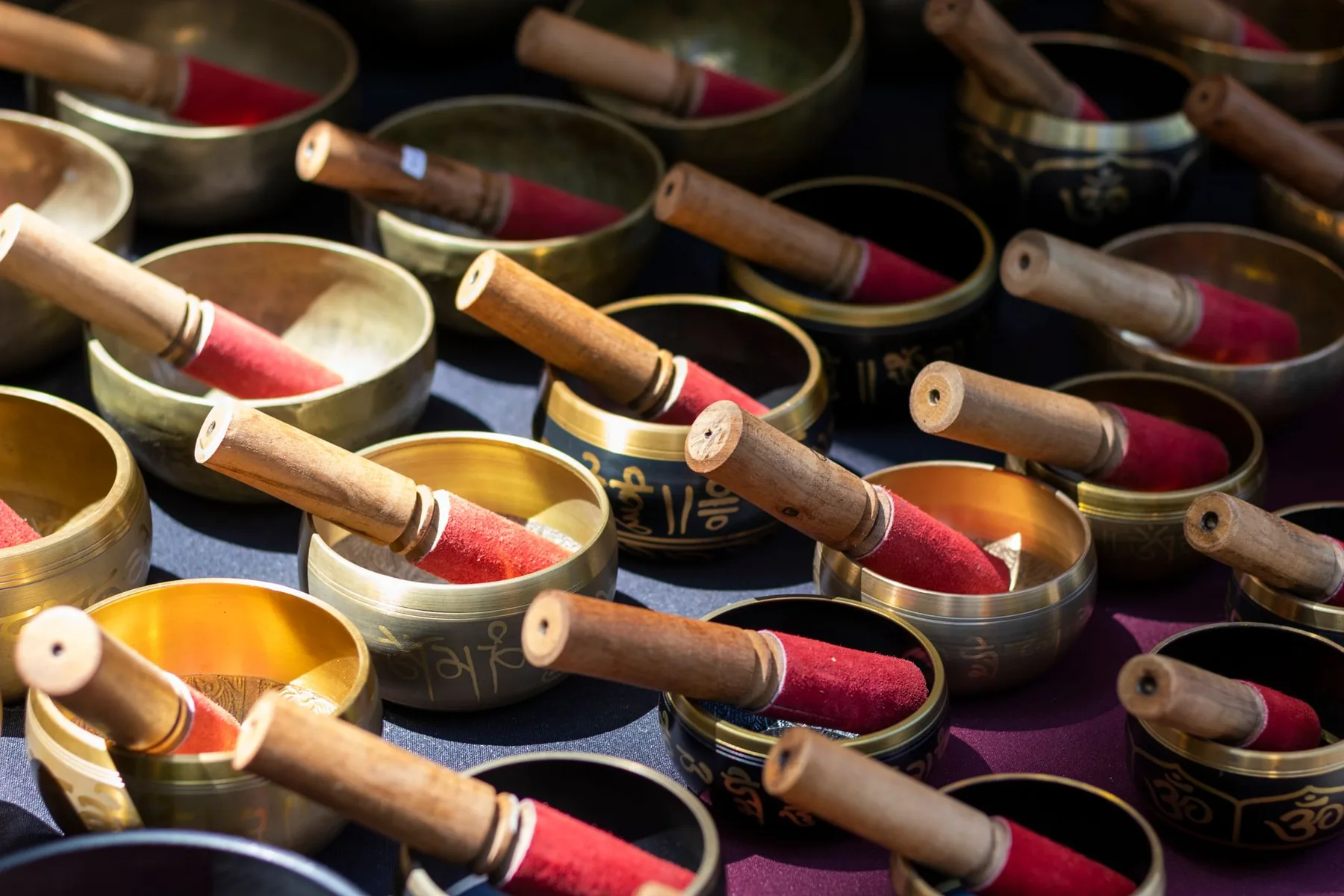
Superior therapeutic benefits
The vibrations of a hand-hammered bowl act on the body and mind. They stimulate deep relaxation and energetic balance.
Unlike industrial copies, traditional models produce:
- 5 to 7 distinct harmonics
- Extended resonance (45 seconds and more)
- Frequencies suited to meditation
Unmatched durability and resonance
The durability of these objects often exceeds a century. At Kopan Monastery, a 17th-century example is still in use.
Lifespan comparison:
| Type | Average lifespan | Ecological impact |
|---|---|---|
| Handmade | 120 years | Low (reusable) |
| Industrial | 3 years | High (frequent waste) |
Time strengthens their patina and tone, unlike counterfeits, which deteriorate quickly.
Where can you buy an authentic Tibetan singing bowl?
Finding an authentic model requires knowing the right buying channels. Traditional pieces are rarely found in large retail chains.
Specialist shops and recognized artisans
Favor Nepalese or Tibetan workshops such as Instruments du Monde. Their catalog presents hand-hammered pieces with metallurgical traceability.
Reliable sources offer:
- Clear provenance (Tibet/Nepal/Bhutan)
- Videos of the manufacturing process
- Customs certificates
Trust signals to check before buying
The condition of the accompanying documents often reveals the quality of the product. Here is an essential checklist:
| Criterion | Expected proof |
|---|---|
| Origin | Certificate with official stamp |
| Composition | Detailed metallurgical analysis |
| Manufacture | Photos or videos of the artisans |
To go further, consult our certified supplier guide.
Care and preservation of your Tibetan singing bowl
Taking care of your handmade piece guarantees its longevity and sound properties. Rigorous maintenance preserves the natural patina and unique harmonics.
Scientific cleaning protocol
Use vinegar diluted to 5% to remove impurities without altering the metal. Dry immediately with a microfiber cloth to prevent oxidation.
Key steps:
- Lightly dampen the cloth
- Clean with circular movements
- Avoid abrasive products
Common mistakes to avoid
Lemon corrodes the tin present in the alloy. Never let your bowl soak: stagnant water damages its structure.
Other risks:
- Prolonged exposure to sunlight
- Contact with chemicals
- Sudden thermal shocks
Optimal storage conditions
Store your piece in a stable environment (15-25 °C), with humidity below 50%. These parameters limit the impact of time on the materials.
| Factor | Ideal value | Risk |
|---|---|---|
| Temperature | 18-22 °C | Deformation above 30 °C |
| Humidity | 40-50% | Oxidation above 60% |
| Light | Low | UV discoloration |
For advanced advice, consult our specialist care guide.
Conclusion: the essentials to remember
Choosing a genuine bowl enriches your spiritual practice and protects a cultural heritage. Remember these markers: hand hammering, bronze alloy, Nepalese or Tibetan origin, deep sound, and a coherent price (EUR70-150 for 15 cm).
Favor ethical platforms such as Instruments du Monde. They guarantee fair income for artisans and preserve their ancestral techniques.
To go further, take part in introductory workshops available in major cities. These sessions reveal the potential of the Tibetan singing bowl for meditation and deep relaxation.
FAQ
What is the difference between a hand-hammered bowl and a molded bowl?
How can you check the metal composition of a singing bowl?
Why is geographic origin important?
What are the signs of a counterfeit?
Where can you buy an authentic Tibetan singing bowl?
How do you maintain a singing bowl?
Source Links
- https://instruments-du-monde.com/en-us/blogs/tibetan-singing-bowl/recognize-genuine-tibetan-singing-bowl
- https://tibetan-soul.co.uk/blogs/infos/authentic-singing-bowls-guide
- https://www.hammi.in/how-can-you-tell-if-a-tibetan-singing-bowl-is-authentic/
- https://www.themindfulword.org/how-to-choose-a-tibetan-bowl/
- https://www.healthline.com/health/sound-healing
- https://tibetan-soul.co.uk/blogs/infos/authentic-tibetan-singing-bowls
- https://www.hammi.in/how-can-you-tell-if-a-tibetan-singing-bowl-is-authentic/
- https://www.metmuseum.org/art/collection/search/38328
- https://www.healthline.com/health/sound-healing
- https://www.britannica.com/science/halite
- https://instruments-du-monde.com/en-us/blogs/tibetan-singing-bowl/recognize-genuine-tibetan-singing-bowl
- https://www.themindfulword.org/how-to-choose-a-tibetan-bowl/
- https://www.healthline.com/health/sound-healing
- https://instruments-du-monde.com/en-us/blogs/tibetan-singing-bowl/recognize-genuine-tibetan-singing-bowl
- https://www.healthline.com/health/sound-healing
- https://tibetan-soul.co.uk/blogs/infos/authentic-tibetan-singing-bowls
- https://instruments-du-monde.com/en-us/blogs/tibetan-singing-bowl/recharge-and-purify-tibetan-singing-bowl
- https://www.healthline.com/health/sound-healing
- https://www.healthline.com/health/sound-healing
- https://instruments-du-monde.com/en-us/products/full-moon-singing-bowl
- https://www.healthline.com/health/sound-healing