
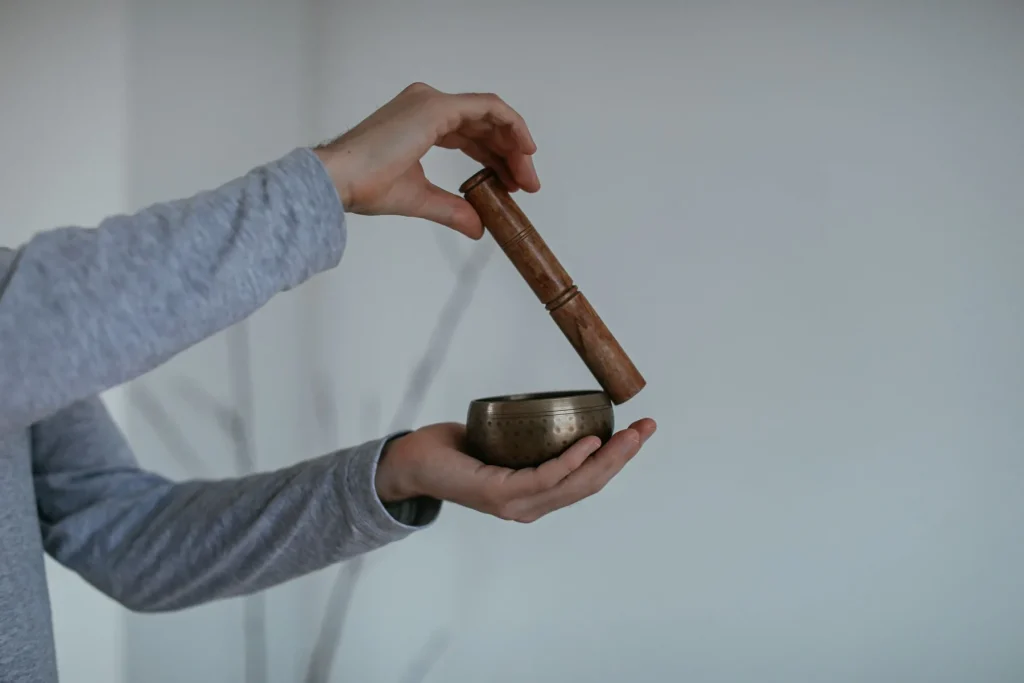
Sound massage is an ancient practice that uses vibrations to harmonize the body and mind. Rooted in centuries-old traditions, this gentle therapy works deeply through the resonance of sound.
Tibetan bowls, made from seven precious metals, produce unique frequencies. These waves travel through the body and naturally stimulate relaxation. The water present in our cells amplifies this beneficial effect.
According to modern neuroscience, these vibrations balance the nervous system. They also support energetic and lymphatic circulation. It is a holistic method for regaining serenity and vitality.
Sommaire
Introduction to Tibetan Singing Bowls
A thousand-year-old tradition still resonates today. Tibetan bowls, born in the Himalayan heights, embody a unique spiritual and therapeutic heritage. Their pure sound acts as a bridge between the visible and the invisible.
Ancient Origins and History
Their history begins with Bon culture, around 6000 BC. These sacred objects were then used as offerings during shamanic rituals. With the rise of Buddhism, their use spread to monasteries.
In the 1980s, Peter Hess introduced them to the West. Today, their effectiveness is recognized, especially in Germany, where some treatments are reimbursed.
Symbolism and Traditional Use
Symbols of harmony, they balance the chakras and purify energy. Monks used them for meditation and grain storage, reflecting their dual practical and sacred role.
Their modern adaptation has made them recognized tools in holistic therapies. Their connection with yoga nidra reinforces their relaxing dimension.
The Unique Composition of Tibetan Bowls
The magic of these bowls lies in their exceptional metal composition. A carefully balanced alloy of seven elements, forged with respect for tradition, creates pure, deep vibrations.
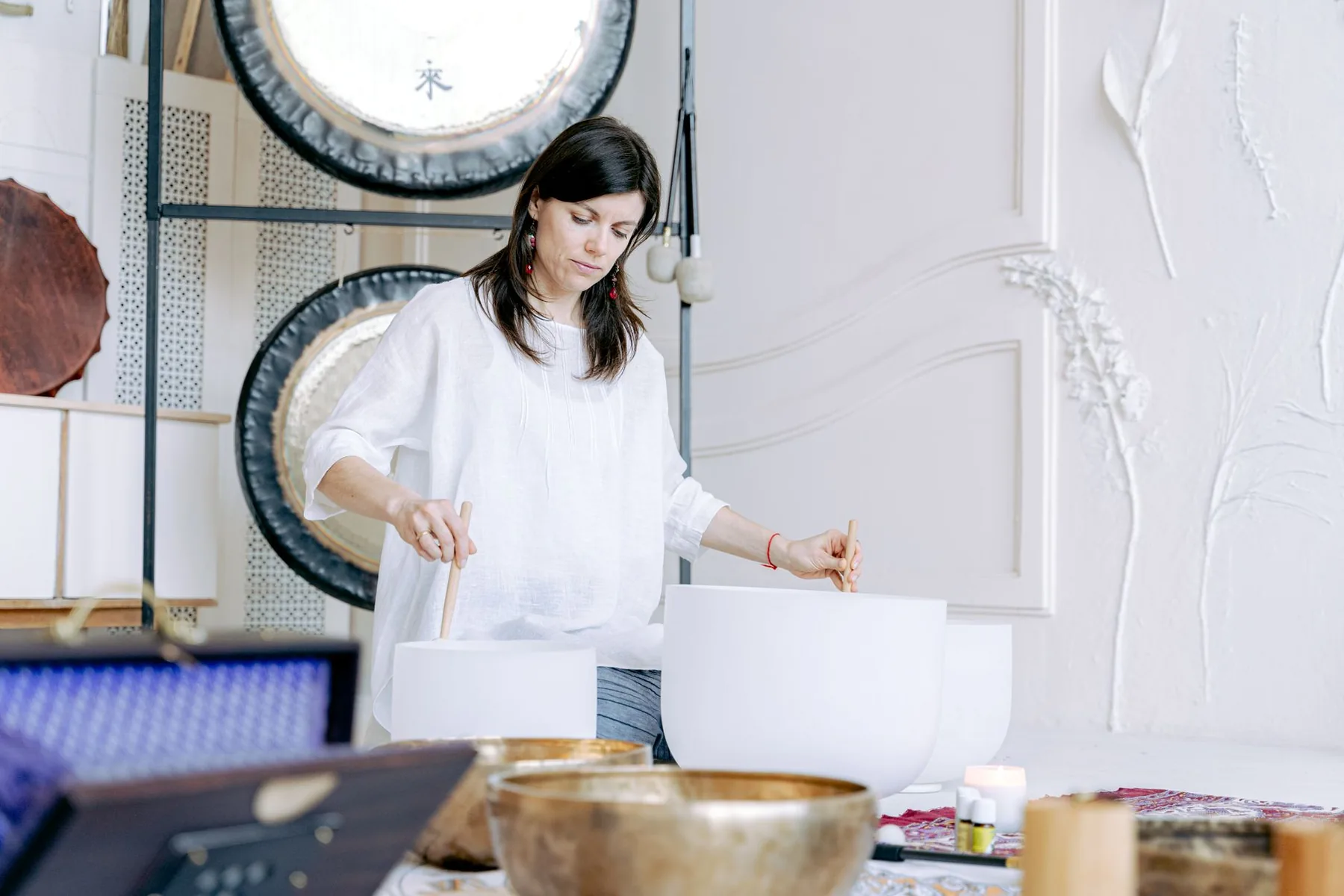
The 7 Metals and Their Correspondences
Each metal symbolizes a cosmic and bodily force:
- Iron (Mars): grounding and the root chakra (Muladhara).
- Silver (Moon): emotions and the sacral chakra (Swadhisthana).
- Gold (Sun): confidence and the solar plexus (Manipura).
Their combination generates a harmonic note, amplified by planetary correspondences. Tin, for example, resonates with the third-eye chakra (Ajna).
Artisanal Craftsmanship and Special Features
Hand crafting, in Nepal or Tibet, explains their authenticity:
- Hand hammering, creating unique imperfections.
- Variable thickness, which influences the depth of the sounds.
These techniques preserve the vibrational energy that is essential to sound therapy. A thick bowl therefore produces deeper frequencies, ideal for relaxation.
How a Tibetan Singing Bowl Massage Works
Water, which makes up 60% of our body, amplifies the effect of sound waves. This characteristic explains why the vibrations of Tibetan bowls penetrate so deeply.
The Principle of Vibrations and Sound Waves
Sound travels four times faster through water than through air (1,500 m/s). The vibrations therefore reach the tissues in just a few seconds. According to Peter Hess, this effect is like a “stone thrown into water.”
The frequencies produced (8-12 Hz) stimulate the brain’s alpha waves. These encourage a state of deep relaxation, close to meditation. One study confirmed their impact on reducing cortisol, the stress hormone.
The Impact on Body and Mind
The waves act on the autonomic nervous system. They slow the heart rate and activate endorphin production. This mechanism naturally reduces muscle pain.
Emotionally, testimonials describe a release of blockages. Tibetan bowls are also used in some sound relaxation techniques to balance energies.
Finally, cellular resonance improves blood circulation. Better oxygenated tissues can then regain vitality.
The Practical Steps of a Sound Massage
A unique sensory experience unfolds during a sound relaxation session. Every detail matters in maximizing the benefits of the vibrations.
Preparation and Atmosphere
The environment should be soothing: soft lighting, a pleasant temperature, and relative quiet. A preliminary conversation helps adapt the session to the receiver’s needs.
Hydration is crucial before and after. It optimizes the circulation of sounds through the tissues. Some practitioners add organic essential oils to strengthen the relaxing effect.
Bowl Placement and Percussion Techniques
Seven bowls are generally used: three along the spine and four around the body. Their placement varies according to body shape.
A felt mallet activates the bowls with circular movements. This technique maintains continuous resonance, ideal for releasing tension. A session lasts between 60 and 90 minutes.
To explore these techniques further, discover this sound relaxation protocol.
The Benefits of Tibetan Bowl Massage
The deep vibrations of singing bowls act on several levels. Physical, emotional, and energetic: every aspect benefits from this holistic therapy.
Physical Effects: Relaxation and Recovery
A recent study (2022) reports a 37% reduction in muscle tension. Sound waves penetrate the tissues, releasing knots and improving blood circulation.
Sleep is transformed as a result. Participants report a noticeable improvement in REM sleep. This crucial stage allows optimal recovery.
Emotional Effects: Release and Creativity
The frequencies stimulate the prefrontal cortex. This area of the brain, linked to creativity, becomes naturally activated. Some testimonials even describe better management of phobias.
Stress decreases through endorphin production. These well-being hormones create a state of deep relaxation that supports emotional balance.
Energetic Effects: Chakra Harmonization
Each metal in the bowl corresponds to a specific chakra. Their resonance balances these energy centers, as Kirlian photographs are said to confirm.
The aura is purified for 48 hours after the session. Synergy with acupuncture amplifies these vibrational effects. To learn more, discover these complementary techniques.
Contraindications and Precautions
Certain precautions are necessary before enjoying the benefits of sound vibrations. Although this therapy is generally safe, it requires adaptations for certain sensitive profiles.
People at Risk
People with pacemakers should absolutely avoid this practice. Vibrational fields could interfere with the functioning of the cardiac device.
Likewise, prostheses containing metal are a contraindication. The vibrations could cause discomfort or localized heating.
Specific Adaptations
For people with epilepsy, an alternative protocol exists. It uses more stable frequencies and avoids sudden stimulation.
Seniors benefit from frequency adjustment. Softer waves are better suited to their increased sensitivity.
In all cases, collaboration with medical professionals is recommended. This ensures a safe and personalized practice.
| Situation | Recommendation | Alternative |
|---|---|---|
| Pregnancy | Avoid the abdomen after 3 months | Side-lying or seated position |
| Children (under 7) | Contraindicated | Gentle music therapy |
| Tinnitus | Reduce intensity | Keep bowls away from the ears |
| Post-operative | Avoid recent surgical areas | Distal vibrations |
People with hearing disorders benefit from special monitoring. The practitioner then adjusts the distance and power of the sounds.
How to Choose Your Tibetan Bowl
Finding the right sound instrument requires careful attention. Several essential criteria guide this choice for an optimal experience.
Size and Thickness Criteria
The diameter directly influences the note produced. For beginners, a model between 18 and 22 cm offers the perfect balance between ease of handling and sound depth.
The wall thickness determines resonance duration:
- Thick wall (4-6 mm): deep, sustained sounds
- Thin wall (2-3 mm): bright, dynamic notes
A simple test is to make the bowl vibrate without holding it. A resonance lasting more than 30 seconds indicates excellent acoustic quality.
Tips for an Informed Purchase
Choose certified Nepalese artisans, such as Hess or NepalSound. Their expertise guarantees bowls with authentic therapeutic properties.
Here is a comparison guide to make your choice easier:
| Use | Ideal Features | Indicative Budget |
|---|---|---|
| Meditation | Small diameter (12-15 cm), crystalline sound | €80-150 |
| Therapy | Large model (25-30 cm), low frequency | €200-300 |
| Decoration | Traditional patterns, polished finish | €50-100 |
To avoid counterfeits, check:
- The presence of the seven metals (magnetic test)
- The imperfections of hand hammering
- The consistency of the vibrations
Intuition plays a key role. The sound should create an immediate resonance with your personal feeling.
Techniques for Making Your Bowl Sing
Mastering the art of harmonic sounds requires a precise technical approach. The quality of the vibrations depends as much on the gesture as on the instrument itself.
Basic Method for Beginners
Start by holding the mallet at its end. A relaxed grip makes it easier to feel the resonances. The ideal angle is around 75° for optimal projection.
The material radically changes the result:
- Wood: clear, dynamic notes
- Leather: warm, deep sounds
To discover other techniques, read this complete guide.
Tips for Optimizing Vibrations
The so-called “cascade” technique creates rich harmonics. Alternate the sides of the mallet in a continuous circular movement. This exercise refines the dexterity of the hand.
A few useful tips:
- Use a silicone support to stabilize the singing bowl
- Record your sessions to analyze your progress
- Take part in workshops to refine your state of presence
Too much pressure muffles the sounds. Instead, let the metal vibrate freely for a complete acoustic experience.
Conclusion
Sound harmony transforms everyday life into a revitalizing experience. Vibrations act on the body, reduce stress, and balance energy flows. A recent study confirms their impact on alpha brain waves.
“My clients feel an immediate sense of well-being,” says Lea, a certified therapist. This practice also fits into yoga retreats, where sounds deepen meditation.
Psychoacoustics is now exploring these mechanisms. For an introduction, join our discovery workshops. Treat yourself to a unique moment of vibrational well-being.
FAQ
What are the benefits of a Tibetan singing bowl massage?
How do Tibetan bowls act on the body?
Can a singing bowl be used on the abdomen?
How long does a typical session last?
Do bowls require special care?
Can children benefit from these massages?
How do you choose the right bowl size?
What metals make up traditional bowls?
Source Links
- https://www.academia.edu/13379779/STATISTICAL_THINKING_ABOUT_VARIATlON_IN_DATA_A_STUDY_WITH_YOUTH_AND_ADULT_STUDENTS
- https://instruments-du-monde.com/en-us/blogs/tibetan-singing-bowl/everything-you-need-to-know-about-tibetan-singing-bowls
- https://www.wikihow.com/Use-a-Singing-Bowl
- https://www.wikihow.com/Use-a-Singing-Bowl
- https://www.britannica.com/topic/Tibetan-Buddhism
- https://instruments-du-monde.com/en-us/blogs/tibetan-singing-bowl/tibetan-singing-bowl-7-metals-meaning
- https://instruments-du-monde.com/en-us/blogs/tibetan-singing-bowl/everything-you-need-to-know-about-tibetan-singing-bowls
- https://www.verywellmind.com/tibetan-singing-bowls-for-healing-89828
- https://instruments-du-monde.com/en-us/blogs/tibetan-singing-bowl/tibetan-singing-bowl-body-head-stomach
- https://health.clevelandclinic.org/sound-bath
- https://www.verywellmind.com/tibetan-singing-bowls-for-healing-89828
- https://health.clevelandclinic.org/sound-bath
- https://www.yogaeasy.com/artikel/what-is-yoga-nidra
- https://en.wikipedia.org/wiki/Kalimba
- https://instruments-du-monde.com/en-us/blogs/tibetan-singing-bowl/tibetan-singing-bowl-side-effects-contraindications
- https://www.verywellmind.com/tibetan-singing-bowls-for-healing-89828
- https://www.verywellmind.com/tibetan-singing-bowls-for-healing-89828
- https://instruments-du-monde.com/en-us/blogs/tibetan-singing-bowl/tibetan-singing-bowl-size
- https://instruments-du-monde.com/en-us/blogs/tibetan-singing-bowl/tibetan-singing-bowl-size
- https://instruments-du-monde.com/en-us/blogs/tibetan-singing-bowl/tibetan-singing-bowl-size
- https://instruments-du-monde.com/en-us/blogs/tibetan-singing-bowl/how-to-use-a-tibetan-singing-bowl-techniques-instructions
- https://instruments-du-monde.com/en-us/blogs/tibetan-singing-bowl/how-to-use-a-tibetan-singing-bowl-techniques-instructions
- https://www.mindbodygreen.com/articles/sound-bath
- https://instruments-du-monde.com/en-us/blogs/tibetan-singing-bowl/everything-you-need-to-know-about-tibetan-singing-bowls