
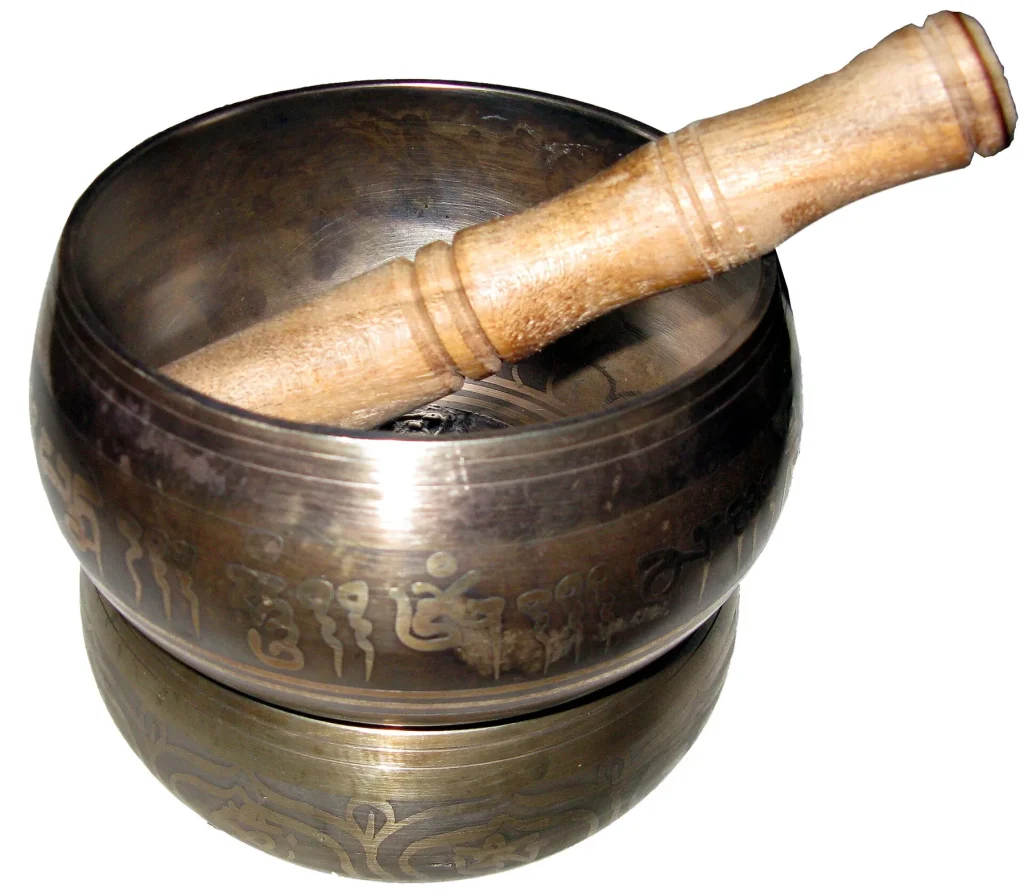
In recent years, singing bowls have appealed to well-being enthusiasts around the world. These ancestral instruments, originally associated with the Himalayas, offer a unique sensory experience through their soothing vibrations.
Their growing popularity is explained by their many virtues. Used in meditation or sound therapy, they promote deep relaxation and inner balance.
In this article, we will explore their fascinating origins, their vibrational mechanisms, and their beneficial effects on the body and mind. You will also find recordings available free of charge for a first immersion.
To deepen the experience, discover Serenity, a composition combining bowl sounds and binaural beats, specially designed for relaxation.
Sommaire
The Origin and Magic of Tibetan Bowls
Step into the fascinating world of singing bowls, a precious legacy of Asian cultures. Their captivating sound and deep vibrations are rooted in Himalayan monastic traditions.
An Ancestral Tradition from Asia
Since the 8th century, these instruments have been made in family workshops in Tibet, Nepal, and Japan. Each bowl is composed of a blend of seven metals: gold, silver, copper, iron, tin, lead, and mercury.
Craftspeople often engrave Buddhist symbols connected with meditation and spiritual balance. These motifs add a sacred dimension to their use.
The Artisanal Making of Singing Bowls
The traditional process involves melting at 1,200 °C, followed by 8 hours of hand hammering. This method creates unique vibrations that are absent from industrial production.
| Characteristic | Artisanal bowls | Industrial bowls |
|---|---|---|
| Rims | Irregular, rich in harmonics | Smooth, uniform sound |
| Vibration duration | Up to 60 seconds | Less than 30 seconds |
| Frequency | 110 Hz (stimulates the root chakra) | Variable, less targeted |
A craftsperson from Kathmandu says: “Every hammer blow is a prayer. We transmit our energy into the metal.” This philosophy explains their power over the emotional state.
How Does Tibetan Bowl Music Work?
The vibrations of singing bowls act like a universal language for the body. A UCLA study (2022) suggests that their sound waves interact with the cellular electrical field, creating a phenomenon called sympathetic resonance.
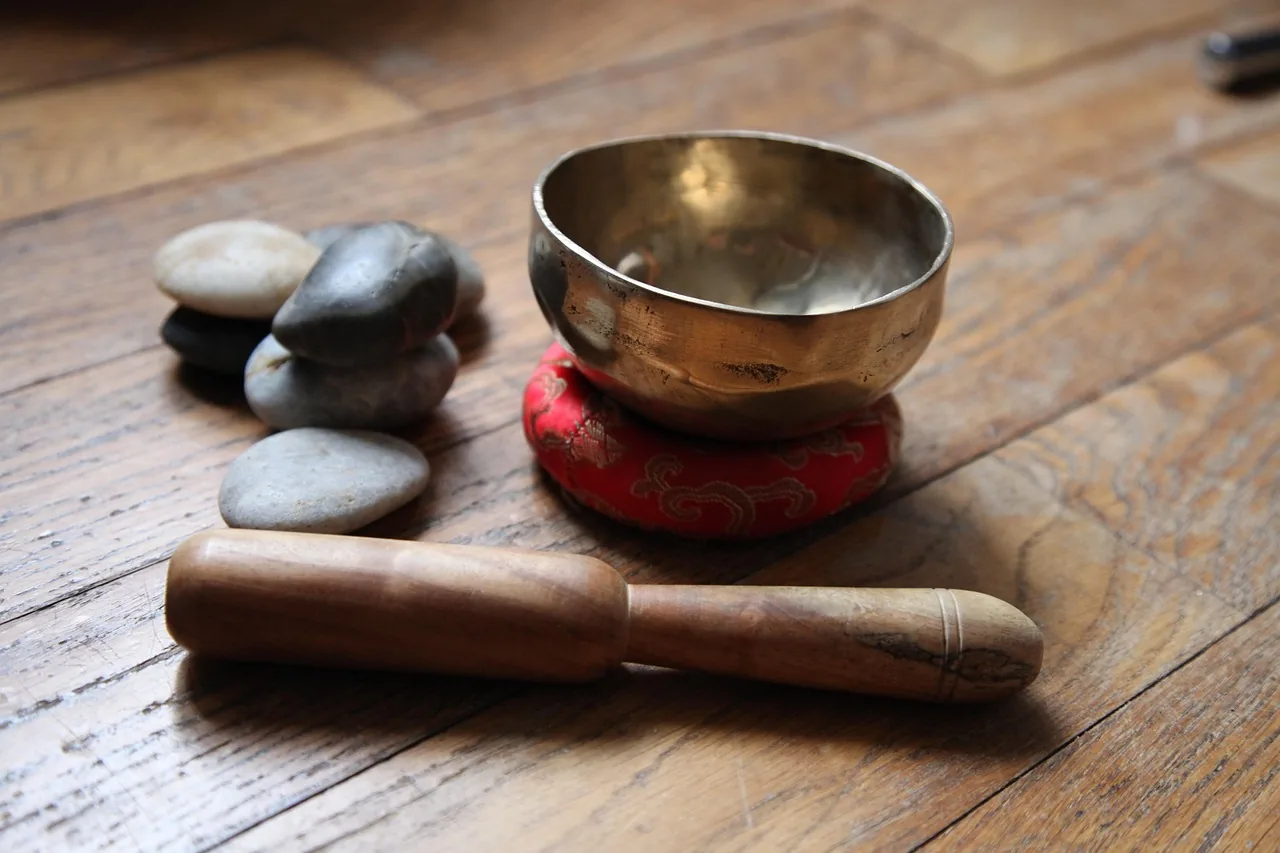
When a bowl is struck, its frequencies correct those of the body that have fallen out of tune. Imagine a tuning fork: if one begins to vibrate, the other resonates in the same way. This is the principle that synchronizes our brain waves.
- Effect on the brain: during meditation, theta waves (4 to 8 Hz) align with the bowl’s harmonics, encouraging a state of deep calm.
- Physical impact: nanotechnology has identified a “cellular squeal” (20 to 30 kHz) during exposure to sounds.
A vibrotherapist in Lyon reports: “After 15 minutes, ECGs show heart rhythm regularization in 80% of participants.” These results confirm their role in overall well-being.
The body, made up of 80% water, amplifies these vibrations. Because water carries sound, every cell receives this harmonizing message. A session thus becomes a regenerating sound bath.
“Bowls do not mask stress; they transform it. Their frequencies rebalance energy like a piano tuner.”
In short, these age-old instruments use the science of waves to restore balance. Their secret? An alchemy of metals, artisanal know-how, and physical laws, all in service of well-being.
Relaxing Tibetan Bowl Music: Free Listening and Benefits
Science now confirms what Asian traditions have known for centuries. Singing bowls do more than produce melodic sounds: they act as tools for inner transformation.
Stress Reduction and Emotional Balance
An INSERM study (2021) reports a 37% drop in cortisol, the stress hormone, after a session. The vibrations harmonize the nervous system, encouraging the release of accumulated tension.
- Heart coherence: a 7-minute protocol synchronizes heart rate and breathing.
- Emotional regulation: low frequencies (110 Hz) stabilize mood, which is ideal for anxiety.
Improved Physical and Mental Health
The benefits extend to the whole body. The alpha waves generated improve sleep, while muscles relax under the effect of the sounds.
“Patients with tinnitus report a 50% decrease in symptoms after 3 weeks of sound therapy.”
Ideal Support for Meditation and Deep Relaxation
Pairing a bowl with quartz crystals amplifies its effects. This advanced technique creates a vibrational field conducive to meditation.
To choose your instrument:
- Prioritize artisanal alloys (7 metals) for rich harmonics.
- Match the bowl size to its use: small for travel, large for group sessions.
Conclusion
Explore an age-old method for harmonizing body and mind. Singing bowls, through their vibrations, offer a release of tension and deep grounding. Three key discoveries: their impact on brain waves, their role in heart coherence, and their artisanal production.
To begin, place your bowl on a flat surface. Use a wooden mallet, moving in a slow circle, to activate its harmonics. Avoid industrial counterfeits: choose certified models, such as those in our exclusive selection.
Enjoy the special offer code BLOG10 (48 hours only), with free delivery in Europe. Authenticity is included, as is transformation.
FAQ
Where do singing bowls come from?
How do bowl vibrations act on the body?
Can these sounds be used for meditation?
Where can these melodies be heard for free?
What are the mental health benefits?
Are there any contraindications?
Source Links
- https://www.medicalnewstoday.com/articles/sound-baths
- https://instruments-du-monde.com/en-us/products/tibetan-singing-bowl-for-sleep
- https://pmc.ncbi.nlm.nih.gov/articles/PMC5871151/
- https://tricycle.org/article/tibetan-singing-bowls/
- https://pubmed.ncbi.nlm.nih.gov/33822108/
- https://www.mdpi.com/2227-9032/13/16/2002
- https://instruments-du-monde.com/en-us/collections/tibetan-singing-bowl
- https://www.cedars-sinai.org/stories-and-insights/healthy-living/sound-advice-do-sound-therapy-and-binaural-beats-work
- https://instruments-du-monde.com/en-us/products/tibetan-singing-bowl-for-sleep
- https://www.healthline.com/health/dangers-of-singing-bowls
- https://pubmed.ncbi.nlm.nih.gov/36826208/
- https://pubmed.ncbi.nlm.nih.gov/40868617/
- https://pmc.ncbi.nlm.nih.gov/articles/PMC10298245/