
For thousands of years, the Tibetan bowl has fascinated people with its soothing properties. Made from an alloy of seven metals, it emits deep vibrations, ideal for meditation and well-being.
Used in Himalayan traditions, this ancestral instrument accompanies spiritual rituals. Its harmonious sounds promote relaxation and energetic balance.
Today, it also appeals to modern therapists. A German study confirms its positive impact on stress and sleep. A precious legacy for our time.
Sommaire
Introduction to the Tibetan bowl
Handmade, they embody the cultural heritage of the Tibetan arc. These Tibetan bowls come mainly from Tibet, Nepal, and Bhutan, where they have been shaped for centuries.
There are two main forms: traditional models, hammered with visible marks, and modern versions, which are smoother. Authentic models can be recognized by their set of precious metals.
Their composition ranges from 3 to 7 metals, including copper, silver, and tin. Each alloy influences resonance and creates unique vibrations. In the past, they were also used as food measures or therapeutic tools.
Mont Blanc Bien-Être, an expert in vibrational instruments, favors 7-metal Tibetan bowls for their sound purity. A choice that carries on the shamanic tradition.
The fascinating history of the Tibetan bowl
In the heart of the Himalayan mountains, a sonic heritage has been taking shape for centuries. This object, far more than a simple vessel, embodies ancestral wisdom.
Origins and Himalayan traditions
The earliest models date back to 5000 BCE and were shaped from wood or stone. Used by shamans, they served in healing rituals.
With the Bronze Age, artisans incorporated rare metals, including meteorite fragments. These materials symbolized a connection with the cosmos.
Evolution of materials and uses
As they moved from shamanic craftsmanship to Buddhist temples, their role changed. They became essential for offerings and ceremonies.
The composition evolved toward seven metals, each associated with a planet:
| Metal | Planet | Symbolism |
|---|---|---|
| Gold | Sun | Vital energy |
| Silver | Moon | Intuition |
| Copper | Venus | Harmony |
| Iron | Mars | Protection |
Today, these bowls transcend their religious use. They adapt to modern meditation and vibrational therapies.
Why the Tibetan bowl is a sacred instrument
Beyond its simple appearance, this ancestral object hides a deep spiritual dimension. Its design rests on precise alchemy, where each element vibrates with the universe.
The link between metals and planets
The seven metals used correspond to the celestial bodies visible to the naked eye. This connection turns sound into a bridge between earth and cosmos.
| Metal | Planet | Influence |
|---|---|---|
| Copper | Venus | Heart chakra |
| Silver | Moon | Emotional cycles |
| Gold | Sun | Life force |
| Tin | Jupiter | Expansion |
Copper, for example, harmonizes energies through its link with Venus. As this in-depth study confirms, this synergy between metal and planet activates specific resonances.
Spiritual and cultural symbolism
Engravings such as “Om” or the flower of life are not decorative. They amplify the vibrations and anchor the sacred symbolism.
“The very shape creates an energetic vortex. When the mallet strikes, it awakens the chakras through resonance.”
The playing technique also influences Yin/Yang balance. Slow rubbing calms, while a sharp strike energizes. Two facets of the same wisdom.
The benefits of the Tibetan bowl for body and mind
An ancestral practice is now revealing its scientifically proven virtues. The generated vibrations act on the body and mind, offering natural solutions for everyday well-being.
Deep relaxation and stress reduction
The sounds emitted reduce cortisol by 40%, according to a recent study. The limbic system, responsible for emotions, responds immediately to these frequencies.
A 20-minute protocol before bedtime significantly improves sleep. Ideal for insomniacs, this method is simple and accessible.
Harmonizing energies and chakras
Each metal influences a specific energy center. Here is how the vibrations interact:
| Effect | Targeted chakra | Recommended duration |
|---|---|---|
| Soothing | Heart | 10 min |
| Balance | Root | 15 min |
| Stimulation | Third eye | 5 min |
| Harmony | Sacral | 12 min |
Improving concentration and meditation
Tests conducted in Nepal show a 30% increase in attention among children. Combined with aromatherapy, the effect is even more powerful.
“Low sounds ground, high sounds awaken. Together, they create a state of mindfulness.”
Perfect for meditation, this tool makes it easier to enter a state of deep calm. A valuable ally for regular practitioners.
How to use a Tibetan bowl for meditation
Discover how to integrate this ancestral tool into your daily routine. Deep vibrations make it easier to enter a meditative state, ideal for beginners and experts alike.
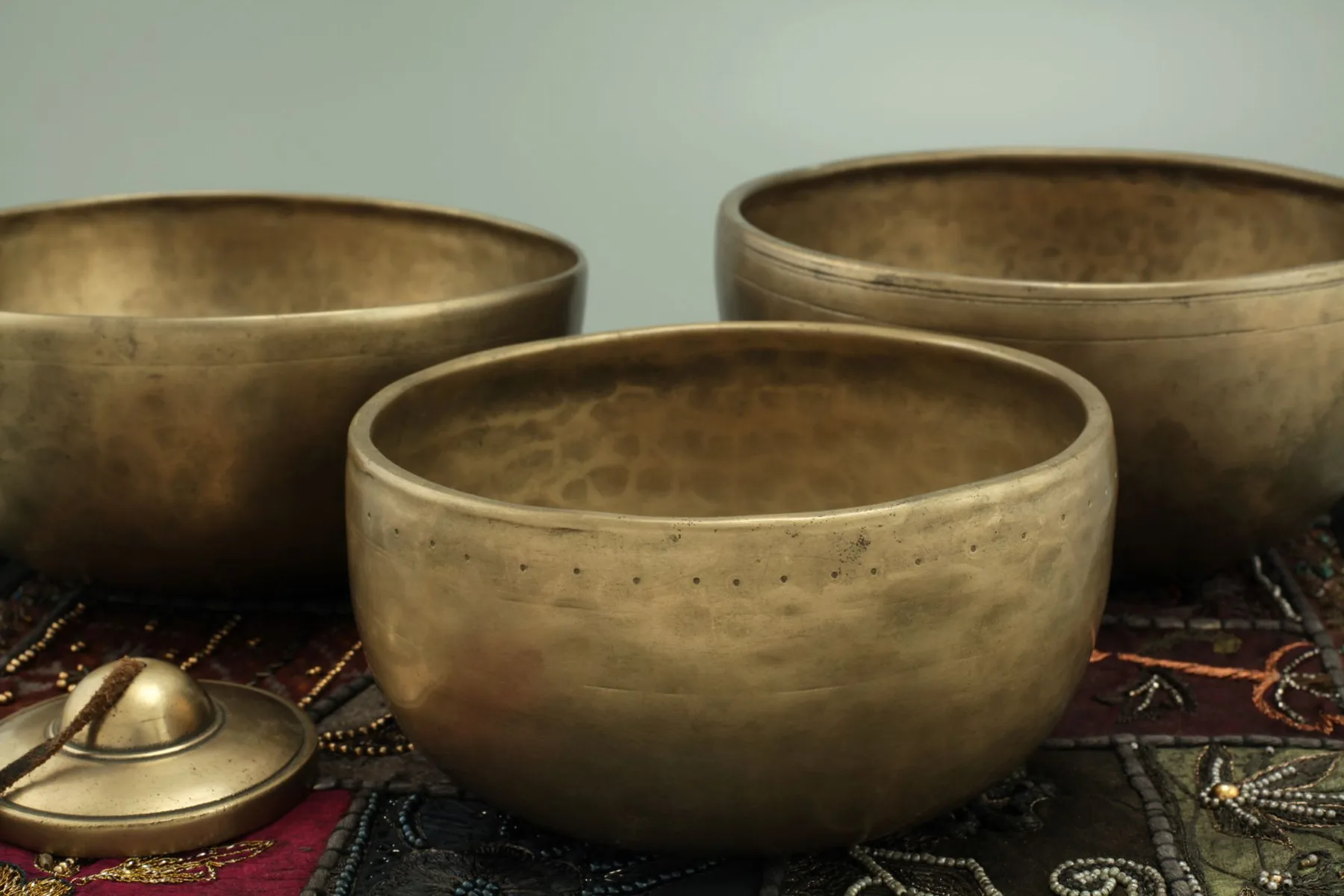
Basic techniques for making the bowl sing
There are two main methods for producing harmonious sounds:
- Light strike: Hold the mallet at 30° and tap the outer rim. This technique generates short, dynamic waves.
- Circular rubbing: After an initial strike, slide the mallet around the rim with steady pressure. This method creates prolonged vibrations.
Avoid these common mistakes:
- Excessive pressure that stifles the sounds
- An incorrect mallet angle, ideally 30°
- Movements that are too fast or irregular
Postures and ideal environment
Adopt a comfortable position to optimize your session:
- Half-lotus or cross-legged posture on a firm cushion
- Straight spine, relaxed shoulders
- Bowl resting on the palm of the hand, without gripping it
Create a supportive space:
- Soft lighting or candles
- Natural elements, such as plants and stones
- Silence or a discreet sound background
For an effective practice, follow this program:
- 10 minutes in the morning to start the day
- 10 minutes in the evening to encourage falling asleep
- Gradually increase the duration
“Regularity matters more than duration. Five minutes every day is better than an occasional hour.”
A practical alternative: a seated position for people with reduced mobility. Stability and comfort remain essential.
To deepen your knowledge, consult this complete guide to using the bowl.
The Tibetan bowl and the chakras
Sound vibrations open a door toward inner balance. Each note resonates with a specific energy center, creating subtle harmony in the body.
Musical notes and energy centers
Here is how frequencies interact with the 7 main chakras:
| Note | Chakra | Function |
|---|---|---|
| C | Root | Grounding |
| D | Sacral | Creativity |
| E | Plexus | Confidence |
| F | Heart | Love |
A specific bowl can target each area precisely. The 432 Hz frequency is ideal for overall harmonization.
Daily practices for rebalancing
Try this simple protocol:
- Day 1: work on the root chakra with low sounds
- Day 3: stimulate the heart with the note F and rose essential oil
- Day 7: finish with the crown chakra (B) for elevation
“Three minutes per chakra is enough to feel the first effects. Regularity is the key.”
To amplify the effect, place a corresponding crystal on each area during the session. Labradorite is perfectly suited to the third eye.
Purifying the aura and space with the Tibetan bowl
A simple ritual for harmonizing places and people. Sound vibrations act like an invisible cleanser, removing accumulated energetic residue.
The corners-and-cupboards technique is ideal for closed spaces. Start with the corners, areas where energy often stagnates, then treat cupboards and openings.
Signs that reveal an imbalance:
- Unusual fatigue with no medical cause
- Recurring tensions between occupants
- A feeling of heaviness in certain rooms
To amplify the effect, combine this practice with white sage. Palo santo is also suitable, especially for offices.
“In geobiology, we use these sounds to neutralize telluric crossings. Three passes are generally enough to restore a healthy flow.”
Essential precautions:
- Air the room for 10 minutes after the session
- Drink water to support drainage
- Repeat monthly for optimal maintenance
Sound massage with Tibetan bowls
The power of sound frequencies is revealed through an innovative therapeutic approach. This method combines deep vibrations and subtle touch to release tension. Ideal for athletes or stressed people, it acts on the entire body.
Techniques for vibrational massage
The protocol varies according to the targeted areas:
- Back: Use a large model to cover the spine. Circular movements stimulate nerve endings.
- Abdomen: A smaller bowl makes it possible to work on the digestive organs. Sound waves improve circulation.
A Nepalese study shows promising results for fibromyalgia. Three weekly sessions reduce pain by 60%.
Benefits for muscles and joints
The vibrations penetrate down to the fascia, the membranes surrounding the muscles. They:
- Relax contractures
- Improve joint mobility
- Speed up post-exercise recovery
“Unlike Swedish massage, this technique does not require physical pressure. The sounds act deeply without risk of injury.”
Precautions: avoid this practice in cases of epilepsy or metal implants. The water contained in the body amplifies the effect of the waves, which is why proper hydration after the session matters.
The Tibetan bowl for children and pregnant women
The benefits of sound vibrations extend to the youngest people and expectant mothers. Adapted to their sensitivity, these gentle waves encourage calm and development.
Among children, especially those with ADHD, the results are promising. The WHO has recognized this pediatric protocol since 2021. Five-minute sessions improve attention by 25%.
For pregnant women, amniotic fluid amplifies the effect of the vibrations. Mother-fetus workshops offer quarterly support. Low sounds soothe the baby’s movements.
Essential precautions:
- Avoid the first week after giving birth
- Do not place the bowl directly on the abdomen
- Limit sessions to 10 minutes
“Colorful miniature kits allow for a gentle introduction. My autistic patients respond especially well to them.”
Safety always comes first. Consult a specialist before any prolonged use. Models adapted to small hands exist for children from age 3.
The Tibetan bowl as a musical instrument
In contemporary practices, these ancestral objects converse with other vibration producers. This synergy expands their applications in the field of sound well-being.
Vibrational dialogues with kalimba and tongue drum
Duets with these modern instruments create rich textures. The kalimba brings crystalline notes that complement low frequencies.
The tongue drum, meanwhile, offers a gentle rhythm. Together, they form a balanced acoustic landscape, ideal for deep relaxation sessions.
Compositions for mental soothing
Pentatonic melodies are especially well suited. Their simplified structure encourages a natural meditative state.
Artists such as Deuter have popularized these arrangements. His album “East of the Full Moon” perfectly integrates these traditional sounds into contemporary creations.
Advanced techniques:
- Studio miking to capture harmonics
- Guided improvisations during group workshops
- Therapeutic protocols with precise sequences
“At the Kathmandu festival, we explore how these multiple vibrations synchronize brain waves. The results for post-traumatic stress are promising.”
How to choose your Tibetan bowl
Finding the ideal model depends on a fine understanding of sound and material characteristics. Several technical parameters guarantee an optimal vibrational experience.
Guide by dimensions and composition
Size determines the depth of the vibrations. Here are the essential correspondences:
| Diameter | Recommended use | Sound level |
|---|---|---|
| 12-18 cm | Individual meditation | High-pitched |
| 20-25 cm | Energy therapy | Medium |
| 28-30 cm | Groups or large spaces | Low-pitched |
Materials also influence quality:
- 7-metal alloy: warm and complex sound
- Brass: medium resonance, accessible price
- Crystal: pure frequencies, but less vibrational
The impact of the fundamental note
Each example emits a dominant frequency. Apps such as SpectralPro analyze this acoustic signature.
The energetic attraction test is simple:
- Place the bowl on your open palm
- Gently rub the rim
- Feel the tingling in your fingers
“Authentic models create a diffuse feeling of warmth. Industrial copies do not produce this effect.”
To choose wisely:
- Favor certified brands
- Avoid decorative bowls that do not sound
- Test several models before buying
Mont Blanc Bien-Être offers discovery sessions to find the perfect size and note. A lasting investment for your practice.
Care and preservation of your Tibetan bowl
The art of preserving vibrational qualities requires special attention. Regular care maintains the purity of resonance and extends its lifespan.
Cleaning and energetic recharging
Use these gentle methods:
- White vinegar: apply it with a microfiber cloth to remove impurities without scratching the metal
- Sun exposure: 20 minutes per month revitalizes vibrational properties
- Avoid chemicals, which alter the alloys
Seasonal calendar
Adapt your routine:
| Season | Action |
|---|---|
| Spring | Deep cleaning |
| Summer | Lunar recharging |
| Autumn | Microcrack check |
| Winter | Warm storage |
Repairs and storage
For microcracks:
- Clean the area with dry cotton
- Apply melted beeswax
- Let dry for 24 hours
Keep it on a virgin-wool cushion or in a wooden box. Keep it away from sources of humidity.
“A well-maintained bowl can last for generations. I have restored some dating from the 18th century.”
Daily ritual
Practice this energetic connection:
- Gently rub the rim every morning
- Visualize golden light filling the bowl
- Speak a positive intention
Respectful recycling
If it is beyond repair, organize a ceremony:
- Bury it in a natural place
- Thank it for its service
- Plant a symbolic shrub above it
This respectful preservation honors tradition while protecting the environment.
Conclusion: the Tibetan bowl, an everyday well-being ally
This thousand-year-old object continues to enrich our modern lives. From meditation to vibrational therapies, its applications support overall well-being.
This ancestral instrument now has a place in hospital settings. Clinical trials confirm its effectiveness against preoperative anxiety.
To discover its benefits, take part in our discovery workshops. Learn relaxation techniques adapted to your rhythm.
Take advantage of our special “ANNIVERSARY -10%” offer by presenting this code. A unique opportunity to adopt a lasting well-being solution.
Share your experience with #MyDailyBowl. Your testimonials inspire our community to live better every day.
FAQ
How do you choose the right size for a singing bowl?
What metals make up a traditional Tibetan bowl?
Can this instrument be used to balance the chakras?
How do you care for a metal bowl to preserve its sound?
Is it suitable for children or pregnant women?
What is the technique for making a bowl sing correctly?
How can this tool be integrated into a sound massage session?
Can this instrument be combined with others, such as gongs or chimes?
Source links
- https://instruments-du-monde.com/en-us/products/tibetan-singing-bowl-relaxation
- https://instruments-du-monde.com/en-us/products/tibetan-singing-bowl-relaxation
- https://pmc.ncbi.nlm.nih.gov/articles/PMC12385955/
- https://instruments-du-monde.com/en-us/blogs/tibetan-singing-bowl/how-meditate-tibetan-singing-bowl
- https://www.sciencedirect.com/science/article/pii/S096522991931756X
- https://instruments-du-monde.com/en-us/blogs/tibetan-singing-bowl/everything-you-need-to-know-about-tibetan-singing-bowls