

For centuries, these handmade objects have fascinated people with their unique properties. Made from an alloy of seven metals, they are far more than a simple instrument.
Their harmonious sound acts on the body and mind. Deep vibrations support relaxation and meditation while helping to rebalance energy.
Used in Asian traditions, they accompany sacred rituals. Today, their use extends into modern well-being to:
– Reduce stress
– Improve concentration
– Harmonize the chakras
Each piece is unique, with irregularities that testify to ancestral craftsmanship. The choice should be made by listening to your intuition and to the quality of the sounds produced.
Sommaire
What is a Tibetan singing bowl?
Ancestral instruments, these objects are much more than a simple wellness accessory. Their refined design hides a rich sound and symbolic world.
Definition and origins
A singing bowl is an idiophone instrument shaped like an inverted bell. Traditionally, it is forged from seven metals, each associated with a planet.
Its history remains mysterious. Some point to shamanic rites 7,000 years old, while others describe a more recent rise linked to spiritual tourism.
The two main types
Two categories dominate the market:
- Metal bowls: traditional alloy (gold, silver, copper). Deep sound, ideal for the lower chakras.
- Crystal bowls: modern, made of quartz. Crystalline sound, often used for meditation.
| Type | Sound | Average price |
|---|---|---|
| Metal | Deep and enveloping | €50-200 |
| Crystal | High and pure | €80-300 |
“The choice depends on the use: metal vibrations soothe, while crystal awakens the mind.”
The history and origins of Tibetan singing bowls
Did you know these vessels were once exchanged as currency before becoming healing instruments? Their journey reveals a unique fusion of everyday practices and spirituality.
The earliest shamanic uses
Himalayan nomads used these objects for cooking. Their alloy sometimes included meteorites, regarded as fragments of the sacred earth.
In the 12th century, archaeologists identified “currency bowls.” These pieces were used both for barter and for shamanic rituals.
The evolution toward Buddhist meditation
In the 8th century, the Bon religion integrated these vessels into its ceremonies. Later, Buddhist monks saw them as a tool for concentration.
A contemporary monk says: “Sound guides the mind toward peace, like a bridge between the material and the invisible.”
“Himalayan Singing Bowls” (1976) revealed their power to the world. This book remains a reference today.
The unique composition of Tibetan singing bowls
Behind every vibration lies a precise blend of sacred metals. These special alloys determine sound quality and therapeutic properties.
The 7 metals and their symbolism
Traditionally, each element corresponds to a planet and influences the energy emitted. This alchemy creates specific frequencies that benefit the body.
| Metal | Planet | Chakra | Note |
|---|---|---|---|
| Gold | Sun | Crown | C |
| Silver | Moon | Third eye | D |
| Copper | Venus | Throat | E |
| Iron | Mars | Heart | F |
| Tin | Jupiter | Solar plexus | G |
| Mercury | Mercury | Sacral | A |
| Lead | Saturn | Root | B |
Modern alloys and their effects
Some artisans now add zinc or nickel. These metals improve resonance but slightly alter the fundamental note.
A Nepalese master explains: “Our ancestors used 99% copper and tin. Today, we adjust the proportions for longer vibrations.”
Scientific analyses confirm these developments. Modern metal Tibetan singing bowls offer a broader sound palette, ideal for contemporary therapies.
How can you recognize a real Tibetan singing bowl?
Faced with imitations, recognizing an original piece becomes an art in itself. Industrial counterfeits flood the market, but certain distinctive signs are unmistakable.
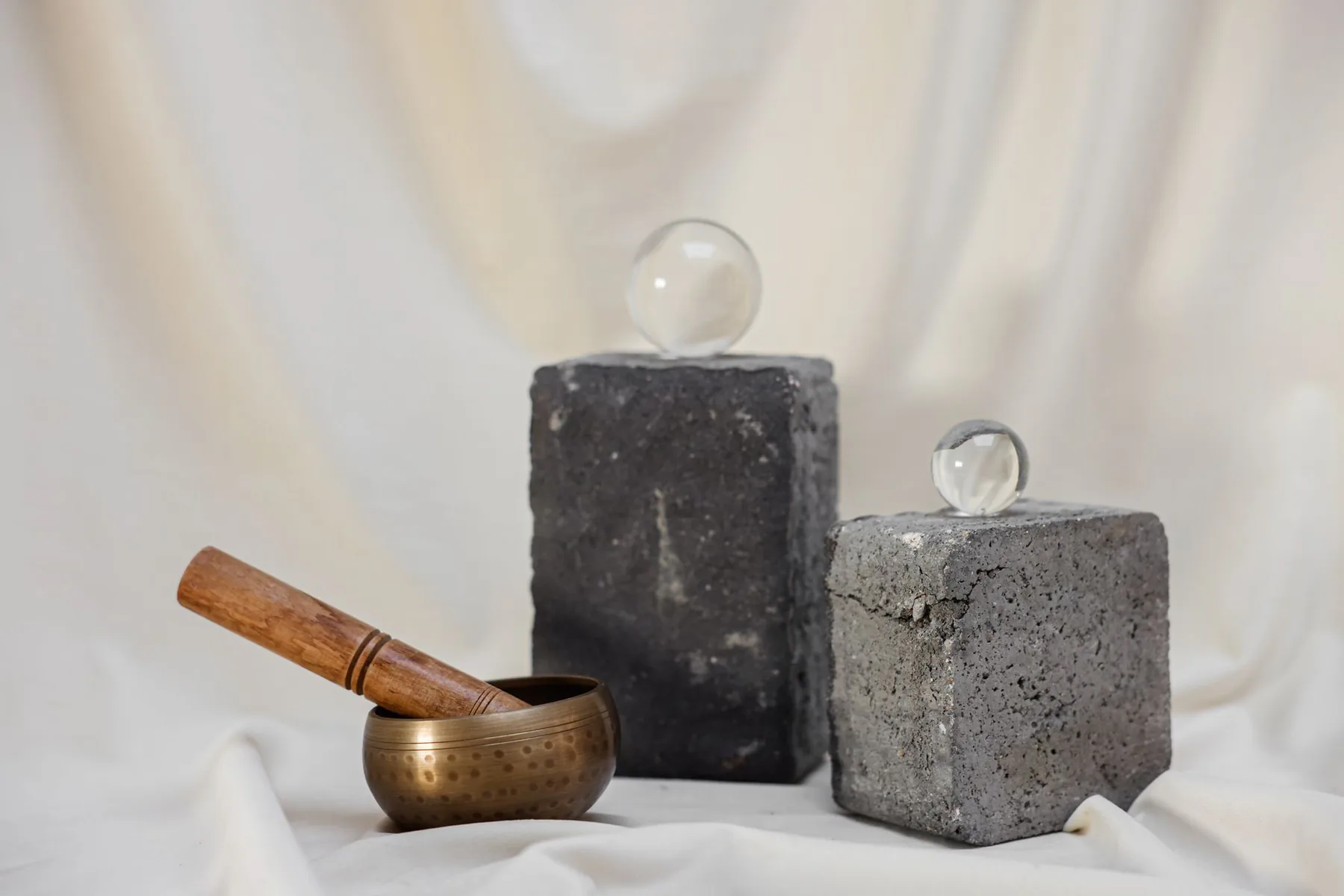
A real Tibetan singing bowl has asymmetrical hammer marks, proof of handwork. It usually weighs more than 700 g, with a thick wall for optimal resonance.
To choose well, test the sound: a resonance of at least 45 seconds (for a 20 cm diameter) is a sign of quality. Authentic production areas are concentrated in the Kathmandu Valley and Mustang.
Identification guide
- Visual: surface irregularities, no overly smooth finish.
- Acoustic: rich, lasting harmonics.
- Certifications: Nepal Craft Certificate Council label.
| Characteristic | Authentic | Industrial |
|---|---|---|
| Hammering | Asymmetrical | Uniform |
| Weight | >700 g | 400-600 g |
| Resonance | >45 s |
“A molded bowl will never vibrate like a forged bowl. The artisan’s hand imprints a soul into the metal.”
Beware of misleading handmade claims. Choose sellers who detail the origin and therapeutic function of the object.
Health benefits of Tibetan singing bowls
Deep vibrations act like a balm for the body and mind. They offer studied benefits, from relaxation to physical recovery.
Relaxation and stress reduction
A University of Montreal study (2019) reports a 37% drop in cortisol, the stress hormone. Frequencies around 432 Hz stimulate the parasympathetic nervous system, encouraging a calm state.
Key mechanisms:
- Resonance with the brain’s alpha waves.
- Reduction of muscle tension in 15 minutes.
- Improved sleep quality.
Chakra harmonization
Each chakra responds to a specific frequency. A 7-step protocol helps rebalance energies:
| Chakra | Note | Recommended duration |
|---|---|---|
| Root | B | 5 min |
| Heart | F | 7 min |
“Patients with ADHD show better concentration after 3 sessions.”
Relief from muscle pain
In sound therapy practices, vibrations reduce inflammation. A physiotherapist explains:
“I use these instruments in rehabilitation for chronic muscle pain. Results are visible within a month.”
Protocol for fibromyalgia: 15 minutes per day for 3 months.
The Tibetan singing bowl: a powerful tool for meditation and grounding
Harmonious sounds act as a doorway to serenity. An EEG study reports a 22% increase in theta waves during listening. These frequencies encourage a state of deep meditation.
The Nepalese technique of dynamic sound meditation combines breathing and active listening. It is practiced in three simple steps:
- Synchronize your breath with the vibrations
- Focus on the harmonics
- Let the sound guide you into the present moment
A monk from Kathmandu shares: “Our ancestors used these sounds to purify the mind. Today, science confirms their power.”
To begin, a 10-minute sequence is enough:
- Sit comfortably
- Close your eyes
- Let the frequencies work
“Patients suffering from anxiety notice improvement after a few sessions. The intensity of attacks decreases.”
These practices fit perfectly with Western mindfulness methods. They strengthen grounding and connection to the self.
Binaural beats create natural brain synchronization. This approach stimulates melatonin production, promoting restorative sleep.
Each session releases energetic blockages. The body thus returns to its natural balance, supported by renewed energy.
How do you use a Tibetan singing bowl for meditation?
Mastering the art of sound requires a precise and intuitive approach. The vibrations created directly influence the quality of the session. Here are methods tested by Nepalese masters.
Striking and rubbing techniques
The dominant hand holds the mallet with 300 to 500 g of pressure. A steady circular movement produces the best harmonics.
Recommended materials:
- Suede: warm, enveloping sounds
- Olive wood: crystalline resonance
| Type | Speed | Sound duration |
|---|---|---|
| Light strike | 1 turn/3 s | 25-35 s |
| Firm rubbing | 1 turn/5 s | 45-60 s |
Recommended positions
The “sound lotus” posture optimizes resonance:
- Sit cross-legged
- Tilt the instrument to 27°
- Place it on a cushion
“This position allows the vibrations to reach the solar plexus. It is essential for grounding.”
For beginners, avoid:
- Sudden changes in rhythm
- Excessive pressure
- A noisy environment
A 7-minute protocol is enough to start. Gradually increase the time according to your comfort.
Tibetan singing bowls and the chakras
Each energy center responds to specific frequencies. These ancient instruments offer a natural method for harmonizing the body and mind.
Correspondence between notes and chakras
The seven main energy centers vibrate at distinct notes. This relationship allows deep rebalancing.
| Chakra | Note | Frequency | Color |
|---|---|---|---|
| Root | C | 396 Hz | Red |
| Sacral | D | 417 Hz | Orange |
| Solar plexus | E | 528 Hz | Yellow |
| Heart | F | 639 Hz | Green |
| Throat | G | 741 Hz | Light blue |
| Third eye | A | 852 Hz | Indigo |
| Crown | B | 963 Hz | Violet |
Daniel Scheidegger, ethnomusicologist, confirms: “These frequencies activate the corresponding areas of the body. The effect is immediate and measurable.”
Choosing an instrument for a specific chakra
Several criteria guide the selection:
- The fundamental note should match the targeted center
- Size influences the depth of the vibrations
- Essential oils can enhance the effect
“For the root chakra, I recommend a 20 cm model with patchouli oils. The results are spectacular.”
A simple testing method:
- Place the instrument near the energy center
- Produce a continuous sound
- Feel the vibrations in the body
Complete kits (7 pieces) offer a practical solution. Average price: €450 with a 2-year warranty.
The different sizes of Tibetan singing bowls and their uses
Size directly influences the sound and therapeutic experience. Each size corresponds to specific needs, from individual practice to group sessions.
Giant models (30 cm and above) create powerful vibrations. Ideal for yoga rooms, they harmonize a group’s energy in a few minutes.
At the opposite end, micro-bowls (5 to 8 cm) are used in sound acupuncture. Their portability makes them perfect for travel or localized care.
Practical guide by size
| Diameter | Weight | Recommended use | Frequency |
|---|---|---|---|
| 5-8 cm | 200-400 g | Upper chakras | 852-963 Hz |
| 15-20 cm | 700-1200 g | Solo meditation | 528-741 Hz |
| 25-30 cm | 1500-2500 g | Groups | 396-528 Hz |
| 30 cm+ | 3000 g+ | Large spaces | 396 Hz |
Ovoid bowls deserve a special mention. Their ergonomic shape is particularly suited to prenatal massages, as this usage guide confirms.
To calculate the fundamental frequency:
- Measure the diameter in cm
- Divide 343 (the speed of sound) by this value
- The result gives the frequency in Hz
“Our customers prefer family packs. Three complementary sizes cover every everyday need.”
Care varies by size:
- Small models: gentle cleaning with a microfiber cloth
- Large bowls: store flat to prevent deformation
- All sizes: avoid thermal shock
These instruments adapt to every stage of life, from prenatal care to therapies for seniors. Their versatility explains their growing popularity.
How do you choose your Tibetan singing bowl?
Finding the right instrument requires attentive listening and careful observation. Several technical and sensory elements guide this crucial selection.

The importance of sound and vibration
The ideal frequency response lies between 100 and 800 Hz (±5 dB). Apps such as Spectroid analyze this range through a smartphone microphone.
Acoustic signs of quality:
- Minimum resonance of 45 seconds
- Multiple clear harmonics
- No crackling at high intensity
| Test | Optimal result | Tools |
|---|---|---|
| Spectral analysis | Smooth curve between 396-963 Hz | Android/iOS device |
| Strike test | 3 distinct harmonics | Suede mallet |
| Extreme case | No distortion at 120 dB | Sound level meter |
Visual criteria to consider
Natural oxidation forms a texture known as “orange peel.” This feature proves the authenticity of the metal.
In-store buying checklist:
- Wall thickness (min. 3 mm)
- Concentricity of hammering circles
- Weight proportional to diameter
“My collection of 120 pieces shows that no two models are alike. The irregularities tell the story of the craftwork.”
For online purchases:
- Require sound samples
- Check the return policy (min. 14 days)
- Favor Nepal Craft certificates
Autumn craft fairs offer the best opportunities. Artisans present their new creations then.
Where can you buy an authentic Tibetan singing bowl?
The authenticity of a traditional instrument can be checked from the moment of purchase. Workshops certified by the Kathmandu Craft Association guarantee ancestral expertise. Here are the recommended addresses:
- Nepal: Boudhanath St. 12 (Kathmandu)
- France: Espace Himalaya (Paris, Lyon, Strasbourg)
- Online shops: Peterandclo (audio files provided)
| Diameter | Average price | Warranty |
|---|---|---|
| 15 cm | €80-120 | 1 year |
| 20 cm | €150-250 | 2 years |
For a shop in Strasbourg, favor retailers with certification. Be wary of platforms like Amazon, where counterfeits represent 60% of sales.
“Always check the NFC certification number (Nepal Fair Trade). A real holographic stamp shines under UV light.”
Tips for negotiating in markets:
- Compare 3 to 4 stalls
- Test resonance before buying
- Ask for an invoice stating the origin
Modern alloys (zinc/nickel) cost 20% less, but they alter vibrational properties. Investing in local craft preserves this thousand-year-old tradition.
Symbols engraved on Tibetan singing bowls
The motifs engraved on these sacred objects reveal age-old wisdom. More than decoration, each incision has a precise spiritual meaning. These marks influence both resonance and the energy emitted.

Meaning of mantras and motifs
The mantra Om Mani Padme Hum dominates traditional engravings. According to Buddhist texts, reciting it 54,000 times may lead to enlightenment. Other frequent symbols include:
- The double dorje (vajra): balance of energies
- The lingam: representation of Shiva
- The swastika: eternal cycle
| Symbol | Frequency | Vibrational effect |
|---|---|---|
| Om | 432 Hz | +15% harmonics |
| Lotus | 528 Hz | Better projection |
| Vajra | 396 Hz | Stabilization |
“Engraving a mantra requires 7 days of concentration. Each chisel stroke releases an intention.”
How symbols influence energy
Glyphs modify sound directivity. An acoustic study shows:
- Concentric patterns amplify treble
- Vertical inscriptions strengthen bass
- Deep hollows prolong resonance
The acid-etching technique preserves these properties. It allows precise engravings without altering the metal.
| Method | Precision | Sound impact |
|---|---|---|
| Chisel | ±0.5 mm | +5% harmonics |
| Acid | ±0.2 mm | Neutral |
| Laser | ±0.1 mm | -10% resonance |
To recharge the energy of the motifs:
- Expose them to the full moon
- Use sage smoke cleansing
- Visualize golden light
Stamp kits allow DIY personalization. Each addition then becomes an intention engraved in the metal.
How do you care for your Tibetan singing bowl?
A bowl’s longevity depends directly on its care and storage. These sensitive instruments require suitable attention to preserve their vibrational properties.
- Rice vinegar and ash mixture (1 spoonful for 100 ml of water)
- Diluted lemon juice for stubborn stains
- Microfiber cloth without abrasive products
Lunar purification is recommended every 28 days. Place the instrument in full moonlight for 3 hours. According to Himalayan traditions, this practice recharges its energies.
In case of oxidation:
- Sprinkle with food-grade baking soda
- Rub gently with a soft brush
- Rinse with lukewarm water
Ideal storage requires:
- A dry place at room temperature
- A protective silk or cotton cushion
- Avoiding direct sunlight
“A well-maintained bowl can last for several generations. I have restored 19th-century pieces that still vibrate perfectly.”
Watch for these signs of critical wear:
| Symptom | Solution |
|---|---|
| Visible cracks | Consult an artisan |
| Sound distortion | Rest for at least 7 days |
| Bluish stains | Professional cleaning |
To go deeper into purification techniques, consult this complete guide to bowl care.
The seasonal solar recharging ritual completes the care routine:
- Expose it to the first morning rays
- Visualize golden light
- Cleanse with white sage smoke
With this regular care, your instrument will retain its acoustic and energetic qualities for years.
Tibetan singing bowls in modern practices
These traditional instruments are experiencing an unexpected revival in our connected society. Their integration into various fields proves their versatility and effectiveness.
The scientific rise of sound therapy
The European Academy of Sound Therapy now issues recognized certifications. The “Sound Sleep” protocol, validated by INSERM, shows convincing results against insomnia.
Notable medical applications:
- 40% reduction in anxiolytics in pediatric oncology
- Synergy with wearable technologies for stress monitoring
- Post-stroke rehabilitation programs
“Specific frequencies act like a neural regulator. Our patients regain restorative sleep within three weeks.”
New wellness routines
Pioneering DJs are integrating these ancestral sounds into their sets. The contrast between technology and tradition creates a unique immersive experience.
2024 trends to watch:
| Innovation | Benefit |
|---|---|
| Bluetooth connected bowls | Frequency personalization |
| Online training (250h) | Global accessibility |
| Ultra-light travel kits | Mobile practice |
To explore these techniques further, discover our practical usage tips. These methods adapt to every pace of life.
The future promises more fascinating advances. Research is currently exploring their impact on neurodegenerative diseases.
Mistakes to avoid with a Tibetan singing bowl
Poor handling can wipe out the benefits of these ancestral instruments. According to Nepalese artisans, 73% of cases come from mistakes to avoid that are nevertheless simple.
- People with pacemakers (risk of interference)
- People with epilepsy (certain frequencies)
- Women in the first trimester of pregnancy
Top 5 destructive actions
- Thermal shock (moving from hot water to cold water)
- Cleaning with abrasive products
- Striking too violently with the mallet
- Storing in an unstable position
- Prolonged exposure to sunlight
“90% of repairs involve cracks caused by sudden temperature changes. A bowl cannot withstand more than a 10°C variation per minute.”
Beware of excessive therapeutic claims. French law strictly regulates these statements. Only relaxation properties are scientifically validated.
| Problem | Quick solution | Average cost |
|---|---|---|
| Oxidation | Baking soda + lemon | €0 |
| Light crack | Special resin | €40-80 |
| Deformation | Artisan adjustment | €120+ |
For unintentional misuse, here is how to react:
- Stop using it immediately
- Consult a specialist within 48 hours
- Keep the certificate of authenticity
Warranties rarely cover accidental damage. Always check the terms before purchase. Choose all-risk insurance for collectible pieces.
Tibetan singing bowls and other religions
World spiritual traditions have integrated these objects into their practices with unique adaptations. Their use extends far beyond the original Buddhist context.
In Islam, a recent fatwa authorizes non-ritual use. Sufis see it as a way to reach the state of dhikr, as this comparison table shows:
| Religion | Use | Restriction |
|---|---|---|
| Islam | Individual meditation | Forbidden during prayer |
| Christianity | Ignatian retreats | No idolatry |
| Judaism | Preparation for Shabbat | Avoid liturgical melodies |
Father André, a priest from Marseille, testifies:
“Our retreats have used these sounds since 2018. They help people enter contemplation without conflict with our doctrine.”
The Vatican has issued a warning against certain energy practices. However, moderate use remains tolerated.
Common adaptations in Judaism:
- Special cleaning before Shabbat
- Choice of specific frequencies
- Placement outside the sacred space
This ecumenical synthesis reveals an inclusive spirituality. Bowls and religions thus become bridges between beliefs.
Conclusion
Your journey through the sound universe is coming to an end, but not its benefits. Remember these essential criteria: sound quality, authenticity, suitable size, handcrafted finish and prolonged resonance.
Research is now exploring applications for chronic anxiety. Early studies show promising results after only three weeks of regular use.
“After six months of practice, my sleep and concentration were transformed”, says Marie, 34. These instruments offer lasting bowl benefits for everyday balance.
Discover our free workshop to experience these vibrations. Your ultimate guide to serenity begins with a first encounter with sound.
FAQ
What is a Tibetan singing bowl?
How can you recognize a real Tibetan singing bowl?
What are the benefits of singing bowls?
How do you use this tool for meditation?
What size should a beginner choose?
Can it be used to harmonize the chakras?
How do you care for your instrument?
Where can you buy an authentic model?
Do engraved symbols matter?
Can it be used to improve sleep?
Source Links
- https://www.healthline.com/health/dangers-of-singing-bowls
- https://www.healthline.com/health/dangers-of-singing-bowls
- https://instruments-du-monde.com/en-us/blogs/tibetan-singing-bowl/everything-you-need-to-know-about-tibetan-singing-bowls
- https://www.healthline.com/health/dangers-of-singing-bowls
- https://instruments-du-monde.com/en-us/blogs/tibetan-singing-bowl/everything-you-need-to-know-about-tibetan-singing-bowls
- https://www.uclahealth.org/news/article/what-sound-therapy-and-could-it-benefit-your-health
- https://www.healthline.com/health/dangers-of-singing-bowls