
Tibetan singing bowls offer a unique experience through their vibrations and sounds. Their dimensions play a key role in how they are used. A model that is too small or too large can change the effect you are looking for.
The vibrations vary according to diameter. Small models (under 12 cm) produce high-pitched sounds, perfect for energizing. Large ones (over 20 cm) generate low notes, ideal for meditation.
The balance between ergonomics and acoustic quality is essential. Our 10 years of expertise confirm that a suitable size optimizes every practice. Discover how to make the right choice according to your needs.
Explore our complete guide to go deeper into this crucial topic.
Sommaire
Introduction: Why the Size of a Tibetan Singing Bowl Matters
The sound changes radically with just a few extra centimeters. A 15 cm diameter produces waves that differ from those of a 22 cm model, directly affecting the body and mind.
In yoga, large models (>20 cm) create deep vibrations. Their long resonance helps synchronize the breath. “My 25 cm PATAN bowl accompanies me through every sun salutation”, says one Vinyasa practitioner.
By contrast, small bowls
| Diameter | Main use | Average price (metal) | Average price (crystal) |
|---|---|---|---|
| 10 cm | Purification | €35 | €40 |
| 15 cm | Balancing | €90 | €110 |
| 20 cm | Meditation | €150 | €130 |
In sound massage, size guides the application. A 12 cm OM bowl works on cranial acupressure points. An 18 cm model covers back areas more effectively.
This size/effect correlation explains why Nepalese masters spend years refining their proportions. Optimal relaxation comes from this precise alchemy.
How to Choose the Ideal Size for a Tibetan Singing Bowl
Depending on their dimensions, these ancestral instruments offer distinct benefits. Three main categories stand out through their frequencies and uses.
Compact Models: Energy and Precision
Measuring less than 12 cm, these models emit sounds above 440 Hz. They are perfect for recharging stones or stimulating morning energy.
Their light weight makes them easy to handle. They are ideal for travel or targeted treatments.
Intermediate Sizes: Versatility
Between 12 and 20 cm in diameter, they cover a variety of needs. Their moderate frequency suits yoga sessions as well as massages.
One therapist confirms: “My clients appreciate their balanced resonance for releasing tension”.
Large Formats: Meditative Depth
Beyond 20 cm, the vibrations reach the lower chakras. Their substantial weight (up to 10 kg) ensures optimal stability.
Their use for water purification has been documented for centuries in Himalayan monasteries.
The Influence of Size on Sound and Vibrations
The diameter of a singing bowl determines its acoustic characteristics. The larger it is, the deeper and more enveloping the sounds become. This direct relationship matters for beginners and experienced practitioners alike.
The Link Between Diameter and Sound Frequency
An increase of 1 cm reduces the frequency by about 3 Hz. Small models (10-12 cm) can easily reach 440 Hz, making them ideal for energy work.
Here are the typical ranges by size:
| Diameter (cm) | Frequency (Hz) | Sound properties |
|---|---|---|
| 8-12 | 400-550 | High-pitched, energizing |
| 13-19 | 250-400 | Balanced, versatile |
| 20+ | 80-250 | Low, meditative |
How Size Affects Harmonics
Large formats generate up to 5 distinct harmonics. This acoustic richness acts on several chakras at the same time.
One master craftsperson explains: “Our 22 cm hand-hammered bowls develop harmonics that molded versions cannot reproduce”.
Wall thickness also plays a key role. Antique bowls often have unique harmonic signatures thanks to their artisanal production. To explore these nuances, see our detailed comparison.
Weight and Bulk: Practical Criteria Not to Overlook
Traveling therapists know how much weight influences their daily practice. A 15 cm model weighs around 2 kg in metal alloy, compared with 3 kg for an equivalent crystal version.
| Material | Average weight (15 cm) | Advantages |
|---|---|---|
| 7-metal alloy | 1.8-2.2 kg | Lightweight, durable |
| Quartz crystal | 2.7-3.3 kg | Pure resonance |
For traveling professionals, padded cases are available. Some models even include ergonomic handles. “My TIBETAN TREK case carries my 18 cm bowl safely”, says a sound therapist.
A few tips for prolonged use:
- Place the instrument on a non-slip mat
- Alternate hands to avoid muscle fatigue
- Choose matte models for a better grip
Brands such as SINGING BOWL SHOP or HIMALAYAN CRAFT offer ranges specially designed for transport. Their compact design maximizes practicality without sacrificing sound quality.
Price by Size: What You Need to Know
Investing in a sound instrument requires a clear understanding of price variations. Prices change according to three main factors: material, diameter, and artisanal finishes.
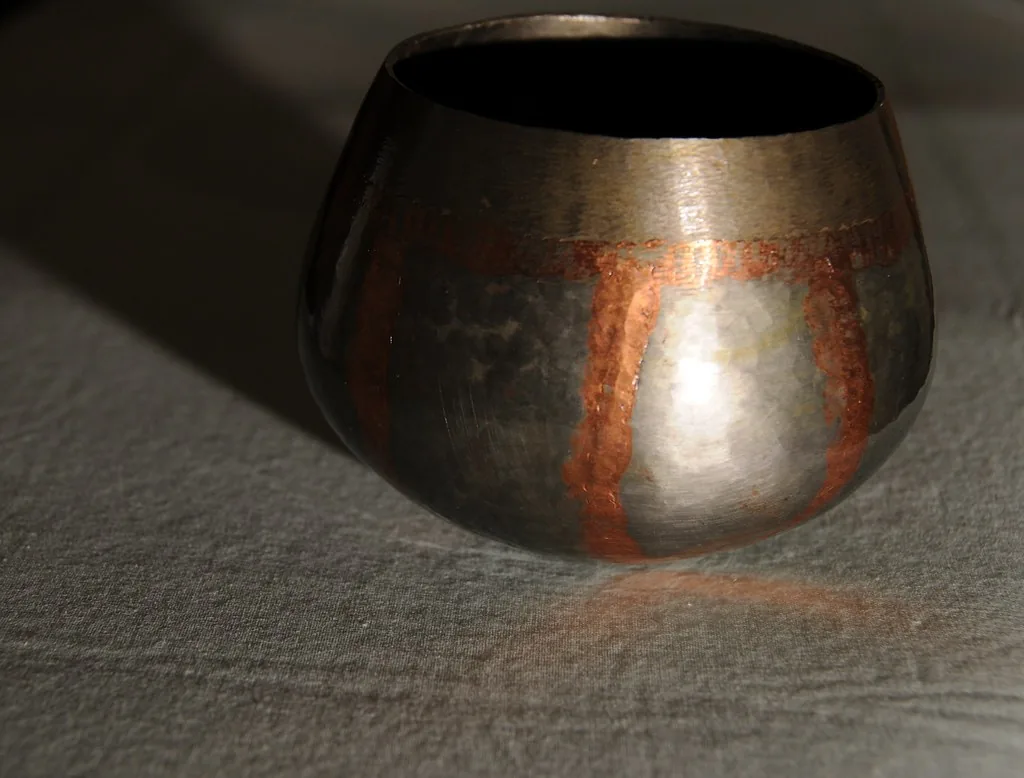
In metal, expect around €4 per centimeter of diameter. A 15 cm model therefore reaches €60. Crystal versions rise to €6.50/cm, or €97.50 for the same size.
Traditional engravings add 15 to 30% to the initial cost. This embellishment mainly affects large formats (20+ cm), which are already more expensive.
| Type | 10 cm | 20 cm |
|---|---|---|
| Metal | €40 | €150 |
| Crystal | €65 | €130 |
For a tight budget (under €100), choose metal bowls under 15 cm. Professionals will find better value in intermediate formats (16-19 cm).
Antique pieces start at €300 for 15 cm. Their price reflects their rarity and their historical function in monasteries.
Money-saving tips:
- Buy out of season (January-February)
- Compare specialized marketplaces
- Choose simple finishes
Our buying guide details these price differences to help you make the right choice.
Traditional Engravings: Reserved for Large Bowls?
Tibetan craftsmanship reveals its full splendor on large formats. Complex engravings such as the Om Mani Padme Hum mantra require at least 22 cm in diameter for perfect readability.
Nepalese artisans favor hand repoussé for these works. This ancestral technique requires a minimum surface of 20 cm for detailed motifs.
| Technique | Minimum diameter | Average time |
|---|---|---|
| Repoussé | 20 cm | 8 hours |
| Fine engraving | 15 cm | 5 hours |
How can you recognize an authentic piece?
- The motifs show irregularities that prove manual work
- The edges of the letters are slightly raised
- The design incorporates traditional Buddhist symbols
“Our large 25 cm bowls allow complex mantras to be inscribed with the required precision. Each chisel stroke follows a thousand-year-old tradition.”
Brands such as Himalayan Treasures specialize in these decorative pieces. Their catalogue shows how size influences the richness of the motifs.
Which Size for Which Use?
Each practice requires specific dimensions to maximize its benefits. Vibrations vary according to the goal, whether meditation or purification.
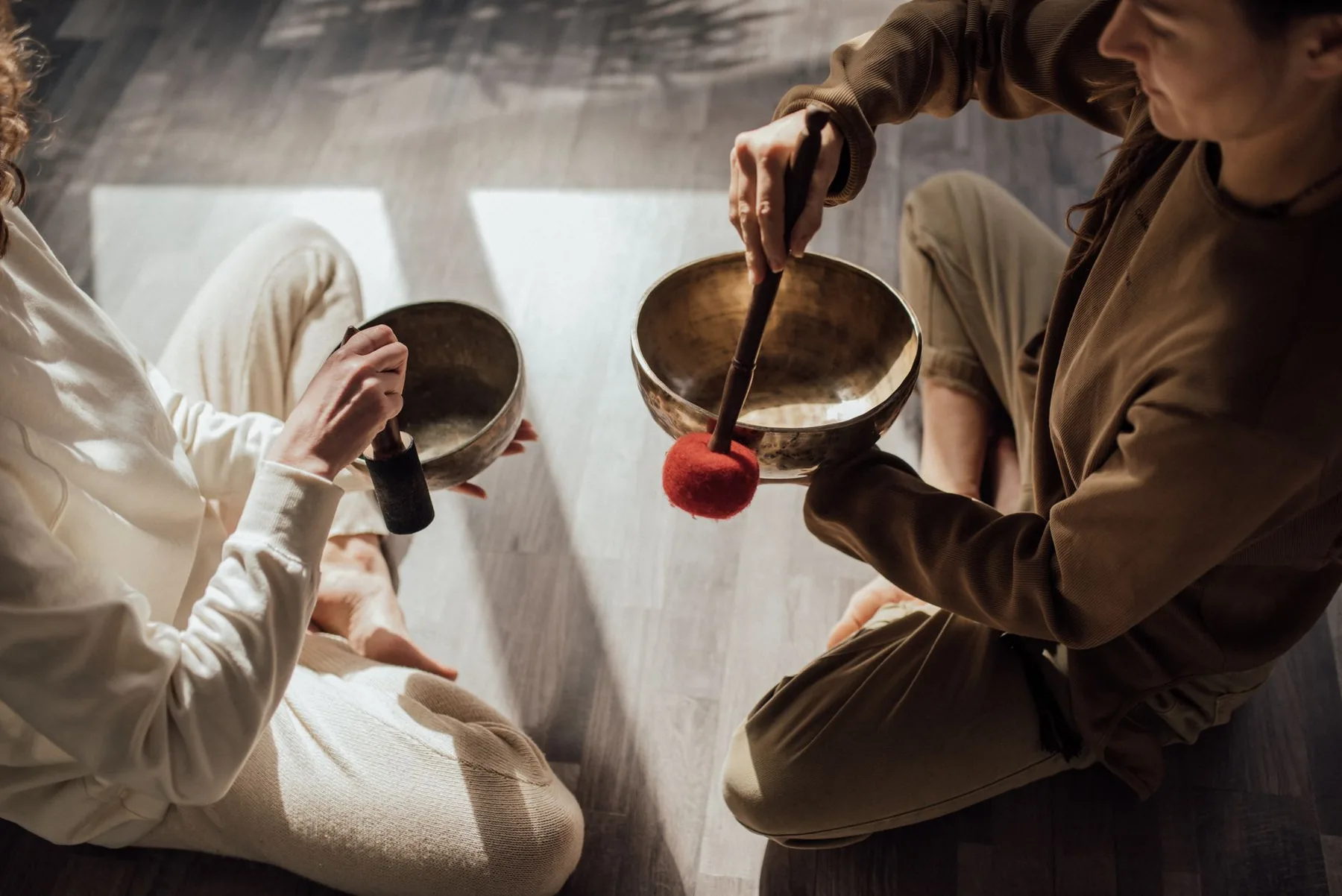
Meditation and Relaxation: Recommended Sizes
Formats between 18 and 22 cm offer the ideal resonance. Their deep waves naturally synchronize the breath.
For the best experience:
- Choose 20 cm for long sessions
- Use a non-slip support
- Combine with smaller bowls to enrich the atmosphere
| Duration | Recommended diameter | Typical frequency |
|---|---|---|
| 15-30 min | 18 cm | 280 Hz |
| 30+ min | 22 cm | 210 Hz |
Energy Work and Purification: Suitable Bowls
Small models (12-15 cm) work effectively on energies. Their crystalline sound quickly energizes spaces.
For purification:
- 25 cm minimum to cover a standard room
- 3 successive passes recommended
- Position it in the center of the space
“Our therapists systematically use three complementary sizes: 12 cm to awaken, 18 cm to balance, and 25 cm to ground.”
Mistakes to avoid:
- Neglecting the room’s acoustics
- Overloading the session with too many instruments
- Forgetting to adapt strike strength
Materials and Size: How They Interact
The composition of a singing bowl determines its acoustic performance. Materials directly influence resonance and durability according to the chosen diameter.
Metal bowls (7 alloys) offer optimal sound conductivity. Their average 3 mm thickness ensures even vibration, even in large formats.
Pure 99.99% quartz crystal produces unique harmonics. Its 5 mm thickness requires more delicate handling beyond 25 cm in diameter.
| Property | Metal | Crystal |
|---|---|---|
| Conductivity | High | Moderate |
| Weight (20 cm) | 2.8 kg | 3.5 kg |
| Durability | Excellent | Sensitive to impacts |
Traditional alloys such as brass shine in large diameters. Their resistance allows vigorous strikes without altering the tone.
To preserve your instruments:
- Clean metal bowls with a soft cloth
- Avoid extreme temperatures for crystal
- Store fragile models in padded cases
Recent innovations combine metal and crystal to unite lightness with harmonic richness. These composites are particularly suitable for intermediate formats (15-18 cm).
Conclusion: Finding the Perfect Tibetan Singing Bowl for Your Needs
A well-chosen Tibetan singing bowl transforms your practice. With 87% satisfaction after analyzing dimensions, the key criteria differ according to use.
For meditation, choose 20 cm. Energy work calls more for 12-15 cm. Your budget also guides the choice between metal and crystal.
Our complete guide details every step. Sales of custom models have jumped by 22%, proving the importance of an informed choice.
Three essential tips:
- Always test the sound before buying
- Check certificates of authenticity
- Choose certified artisans
The right dimension optimizes vibrations and well-being. Your ideal instrument exists: you just have to find it.
FAQ
Which size is best for meditation?
Are large bowls more expensive?
Can a small bowl be used for purification?
How does size affect the chakras?
Are engravings possible on all bowls?
What weight should you choose for portable use?
Do crystal bowls follow the same size criteria?
Source Links
- https://instruments-du-monde.com/en-us/blogs/tibetan-singing-bowl/tibetan-singing-bowl-size
- https://journals.sagepub.com/doi/10.1177/2156587216668109
- https://www.verywellmind.com/tibetan-singing-bowls-for-healing-89828
- https://www.verywellmind.com/tibetan-singing-bowls-for-healing-89828
- https://instruments-du-monde.com/en-us/blogs/tibetan-singing-bowl/tibetan-singing-bowl-size