
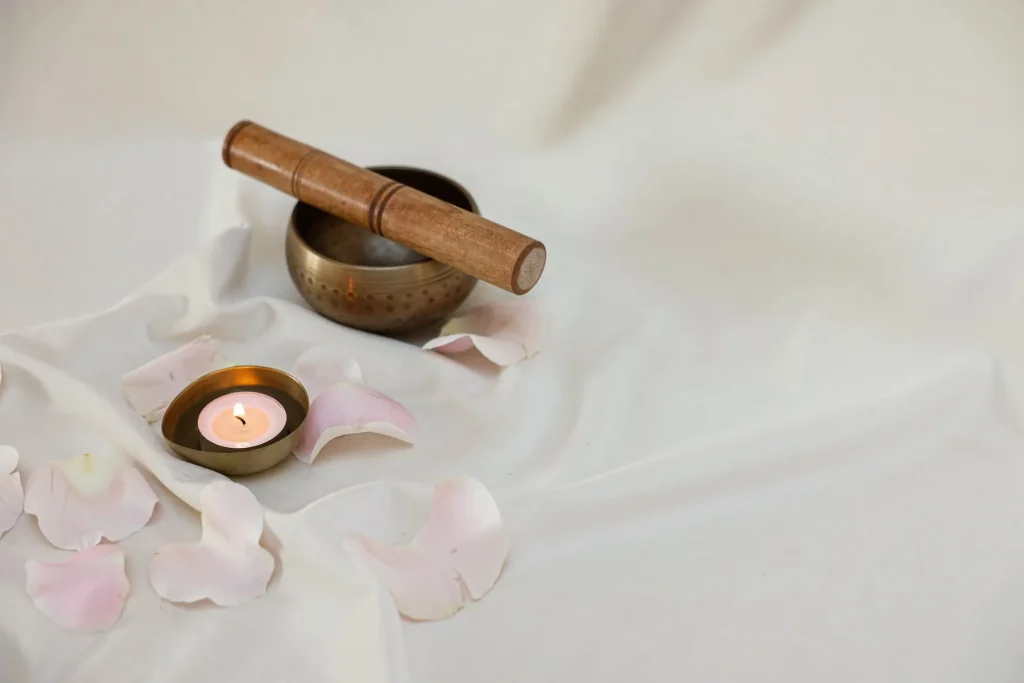
For more than 5,000 years, Himalayan singing bowls have accompanied spiritual rituals and meditative practices. Sacred objects, they are now valued for their soothing benefits and their ability to harmonize energies.
Handcrafted in Nepal, these unique instruments blend tradition with modern use. Whether for meditation, sound therapy, or relaxation, their deep vibration offers an incomparable sensory experience.
Choosing your bowl is a crucial step. Between hand-hammered models and cast versions, each piece has its own character. Some artisans even offer a satisfaction-or-your-money-back guarantee, proof of their commitment to quality.
This guide helps you find the perfect instrument, suited to your needs and your practice. Discover how to select a bowl that will resonate with your inner world.
Sommaire
History and Origin of Tibetan Bowls
The history of singing bowls goes back thousands of years: they were once much more than simple objects. Their journey through time reveals a fascinating transformation, from everyday utensils into sacred instruments.
The First Singing Bowls in the Himalayas
About 5,000 years ago, Mongolian nomads used wooden or stone vessels to store food. These early models, though rudimentary, laid the foundations for a rich tradition.
Over time, artisans incorporated metals, including meteorite fragments, to create more durable versions. This innovation marked the beginning of a new era.
- Transition to metal thanks to local blacksmiths
- Influence of Bon shamans in ancient rituals
- Archaeological discoveries in Himalayan monasteries
From Culinary Object to Spiritual Tool
Little by little, bowls left homes and entered temples. Bon priests were among the first to use their vibrations during shamanic ceremonies.
The arrival of Tantric Buddhism accelerated their spread. Monks adopted these instruments to accompany meditations and prayers, strengthening their sacred dimension.
“The sound of an ancient bowl carries the echo of the mountains and the wisdom of centuries.”
Today, their production remains concentrated in the Tibetan arc, where miners and blacksmiths preserve ancestral know-how. Each piece tells a unique story, linked to the earth and the stars.
Composition and Handcrafting
The magic of singing bowls lies in their unique composition and meticulous making. Each piece is a symphony of precious metals, shaped with passion by artisans who inherit centuries-old expertise.
The 7 Metals and Their Link with the Planets
The traditional alloy combines seven elements, each connected to a celestial body:
- Gold (Sun) – symbol of purity and vital energy
- Silver (Moon) – represents intuition and femininity
- Iron (Mars) – brings strength and protection
- Copper (Venus) – encourages love and creativity
This alchemical combination creates harmonious vibrations, ideal for meditation. According to experts, each metal influences a specific note, enriching the tone.
| Metal | Planet | Vibrational effect |
|---|---|---|
| Gold | Sun | Stimulates confidence |
| Silver | Moon | Calms the mind |
| Copper | Venus | Balances emotions |
| Iron | Mars | Strengthens willpower |
Traditional Hammering Techniques
Winter production follows precise rituals. Four artisans synchronize their movements to shape the material:
- Heating the alloy to a high temperature
- Rhythmic hammering for 8 hours
- Natural cooling in the open air
This process creates micro-irregularities that give the bowl its unique timbre. The finest pieces come from Nepalese family workshops.
Difference Between Cast and Hammered Bowls
Two methods coexist:
- Hammered bowls: unique works, with a rich, deep sound
- Cast bowls: standardized production, accessible price
“A true singing bowl bears the marks of its history: every hammer strike tells the story of a day’s work.”
To recognize an authentic hammered bowl, look for traces of handcrafting and test its resonance. Quality is measured by the duration of its vibrations.
The Benefits of a 7-Metal Tibetan Singing Bowl
The deep vibrations of Himalayan bowls act as a bridge between body and mind. Regular use reveals multiple benefits, from relaxation to energetic balance.
Effects on Relaxation and Meditation
The sound produced generates alpha waves, favorable to deep relaxation. Ideal for meditation, it supports grounding and concentration.
Therapists use it for stress or insomnia. Its impact on bodily water, which represents 70% of the body, amplifies its soothing effects.
- Reduced heart rate thanks to slow vibrations
- Release of muscle tension during sound massages
- Synergy with yoga for sensory immersion
Harmonizing the Chakras
Each note corresponds to a specific chakra. Low notes (C) stabilize the root chakra, while higher notes (B) awaken the crown chakra.
“The singing bowl is a tuner for the soul: it reveals imbalances and restores harmony.”
Practitioners often combine this tool with Reiki or crystal therapy to reinforce the alignment of energies.
How to Choose Your Tibetan Singing Bowl
Finding the ideal instrument requires both a technical and an intuitive approach. The right piece creates an immediate resonance with its user, like a chance meeting that feels obvious.
https://www.youtube.com/watch?v=FKDZCeZHCiQ;pp=0gcJCfcAhR29_xXO
Size and Weight: Impact on Vibrations
Dimensions directly influence the function and therapeutic effects. A small model (8 to 12 cm) produces high-pitched sounds, perfect for working with the upper chakras.
Larger versions (15 to 22 cm) produce low vibrations. Ideal for the root chakra, they ground you deeply in the present moment.
The Musical Note and Its Importance
Each frequency corresponds to a specific energy center. The note C acts on the physical heart, while B opens spiritual awareness.
Test several instruments before deciding. The right note often creates an immediate bodily response: goosebumps or warmth in the hands.
Quality Criteria for an Informed Purchase
Choose recognized artisans such as Jumkha or Patan. Their know-how guarantees incomparable acoustic and aesthetic quality.
Beware of simple brass counterfeits. Their sound lacks depth and may even create energetic dissonance.
“A true bowl is not chosen, it reveals itself: when the vibrations touch your soul before your ears.”
Some sellers, such as Mont Blanc Bien-Être, offer exchange guarantees. Use them to test your bowl at home, in your usual practice space.
Techniques for Making Your Bowl Sing
Mastering the art of making a bowl sing requires patience and technique, but the results are worth it. Whether you are a beginner or experienced, these methods will help you release harmonious sounds.
The Percussion Method
Place the instrument in your left hand, if you are right-handed, for better stability. Strike the rim with a wooden stick, like a gong. The sound produced is bright and pure.
- Use light pressure to avoid dissonant vibrations.
- Experiment with different angles (20 to 30 degrees) to find the ideal resonance.
The Circular Rubbing Method
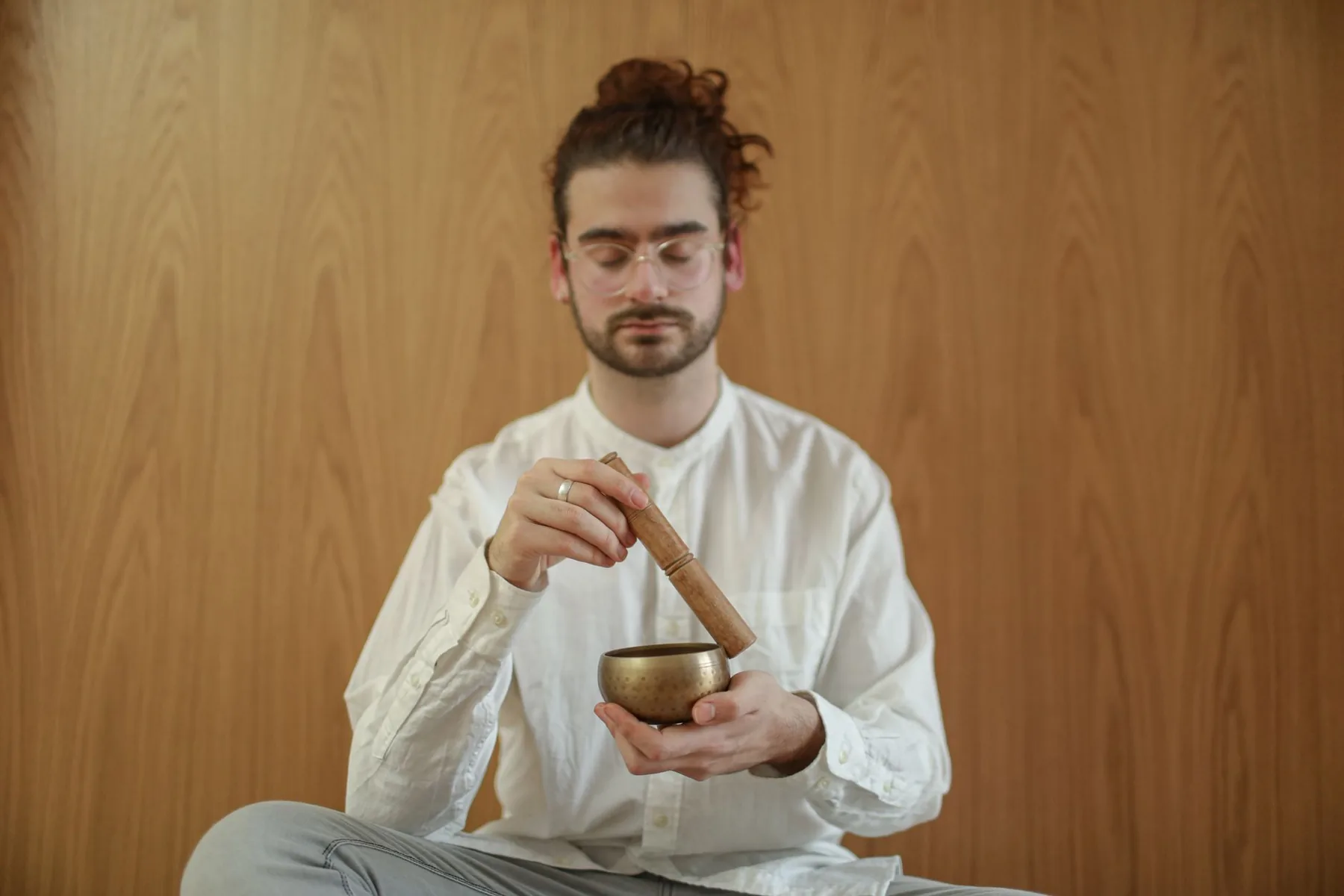
With a suede-covered mallet, slide it along the rim in steady movements. This technique creates soothing sounds, perfect for meditation.
“Emotional intention transforms a simple vibration into a deep experience.”
Choosing the Right Mallet
The material influences sound quality. Here is a comparison:
| Material | Effect | Ideal use |
|---|---|---|
| Sandalwood | Clear, powerful sound | Percussion |
| Wool felt | Soft, enveloping sound | Rubbing |
To go further, see our complete guide to suitable accessories.
Common mistakes:
- Pressing too hard, which stifles the vibrations.
- Neglecting to warm up the bowl (3 to 4 light strikes before rubbing).
Advanced Uses of the Tibetan Bowl
Beyond meditation, these ancestral instruments reveal unexpected applications for balancing daily life. Their vibrations act as a universal language, capable of transforming spaces and energies.
Sound Massage and Vibrational Therapy
Placed on the body, the instrument releases waves that penetrate deeply. Therapists use it to:
- Relieve digestive discomfort (circular abdominal massage technique)
- Reduce muscle tension thanks to low frequencies
- Treat dysphonia in speech therapy (testimony from Dr. Lefèvre, Marseille)
Comparison of methods:
| Application | Frequency | Recommended duration |
|---|---|---|
| Muscle relaxation | Low (C) | 10 to 15 min |
| Digestive stimulation | Medium (G) | 5 to 8 min |
Purifying a Place or Objects
In Feng Shui, a 3-step protocol helps clear stagnant energies:
- Make the bowl sing in each corner of the room
- Visualize a purifying white light
- Finish by opening the windows
“During wedding ceremonies in Nepal, the vibrations seal the union by harmonizing bodies and souls.”
Science is also exploring these effects. A study from the University of Strasbourg (2022) shows how sounds modify the molecular structure of water, proving their subtle impact.
Care and Practical Advice
Taking care of your sacred instrument ensures its longevity and preserves its vibrational properties. Regular maintenance optimizes its sonic and energetic performance.
Cleaning and Energetic Recharging
For cleaning, choose gentle methods. Spanish white or Miror provide a purifying action without abrasion.
Here is an effective routine:
- Wipe gently with a microfiber cloth
- Apply a cleaning paste designed for precious metals
- Rinse with warm distilled water
Energetic recharging follows natural cycles:
“Expose it to moonlight for pieces dominated by silver, and to sunlight for those rich in gold.”
Precautions for Long-Lasting Use
A few simple precautions extend the instrument’s life:
Avoid at all costs:
- Prolonged humidity, which oxidizes metals
- Sudden thermal shocks
- Aggressive chemical products
For storage:
- Choose a dry, temperate place
- Wrap it in natural silk fabric
- Keep it away from electromagnetic sources
In case of a microcrack, tin soldering performed by a professional can save the instrument. For irreparable damage, ritual burial allows its energy to be released.
Conclusion
The harmony of a Tibetan singing bowl rests on an alchemy between matter and intention. To choose well, prioritize authenticity, personal resonance, and use suited to your needs.
Taking part in workshops, such as those offered by Mont Blanc Bien-Être, refines your practice. Beware of impulsive purchases on marketplaces: an attractive price often hides mediocre quality.
The future promises innovations, such as connected bowls that analyze frequencies. But the essential thing remains the sensory experience: let yourself be guided by vibrations rather than reason.
Your ideal instrument is the one that whispers to your soul before singing to your ears.