
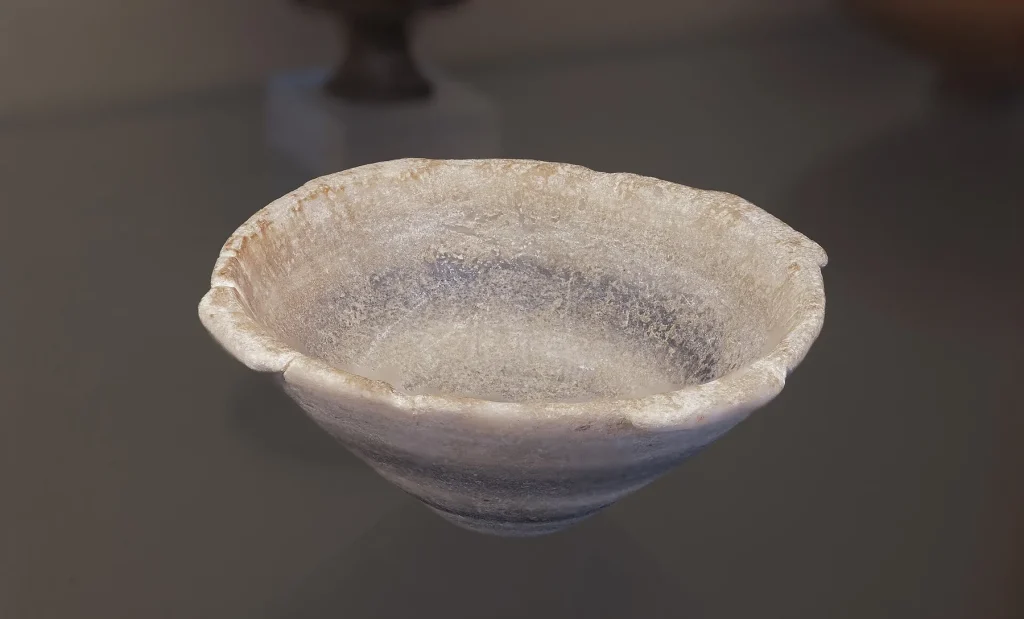
For centuries, singing bowls have accompanied seekers of inner peace. Their soothing tone acts as a bridge between body and mind, encouraging a state of deep relaxation. A 2016 study from the University of San Diego confirms their effectiveness in reducing stress and balancing emotions.
After twenty years of meditation practice, including five years with these sacred instruments, I am sharing techniques here that are accessible to everyone. Whether you are a beginner or experienced, these methods can adapt to your pace.
Explore how to integrate these harmonious vibrations into your routine. Variations such as crystal bowls enrich the experience, while water amplifies their energetic properties.
Sommaire
What is a Tibetan bowl, and why use it for meditation?
Singing bowls, forged in Himalayan valleys, are far more than simple instruments. Their history is intertwined with that of ancient civilizations, where shamans and monks used them for sacred rituals.
The historical and spiritual origins of the Tibetan bowl
Appearing more than 5,000 years ago, these fascinating objects were already used in the Bronze Age. Nomadic tribes used them during purification ceremonies. Later, Buddhist monasteries made them tools for energy healing.
Each piece was handmade at the time. Artisans incorporated deep symbolism linked to lunar and solar cycles. This tradition continues today in Nepalese workshops.
The connection between the 7 metals and the chakras
The particular alloy used in these bowls is no accident. Seven precious metals correspond to the seven energy centers of the human body:
| Metal | Celestial body | Associated chakra |
|---|---|---|
| Gold | Sun | Crown (Sahasrara) |
| Silver | Moon | Third eye (Ajna) |
| Copper | Venus | Heart (Anahata) |
| Iron | Mars | Root (Muladhara) |
This harmony between matter and cosmos explains their vibrational power. As this study reveals, the sounds emitted act directly on our nervous system.
In meditation, these frequencies help release blockages. They create a bridge between the physical and the subtle, making it easier to access expanded states of consciousness.
The benefits of meditation with a Tibetan bowl
The unique vibrations of these ancestral instruments offer scientifically studied benefits. A 2016 study reports a 37% reduction in stress among regular practitioners.
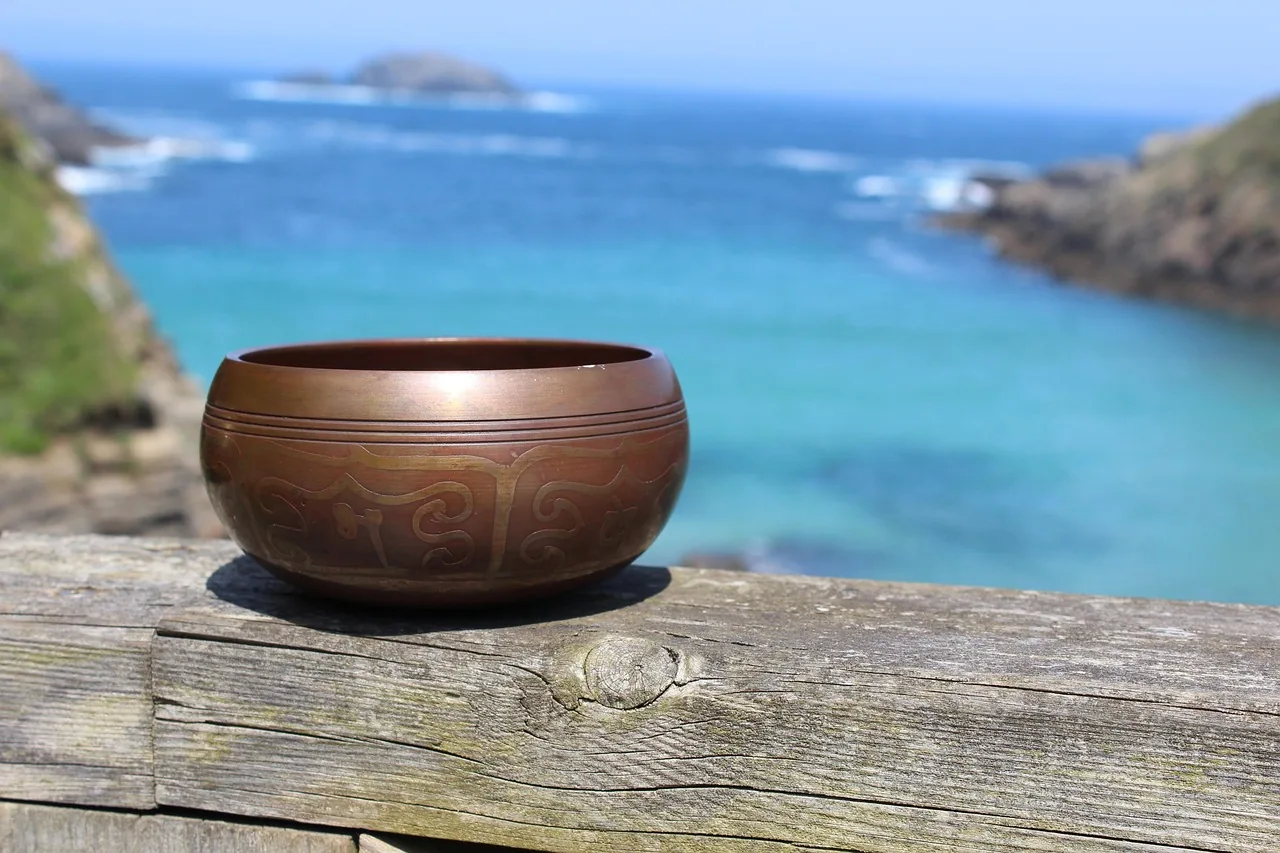
Stress reduction and improved concentration
The sounds emitted act directly on our nervous system. They stimulate the production of alpha waves, associated with a state of deep calm.
Among the observed effects:
- A significant drop in blood pressure
- Reduced anxiety symptoms
- Stronger mental clarity
Study participants reported a noticeable improvement in their ability to concentrate after only three weeks of practice.
Energetic harmonization and emotional balance
These ancestral tools work on several levels:
- Release of muscular tension
- Rebalancing of energetic flows
- Soothing of disruptive emotions
Their synergy with yoga amplifies these benefits. Postures combined with sound vibrations create complete relaxation of the body and mind.
For sleep disorders or tinnitus, regular use shows promising results. Rest quality improves through this calming sound support.
How to choose the right Tibetan bowl for your practice
Selecting a suitable bowl directly influences the quality of your sessions. Tone, size, and materials determine its harmony with your energetic needs.
Selection criteria: size, tone, and materials
Tibetan bowls range from 10 to 30 cm in diameter. The smaller they are, the higher their sound. Larger models produce lower vibrations, ideal for deep grounding.
Always test the resonance:
- Strike lightly with a felt mallet to assess how long the harmonics last
- Favor those whose sound immediately calms you
- Check the balance between weight and ease of handling
The difference between metal bowls and quartz crystal bowls
Metal alloys (gold, silver, copper) target specific chakras. Quartz, meanwhile, emits precise frequencies, such as 432 Hz, reputed for its restorative effect.
| Type | Benefits | Recommended use |
|---|---|---|
| Metal | Warm vibrations, ancestral tradition | Dynamic meditation |
| Quartz | Sound clarity, crystal healing | Deep relaxation |
Maintain your instrument with a soft cloth. Avoid thermal shock to preserve its vibrational properties.
Preparing your meditation session with a Tibetan bowl
A successful session begins with careful preparation of both space and mind. These few simple steps will optimize your experience.
Create a calm, supportive environment
Choose a quiet place, protected from disturbances. Soft lighting and natural elements strengthen serenity.
To deepen the atmosphere:
- Use incense or crystals to purify the atmosphere.
- Turn off electronic devices to avoid interruptions.
- Prepare a mat or cushion for greater comfort.
Adopt the ideal posture for deep relaxation
Your body should feel comfortable while remaining aligned. Classic postures include:
- The lotus or half-lotus, for maximum stability.
- The cross-legged posture, more accessible for beginners.
- Sitting on a chair, with your back straight and feet flat on the floor.
Practice abdominal breathing to synchronize body and mind. Ten to twenty minutes are enough for tangible results.
Setting an intention before practice strengthens the connection to the bowl’s vibrations.
Basic techniques for using a Tibetan bowl
Two essential methods allow you to fully use the vibrational potential of these instruments. Each produces distinct sounds, suited to different moments in your practice.
The struck method: precision and immediacy
Use a felt mallet to gently strike the outer wall. The optimal zone is halfway up the bowl, where the vibrations are purest.
Key tips:
- Keep light pressure to avoid metallic sounds
- Let the bowl resonate freely after each impact
- Begin with sequences spaced 10 seconds apart
Circular rubbing: a continuous, enveloping sound
This technique takes more practice but offers deep results. Position the mallet at 45 degrees and make steady circles.
To succeed:
- Maintain a constant speed
- Gradually increase the pressure
- Listen for the emergence of harmonics
| Method | Duration | Effect produced |
|---|---|---|
| Strike | Short term | Immediate awakening |
| Rubbing | Long term | Progressive relaxation |
An example for beginners: alternate 3 gentle strikes with 30 seconds of rubbing. This combination creates a harmonious transition between energy and calm.
Regularity matters more than duration: 5 minutes daily is better than occasional sessions that are too long.
How to integrate the bowl’s sound into your meditation
The meditative experience takes on a new dimension when accompanied by sound vibrations. These waves act as a guide for the mind, making it easier to access altered states of consciousness.
Focus on vibrations and harmonics
The emitted frequencies create a perceptible physical resonance. According to a University of San Diego study, this interaction reduces stress by 37% on average.
Effective techniques:
- Visualize the vibrations as a wave of light moving through the body
- Synchronize inhalation with the beginning of the resonance
- Let the sound fade naturally before exhaling
“The first time I perceived the harmonics, my sense of space changed. The boundaries between inner and outer seemed to disappear.” — Testimony from a practitioner
Use the sound as a point of focus
Unlike vocal mantras, the bowl’s vibrations offer an immediate sensory anchor. This method is especially effective for beginners.
Recommended procedure:
- Choose a regular rhythm (one strike every 15 seconds)
- Pay attention to the quality of the sustain (resonance duration)
- Notice distractions without judgment, then return to the sound
To go further, discover complementary techniques suited to every level.
| Element | Effect on the meditative state |
|---|---|
| Low frequency | Grounding and stability |
| High harmonics | Mental clarity |
Alternating between active listening and passive receiving helps balance the mind. This approach acts as a valuable aid for reaching inner silence.
Advanced variations to enrich your practice
Deepen your experience with innovative methods that transform traditional use. These approaches stimulate sensory awareness and open new energetic perspectives.
Meditation with a Tibetan bowl filled with water
Adding water turns the object into a fascinating visual tool. The vibrations create geometric patterns on the surface, revealing the energy being emitted.
Safe protocol:
- Fill to no more than one-third to avoid splashing
- Use room-temperature water
- Clean carefully after each session
Water patterns vary depending on frequency:
| Pattern | Energetic meaning |
|---|---|
| Hexagons | Chakra balance |
| Spirals | Smooth circulation of Qi |
“Observing these forms helped me visualize the invisible. It is like seeing your own vibrational field.” — Practitioner for 5 years
Combining a Tibetan bowl with guided meditation
An experienced guide amplifies the benefits, especially for beginners. Their voice works in synergy with the sounds for total immersion.
Criteria for choosing a professional:
- Certified training in sound therapy
- Experience with vibrational instruments
- An approach adapted to your level
In a group, the effect multiplies. Therapeutic workshops create a powerful collective resonance. This method is ideal for those who want to be supported in their process.
How often should you meditate with a Tibetan bowl?
Adapting the frequency of your sessions optimizes their long-term benefits. Research suggests that five 10-minute sessions are better than one intensive hour. This approach maintains a stable energetic flow.
- Relaxation: 3 to 5 weekly sessions of 10 to 15 minutes.
- Energy work: 15 minutes daily, with breaks.
- Morning for energizing, evening for calming.
“Consistency turns a practice into a sacred ritual. A little daily time is better than sporadic effort.”
Signs of overtraining to watch for:
- Auditory fatigue or irritability.
- Reduced sensitivity to vibrations.
- Difficulty concentrating during sessions.
A journal helps you track your progress. Note:
| Element | Impact on your well-being |
|---|---|
| Duration | Felt energy |
| Frequency | Sleep quality |
In winter, increase slightly to counter seasonal lethargy. In summer, favor shorter but regular sessions.
Conclusion: transform your meditation practice with a Tibetan bowl
The benefits of this ancient instrument go far beyond immediate simple well-being. Stress reduction, mental clarity, and emotional balance are an integral part of its effects.
Each session is a unique exploration. Find your ideal rhythm and let the vibrations guide your inner world. Personal experimentation often reveals surprises.
To begin, choose a medium-sized 7-metal model. Its versatility suits most practices. Video tutorials can complement your learning.
Dare to bring these ancestral sounds into your routine. Their transformative power works gradually, like an echo of your own evolution.
FAQ
What impact do singing bowl vibrations have on the body?
Can this object be used without prior experience?
How should you clean and maintain your instrument?
Is there a difference between crystal bowls and metal bowls?
How long should an ideal beginner session last?
Can this tool be combined with other practices such as yoga?
Where can you buy an authentic singing bowl?
Source Links
- https://instruments-du-monde.com/en-us/products/singing-bowl-meditation
- https://www.headspace.com/meditation/meditation-for-beginners
- https://pmc.ncbi.nlm.nih.gov/articles/PMC9144189/
- https://www.yogajournal.com/meditation/?scope=anon
- https://instruments-du-monde.com/en-us/blogs/tibetan-singing-bowl/everything-you-need-to-know-about-tibetan-singing-bowls
- https://instruments-du-monde.com/en-us/products/singing-bowl-meditation
- https://www.mayoclinic.org/tests-procedures/meditation/in-depth/meditation/art-20045858
- https://instruments-du-monde.com/en-us/blogs/tibetan-singing-bowl/tibetan-singing-bowl-size
- https://www.masterclass.com/articles/singing-bowl
- https://instruments-du-monde.com/en-us/products/singing-bowl-meditation
- https://pmc.ncbi.nlm.nih.gov/articles/PMC9144189/
- https://inspireculture.org/spirituality/spiritual-practices/how-to-use-a-singing-bowl-for-meditation-and-stress-relief/
- https://www.healthline.com/health/sound-healing
- https://instruments-du-monde.com/en-us/products/singing-bowl-meditation
- https://instruments-du-monde.com/en-us/products/singing-bowl-meditation
- https://www.calm.com/blog/how-to-meditate
- https://instruments-du-monde.com/en-us/products/singing-bowl-meditation
- https://health.clevelandclinic.org/sound-bath
- https://en.wikipedia.org/wiki/Standing_bell