
The kalimba, also known as a thumb piano, is a popular African musical instrument. Easy to learn and enjoyable to play, the kalimba is an ideal choice for beginners who want to get started with music. In this article, we explain how to play the kalimba and share tips to help you improve quickly.
Sommaire
Understanding how the kalimba works
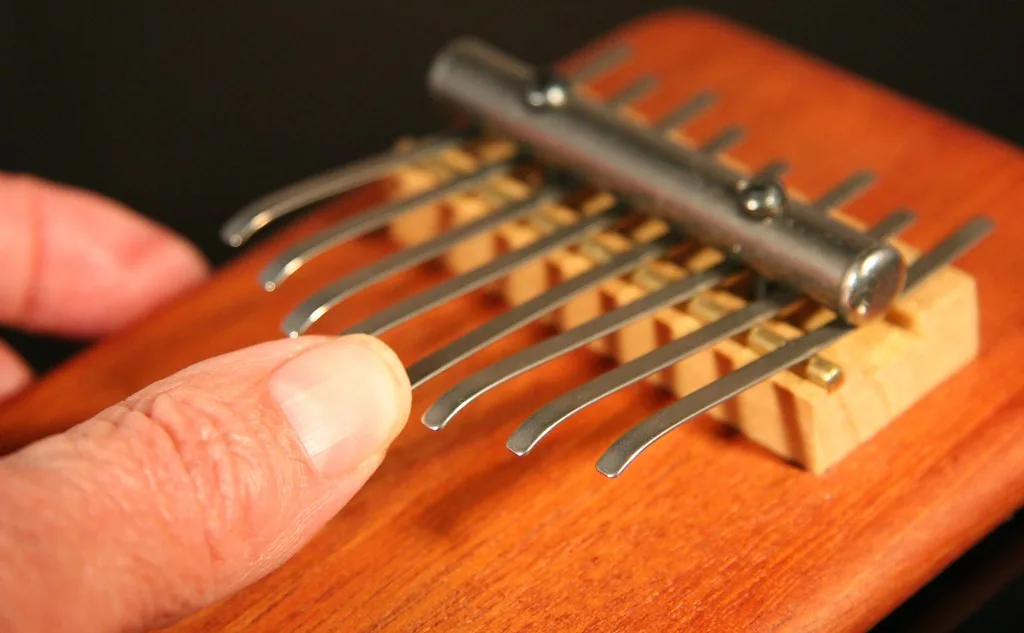
The kalimba is made of a wooden board topped with metal tines of different lengths and thicknesses. Each tine produces a specific note when it is plucked with the thumbs. The layout of the tines varies depending on the model, but the notes are generally arranged to form a diatonic scale.
Choosing the right kalimba to start with
To start playing the kalimba, it is essential to choose a model suited to your needs and your level. The kalimbas most commonly used by beginners are those with 10 or 17 tines:
- A 10-tine kalimba offers a limited range of notes, which may be enough to learn the basics and play simple melodies.
- A 17-tine kalimba lets you play with a wider variety of notes and offers more musical possibilities.
There are also kalimbas with a larger number of tines, which make it possible to extend the range even further and access advanced techniques. However, these kalimbas are generally intended for experienced musicians.
Learning how to hold the kalimba
To play the kalimba, you need to know how to hold it correctly. Here are a few tips to help you:
- Hold the kalimba with both hands, placing your thumbs on the sides and your other fingers at the back of the instrument.
- Position your thumbs so they can easily pluck the metal tines.
- Make sure your grip is comfortable and natural so your hands do not tire during long playing sessions.
Learning the basic notes
Before you start playing melodies, it is important to know the notes produced by each tine. On a standard kalimba, the notes are usually indicated by letters engraved or painted near the tines. If your kalimba has no markings, you can use stickers to identify the notes and make learning easier.
Getting familiar with the diatonic scale
Most kalimbas are tuned to a diatonic scale, which means they can play the notes of a major or minor scale without accidentals. To get familiar with these notes, feel free to experiment and play scales on your kalimba:
- Start by plucking the shortest tine (the highest note) through to the longest tine (the lowest note).
- Then do the reverse, starting from the longest tine and moving toward the shortest.
This simple exercise will help you develop your musical ear and better understand how the kalimba works.
Learning to play simple melodies
Once you are comfortable with the basic notes, you can start playing simple melodies. Many songs can be adapted for the kalimba, even if the original version does not include this instrument. You can also find sheet music designed specifically for the kalimba, showing you which tines to pluck to play each note.
Developing your technique
To improve quickly, it is essential to work on your technique regularly. Here are a few exercises to improve your agility and accuracy:
- Play scales ascending and descending, trying to stay as even as possible.
- Link several consecutive notes by plucking the tines quickly and precisely.
- Alternate between high and low notes to develop your coordination and sense of rhythm.
Exploring advanced techniques
Once you have mastered the basics, it is time to explore more advanced techniques that will enrich your playing:
- Glissando: this involves sliding the thumb across several tines, creating a connected effect between the notes.
- Vibrato: by making the tine vibrate slightly after plucking it, you add pitch modulation to the note produced.
- Chords: by plucking two or more tines at the same time, you create harmonies and rich sound textures.
By experimenting with these techniques and incorporating them into your playing, you will develop your own style and be able to create increasingly interesting and varied melodies.
Playing the kalimba is a rewarding musical experience, accessible even to beginners. By following the advice and steps described in this article, you will be able to start playing your first melodies and make quick progress on this fascinating instrument. Feel free to explore new techniques and experiment to find your own path in the world of the kalimba.
Above all, do not make a mistake before buying your first thumb piano, and read our tutorial that will help you choose the brand of your future kalimba. It is an essential guide for any new player of this musical instrument.