

Comparing these two instruments without setting them against each other helps you choose according to your real needs. They look similar in shape, but their internal construction and the way sound is produced are very different.
In this article, we will cover three major criteria: tone, budget, and ease of learning. The approach remains practical and suited to buyers in France.
The “flying saucer” silhouette can be misleading. The manufacturing process — hammered surface versus cut tongues — changes everything about tone color, note sustain, and price.
Promise: by the end, you will know how to recognize each instrument, anticipate the learning curve, and avoid buying mistakes.
The comparison is made in the present moment, according to the intended use (meditation, ambient music, group playing, at home or on stage), and will be presented criterion by criterion: construction, durability, tone, scales, accessories, and maintenance.
Sommaire
Tongue Drum vs Handpan: Differences in Sound, Price, and Learning Curve
Who is this comparison for?
Target Profiles
This article is aimed at curious beginners, experienced musicians, people seeking relaxation, and buyers choosing their first percussion instrument in France.
What You Will Be Able to Decide by the End
This article helps you decide on three clear points: sound color, ease of handling, and budget / price. Fixed tunings prevent wrong notes, which simplifies the choice for wellness or stage use.
- Use: solo practice at home, wellness sessions, ambient recording, or group playing.
- Constraints: transport, maintenance, and longevity depending on the material.
- Simple framework: I like this sound • I can invest this budget • I want this learning curve.
Concrete benefit: making a rational choice without sacrificing musical emotion. This article guides you in aligning your desires, budget, and practice.
Understanding How They Work: Cut Tongues vs Hammered Surface
The internal mechanism explains why two instruments that look similar produce such different tones.
Why this changes everything: the vibration method determines the tone, resonance, and feel under the fingers. When an entire area acts as a membrane, the attack is clear. When a tongue vibrates freely, the sustain becomes longer.
Handpan: Hammered Membrane
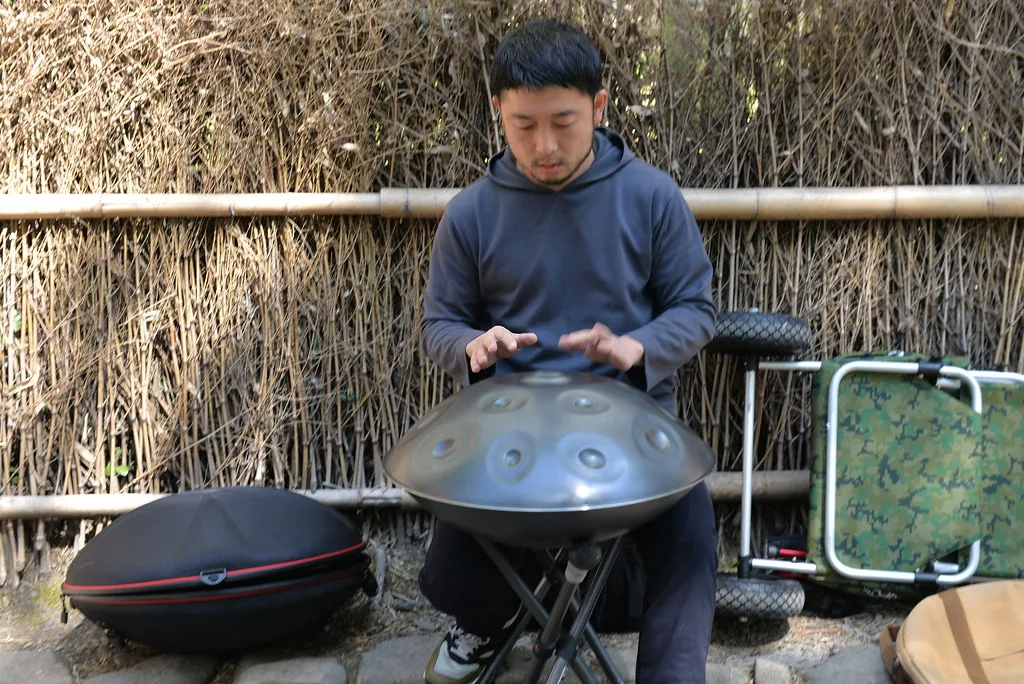
The handpan is built from two welded shells. Round tone fields — the central ding and the dimples — are hammered without cutting the metal sheet. Each area reacts like a small membrane. The result: clarity, precise attack, and dynamic response.
Tongue Drum: Vibrating Slots
The tongue drum (also called a steel tongue or tank drum) has cut slots. Tongues of varying sizes vibrate independently and produce long, meditative notes. Visually, you can identify the slots and aligned tongues.
In short: construction explains the difference between the two instruments. The hammered membrane favors attack; the cut tongues favor sustain and softness.
Construction, Materials, and Durability: Two Instrument Philosophies
In the workshop, each note is born from a very different gesture depending on the chosen method.
Tuning by Hammering: Craft Precision and Sensitivity
Hammering requires long and precise expertise. The tuner shapes each area to obtain the desired pitch. Construction often takes several months and requires specific tools.
This precision creates a refined result, but makes the instrument more sensitive to impacts. A dent or pressure during transport may be enough to knock it out of tune.
Cutting the Tongues: Stability and Longevity
With cutting, tuning depends on the dimensions of the tongues. Depending on the model, a grinder or laser is used. The result is often more stable over time.
Wear tolerance is better: small deformations do not necessarily affect tuning as quickly as they would on a hammered model.
Wear, Transport, and Practical Advice
Whatever you choose, material quality matters. An instrument that is too low-end may have fragile areas around the slots.
- Protect it with a padded case.
- Avoid stacking it or applying pressure to the shell.
- Always place it on a stable surface; handle it from underneath when moving it.
For a complete comparison and buying advice, see our buying guide.
Sound and Resonance: How to Recognize the Sound of a Handpan or Tongue Drum
The sound signature is heard in the attack, the sustain, and the halo around the note.
Handpan: Clear and Precise
Signature: clean attack, readable notes, medium to high sustain.
Clarity helps the musician play precise melodic lines in a group.
A More Meditative Timbre
Signature: softer definition, rounded halo, and very long sustain.
This effect creates a sound bed that is ideal for relaxation and ambient atmospheres.

Volume Versus Resonance
Do not confuse volume and resonance: an instrument may seem less loud while offering greater resonance. Size, scale, and construction change these parameters.
Use Cases and Place in an Ensemble
For meditation, yoga, or ambient music, the enveloping sound often works better.
For a world-music performance or a melody in a group, precision becomes more valuable.
| Characteristic | Attack / Clarity | Sustain / Resonance |
|---|---|---|
| Clear instrument | Clean attack, distinct notes | Medium to high, projective |
| Enveloping instrument | Soft attack, sound halo | Very long, meditative sound bed |
| Listening advice | Compare samples in the same scale | Evaluate projection vs sustain |
Practical advice: listen to samples in similar scales and test striking with the hands and then the fingers. To go further, see our detailed comparison on choosing an instrument.
Number of Notes, Scales, and Musical Possibilities
The number of notes directly influences the role of the instrument in a piece. A smaller range makes improvisation easier; a wider range opens harmonic choices.
Common Configurations
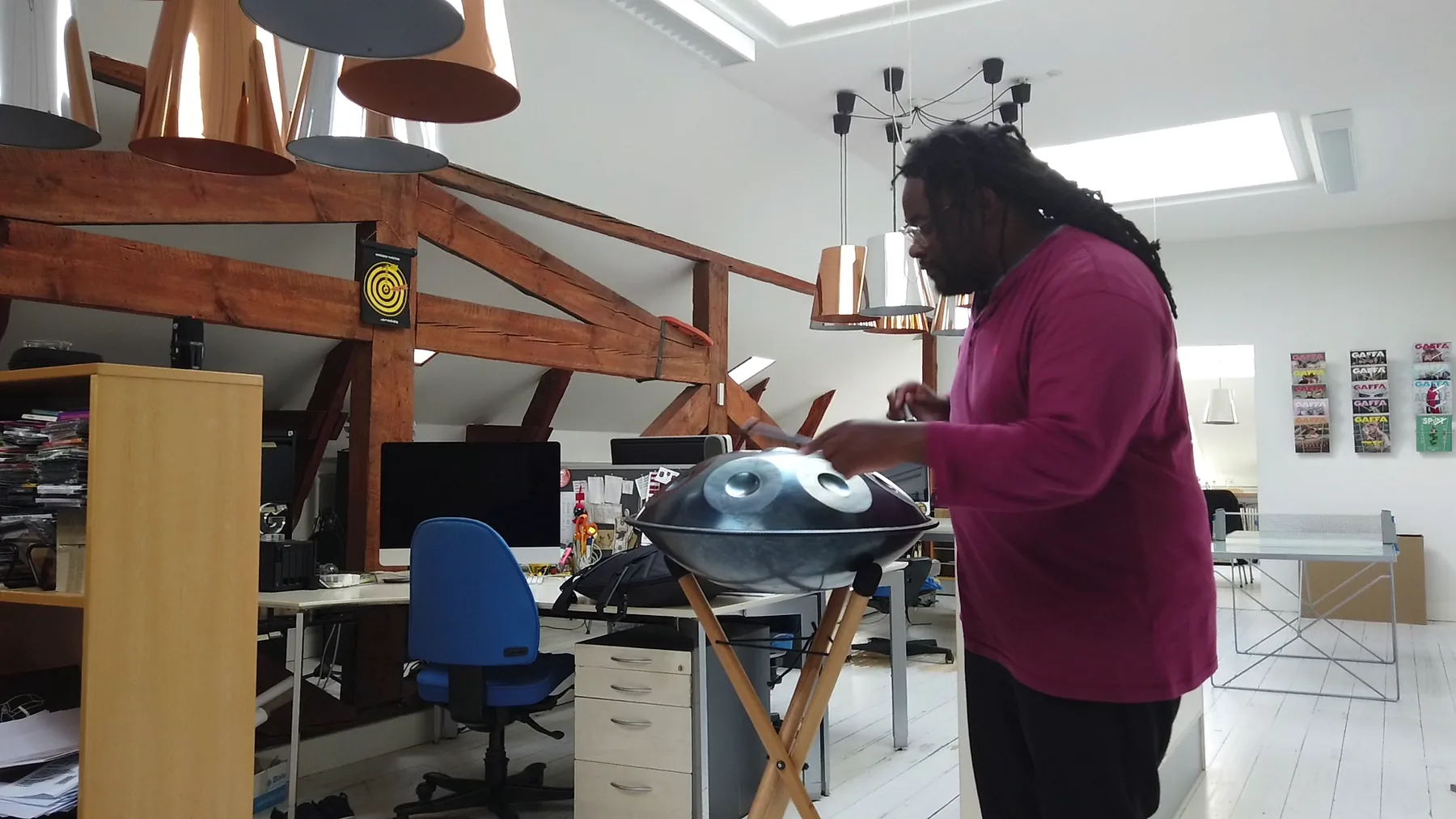
Handpan: the standard configuration generally offers 7 to 10 notes on the upper side. Some models add extra tone fields (top or bottom) to exceed 20 notes.
Tongue drum: 6 to 9 notes are common depending on the diameter. Makers also offer versions with more tongues to expand the palette.
Scale Choices and Their Impact
Scales (major, minor, modes, “ethnic” scales) strongly change the atmosphere. A pentatonic scale limits dissonance and supports relaxation.
- More notes = more harmonic possibilities, but more complexity.
- Fewer notes = intuitive playing and meditative textures.
- To play in a group, check that you share the same scale/key for better compatibility.
| Aspect | Typical configuration | Recommended use |
|---|---|---|
| Reduced palette | 6–9 notes | Meditation, simple accompaniment |
| Expanded palette | 7–21+ notes | Melodic covers, compositions |
| Scales | Major, minor, modal, pentatonic | Choose according to the desired mood |
Buying advice: choose a scale that matches your intention. If you are starting out and want calm, a limited configuration is enough. If you plan to accompany others or play pieces, choose more notes.
To explore the scales offered by makers, see our dedicated page on the handpan scale.
Price and Budget: How Much Does a Handpan vs a Tongue Drum Cost in France?
Price ranges in France reflect manufacturing complexity and the maker’s reputation.
Realistic ranges: a tongue-based model is generally found between €50 and €600. Variations come from size, number of notes, finish, and brand.
For a serious handpan, expect more like €800 to €2,500, and often €1,000 to €3,000 for high-end models. The low floor for this type of instrument is rare and often risky.
Why the gap? Building a handpan requires more time, tooling, and precise tuning. These steps cost hours of labor and craft expertise.
Bargain alert: a price that is too low for a handpan may hide unstable tuning or a fragile finish. Favor sound quality over appearance.
| Item | France range | What changes the price |
|---|---|---|
| Tongue-based model | €50 – €600 | Size, notes, finish, brand |
| Standard handpan | €800 – €2,500 | Hammering, adjustments, maker reputation |
| High-end | €1,000 – €3,000+ | Quality control, rarity, acoustics |
Budget logic: if you are testing the waters, start with an affordable instrument. If you are committing musically, invest in a quality handpan. As a rule, price primarily reflects manufacturing complexity, not only artistic value.
Size, Diameter, and Weight: Transport, Mobility, and Playing Comfort
Choosing a compact format can transform your daily practice and travel. Size and weight influence how often you take an instrument with you, the posture you adopt, and how you place it (lap, table, stand).
Handpan: Size and Weight Benchmarks
Diameter: the handpan follows a near-standard format of around 50–55 cm. This makes it easier to choose a suitable case.
Weight: generally expect between 3 and 8 kg, often around 7 kg. Transport remains possible, but requires protection and dedicated storage.
Compact Formats and Mobility
The tongue drum comes in very variable diameters, often 15–30 cm for compact models. Weight ranges from 1 to 5 kg depending on size and material.
These small formats are easier to place on a table, lend to someone else, and take away for a weekend.
Practical Consequences and Advice
On the lap, a heavy instrument requires a stable position; on a table, height changes ergonomics. If you often travel by train or car, prioritize weight and a good transport case.
“Thinking about format means thinking about practice.”
| Aspect | Handpan | Tongue drum |
|---|---|---|
| Diameter | 50–55 cm | 15–30+ cm |
| Weight | 3–8 kg (≈7 kg) | 1–5 kg |
| Mobility | Less portable, case required | Very portable, table format |
In short: variability is greater for the second instrument; between two options, choose according to your mobility needs.
Learning and Playing Techniques: Which One Is Easier to Master?
How quickly you get started depends mostly on the instrument’s design and the gestures required.
Shared advantage: the notes are fixed during construction, which eliminates harmonic wrong notes. This makes playing easier for beginners and reassures musicians who want to play without music theory.
Quick handling: the tongue drum is visually easy to read. The patterns and striking zones offer predictable responses.
You can play with hands or mallets. Mallets are often suitable for small models and speed up the discovery of rhythm.
More Advanced Techniques
The handpan offers a richer palette. The work focuses on attack, rebound, and precision with the fingers and thumbs.
Strike zones, sequences, and circular movements add groove and depth. These techniques take time, but offer greater expressiveness.
Lessons and Progression
Handpan teachers and workshops are more common in France. Guidance accelerates progress and helps avoid bad habits.
Advice: for guided initiation, discover the handpan essentials masterclass. If you want immediate pleasure, choose the tongue drum; if you like exploring techniques, turn to the handpan.
Accessories and Use: Hands, Mallets, Feet, and Good Practices
Accessories transform the way each note is triggered and felt.
The role of complementary elements is simple: they change attack, dynamics, comfort, and sometimes the longevity of the surface.
Hands or Mallets: Why Mallets Are Not Recommended on Handpan
On a handpan, hard strikes can deform the hammered area. Over time, this may alter the tuning.
Alternative: favor hands, fingers, and the open hand for fine tone control and to protect the shell.
Mallets and Small Models: When They Are Suitable
On the tongue drum, the geometry of the tongues is more tolerant. Soft mallets work well on small formats to obtain a regular attack.
This makes learning and outdoor or group practice easier.
Playing Positions: Lap, Table, or Stand
Playing on the lap offers good proximity and direct contact. A table provides stability. A stand adjusts height for comfort.
Models with rubber feet remain stable; handpans often benefit from a cushion or dedicated stand.
Good Practices
- Avoid abrasive surfaces that scratch the finish.
- Stabilize the instrument to remove unwanted vibrations.
- Transport it in a padded case and handle it from underneath.
| Accessory | Effect | Recommendation |
|---|---|---|
| Hands / fingers | Fine control, protection | Preferred on handpan |
| Soft mallets | Regular attack | Suitable for small tongue drums |
| Feet / cushions | Stability, isolation | Stand recommended for the stage |
Maintenance, Climate, and Everyday Durability
Climate exposure radically changes the longevity of a steel instrument. Humidity and salty air accelerate rust. Simple maintenance reduces this risk and extends sound quality.
Humidity, salt, and rust:
- Always wipe after use, especially if you play by the sea.
- Store dry, in a clean and ventilated case.
- Avoid damp trunks or uninsulated garages.
Heat and sun:
The handpan is sensitive to extreme heat and direct sunlight. Heat deformation can knock the shell out of tune. Avoid leaving the instrument in full sun during outdoor sessions.
Practical maintenance:
- Use gentle metal products and non-abrasive cloths.
- Play with clean hands to limit fatty acid deposits.
- For intensive use, plan for retuning by a craftsperson every 4–5 years for the handpan.
| Risk | Simple measure | Frequency |
|---|---|---|
| Corrosion (humidity/salt) | Wipe + dry storage | After every outing |
| Heat / deformation | Avoid direct sun | At every exposure |
| Slot wear | Check the finish, oil lightly | 6–12 months |
Practical decision: if you often play outdoors, include maintenance in your instrument choice. For buying advice and recommended maintenance methods, see our guide.
Conclusion
, To conclude, let’s look at how to align your musical desire with real-world constraints.
Quick summary: how it works (hammered vs cut), clear or enveloping tone, higher price for the handpan, and often better durability and stability for the tongue drum.
Practical choice: if you want an accessible and intuitive immersion, choose a tongue-based model. If you are looking for an expressive palette and a very precise tone, turn to a handpan.
Before buying, listen to several models in the same scale, compare resonance and note stability. Also check the required maintenance if you often transport your instrument or play outdoors.
Final advice: choose the instrument that makes you want to play regularly. Practice turns the choice into musicianship.