
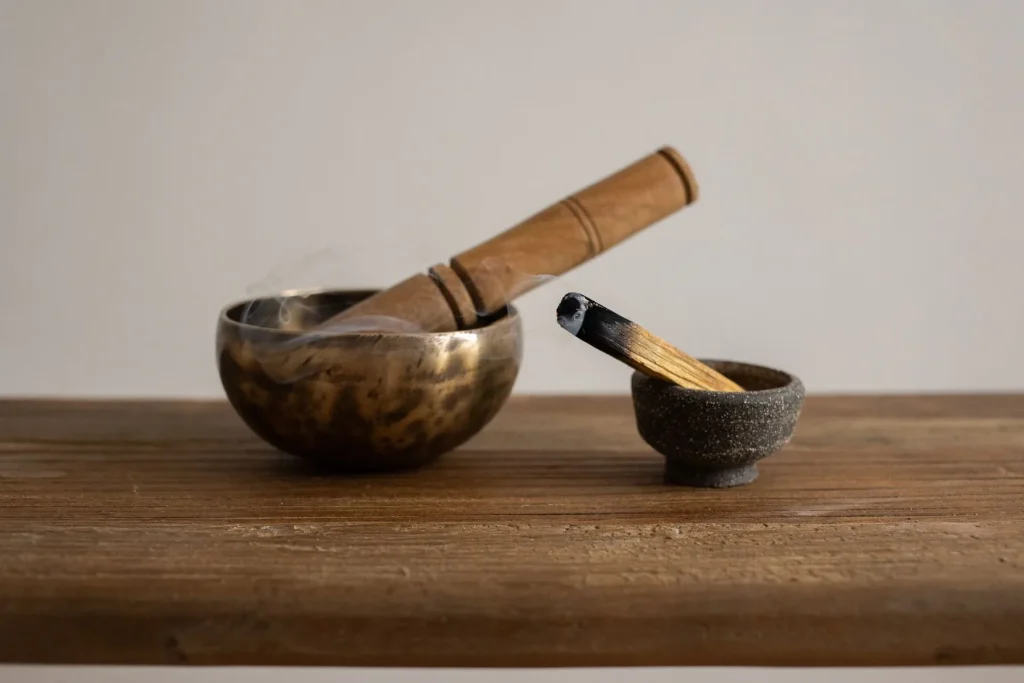
For centuries, this sacred instrument has accompanied meditative practices. Made from metal alloys or crystal, it produces unique vibrations.
Tibetan bowls are far more than a simple musical object. Their resonance acts on the body and mind, encouraging deep relaxation. Some models feature symbols such as the mantra “Om Mani Padme Hum”.
Used during meditation sessions, this tool helps people reach a state of mindfulness. Its benefits include stress reduction and improved concentration.
To learn more about their role in local culture, see our complete guide. You will discover their fascinating history and their many uses.
Sommaire
Introduction to the Tibetan singing bowl
This ancestral instrument fascinates people with its unique vibrational properties. Used for generations, it supports various practices aimed at inner harmony.
What is a Tibetan singing bowl?
A traditional tool, it is generally made from an alloy of seven metals. Each metal corresponds to a celestial body, influencing its distinctive resonance.
Its rounded shape produces deep, enveloping sounds. These vibrations act on the body and mind, promoting a state of deep relaxation.
Why use a Tibetan bowl?
Its main strength lies in its ability to generate soothing energy. It is ideal for:
- Improving concentration during meditation
- Making it easier to fall asleep and enjoy restorative sleep
- Creating a Zen atmosphere in a living space
Many therapists include it in their relaxation sessions. Its vibrational frequencies help rebalance the energy centers.
Compatible with yoga or reiki, it becomes a valuable ally for everyday well-being. To explore its distinctive features further, discover its cultural meaning.
Origins and history of Tibetan singing bowls
The origins of these instruments go back to ancient shamanic practices. According to some theories, Mongolian nomads used them more than 5,000 years ago in rituals linked to the Bon religion.
In the 8th century, their use evolved with the adoption of Tibetan Buddhism. Monks incorporated their vibrations into meditative practices, marking a key transition in their history.
Nepalese blacksmiths played a crucial role by refining the alloys. Analyses reveal a predominance of copper and tin, symbolically associated with the moon and life.
Contrary to popular belief, the traditional seven metals are a modern myth. Ancient bowls contained only two, handcrafted well before the tourist era of the 1970s.
Today, their history continues to inspire, blending legends and reality. These sacred objects carry centuries of traditions and cultural transformations within them.
Symbols engraved on Tibetan bowls
The motifs engraved on these sacred objects reveal deep symbolic richness. They are not merely decorative; they help elevate the state of consciousness during meditative practices.
The Om Mani Padme Hum mantra
Inscribed on many models, this mantra embodies the union of compassion and wisdom. It is often associated with Chenrezig, the bodhisattva of benevolence.
Its vibrations are said to purify the mind and support spiritual awakening. It is a powerful tool for rituals of inner guidance.
The double dorje or double vajra
A symbol of indestructible strength, it represents harmony between opposites. Its geometric design evokes stability and protection.
Used in meditation, it strengthens concentration and energetic balance.
The flower of life
This sacred motif illustrates the interconnection of all existence. It symbolizes longevity and the purification of negative energies.
It is ideal for accompanying deep relaxation or spiritual reconnection sessions.
The eyes of Buddha
Representing clairvoyance and infinite compassion, they guide the practitioner toward awakening. These engravings recall the teachings of the historical Buddha.
A visual reminder to cultivate wisdom in everyday life.
Tibetan singing bowl: spiritual meaning and use
The harmonious sounds of this ancient instrument open a doorway to inner peace. Their power lies in their ability to synchronize brain waves with their unique frequencies.
A tool for mindfulness
In meditation, the resonances act as an anchor for the mind. Studies show a 30% reduction in cortisol, according to research published in the Journal of Sound Therapy.
“Frequencies between 432 Hz and 528 Hz activate expanded states of consciousness, encouraging mental clarity.”
The science of vibrations
The human body, made up of 70% water, amplifies these sound waves. This phenomenon explains their effect on:
- The release of muscle tension
- The balancing of energy flows
- The stimulation of cellular regeneration
| Frequency (Hz) | Effect on the body | Application |
|---|---|---|
| 110-136 | Deep relaxation | Guided meditation |
| 285-320 | Tissue repair | Sound therapy |
| 432-528 | Intuitive awakening | Shamanic practices |
Therapists use this principle of sympathetic resonance to release emotional blockages. A typical session combines these vibrations with conscious breathing techniques.
The benefits of singing bowls
The sound vibrations of this ancestral tool offer scientifically documented benefits. They synchronize brain waves and act on the nervous system.
Relaxation and stress reduction
Low frequencies (110-136 Hz) activate delta waves, which support relaxation. A study in the Journal of Sound Therapy confirms a 30% drop in cortisol.
“Patients feel immediate relief, like a wave of calm.”
Ideal for:
- Short meditation sessions
- Preparing for sleep
- Managing anxiety
Balancing the chakras
Each energy center responds to a specific frequency. Here is how to harmonize them:
| Chakra | Note | Effect |
|---|---|---|
| Root (Muladhara) | C | Stabilizes grounding |
| Heart (Anahata) | F | Opens compassion |
| Crown (Sahasrara) | B | Stimulates intuition |
Energies flow better when the chakras are aligned. A typical session lasts 15 minutes, with slow movements around the body.
Composition and manufacture of Tibetan bowls
The creation of these sacred objects rests on ancestral techniques and specific materials. Each manufacturing step directly influences the sound and vibrational quality.
The traditional 7 metals
The alloy used combines seven metallic elements, each carrying a symbolic function:
- Copper (Venus): encourages emotional balance
- Silver (Moon): develops intuition
- Gold (Sun): strengthens vitality
These metals are mixed according to secret proportions passed down among master artisans. Mercury, although toxic, was historically used in tiny amounts.
Hammering and casting methods
The traditional technique involves four artisans working in synchronization. They hammer the metal plate, heated to 800°C, for several hours.
“A true Nepalese bowl bears the marks of the hammer: it is this imperfection that creates its acoustic perfection.”
Comparison of methods:
| Technique | Duration | Sound quality |
|---|---|---|
| Hand hammering | 3 to 5 days | Rich harmonics |
| Industrial casting | 2 hours | Uniform sound |
The wood of the mallets also plays a crucial role. Boxwood and bamboo offer different timbres, suited to each use.
Nepalese artisans preserve this expertise with simple tools. Their remuneration reflects the sacred nature of this meticulous work.
How to choose your Tibetan singing bowl
Finding the ideal instrument requires understanding its unique characteristics. Several elements influence sound quality and vibrational effect.
Selection criteria
Three key aspects should guide your choice:
- Size: 20 cm models offer a good balance between depth and clarity
- Material: metal alloys for rich harmonics, or crystal for sonic purity
- Finish: etched engravings or smooth surfaces depending on the intended use
Beginners will prefer versatile versions. Experienced practitioners will choose specific features suited to their discipline.
The different types of bowls
Here are the main categories available:
| Model | Characteristics | Use |
|---|---|---|
| Full Moon | Long resonance | Deep meditation |
| Jumkha | Multiple harmonics | Sound therapy |
| Shiny | Polished surface | Zen decoration |
Crystal versions are especially suited to work on energy centers. Their visual transparency enhances the sensory experience.
Practical use of the Tibetan bowl
To optimize its potential, careful preparation of the space and the mind is essential. This instrument reveals its magic when technique and intention are combined.
Striking and rubbing techniques
Two methods produce distinct sounds:
- Light strike: use a wooden mallet to obtain clear, short notes. Ideal for marking transitions.
- Circular rubbing: steady movement creates prolonged resonance, perfect for deep meditation.
The angle of the mallet influences the vibrational state. Contact at 45° generates rich harmonics.
Preparation for meditation
Create a supportive environment with these steps:
- Set out natural stones and a candle to purify the space.
- Sound three tones to symbolize the beginning of sacred time.
- Pair the practice with a mantra or visualization to guide the mind.
“Regularity of movement amplifies the therapeutic effect. It is a dance between body and sound.”
Tibetan bowls and the chakras
These vibrational instruments resonate with the body’s energy centers. Their use helps harmonize vital flows and restore inner balance.
Correspondence between notes and chakras
Each center responds to a specific frequency. Here is how to align them:
- Root (Muladhara): note C – stabilizes physical grounding
- Heart (Anahata): note F – activates compassion
- Crown (Sahasrara): note B – awakens intuition
Mantras such as “Lam” or “Yam” strengthen the vibrational effect. Regular practice improves the circulation of energy.
Harmonization exercises
A 7-step protocol makes it possible to work on each center:
- Place the instrument on the corresponding area
- Hold the position for 10 minutes
- Synchronize with box breathing (4-4-4-4)
“After each session, I feel a beneficial warmth and a renewed sense of flow.”
Crystal versions offer purer vibrations. Their visual transparency amplifies the sensory experience.
Crystal singing bowl vs metal bowl
The choice between these two materials directly influences the sound and energetic experience. Each type has unique characteristics suited to specific needs.
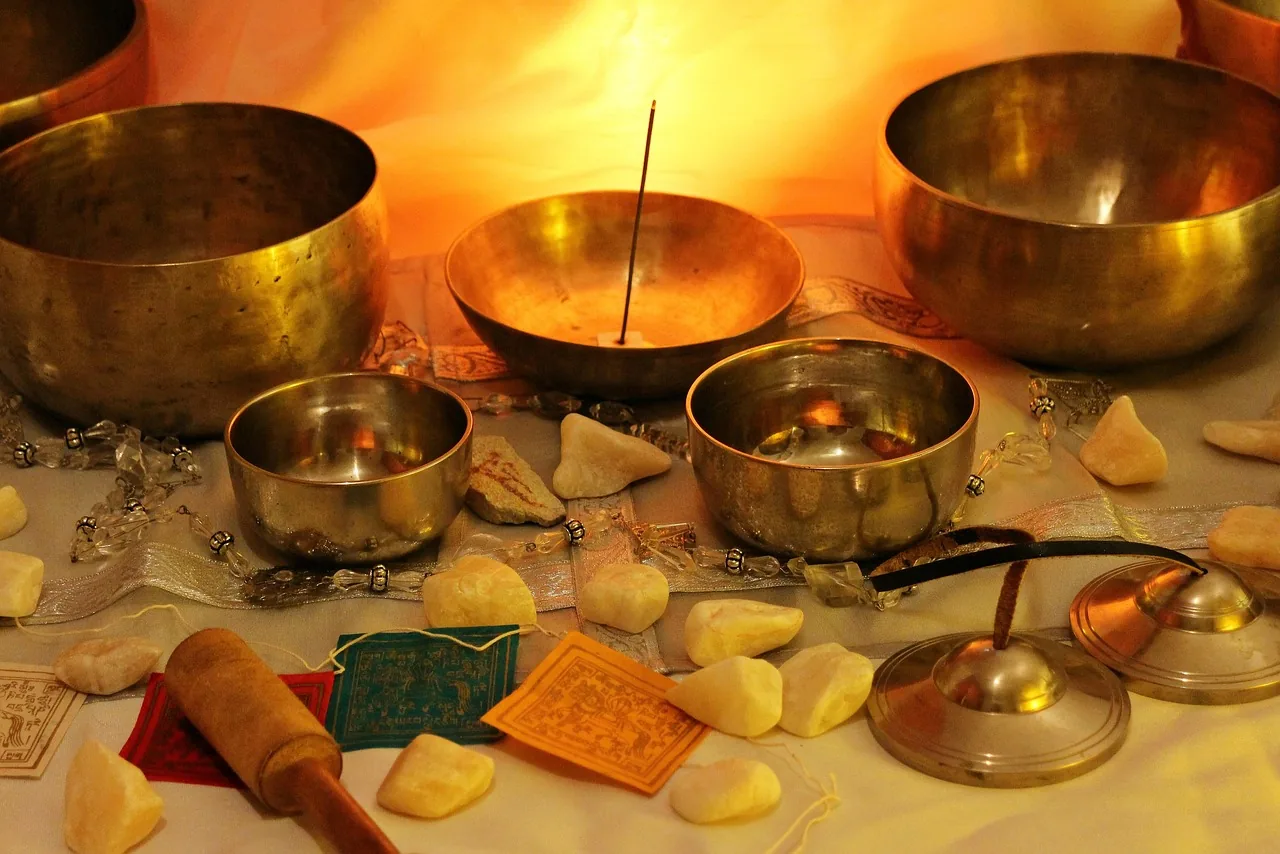
Crystal versions stand out for their acoustic purity. Their quartz-based composition generates clear harmonics, ideal for individual meditation.
Metal models, by contrast, offer a wider variety of timbres. Their seven-element alloy creates complex resonances, perfect for group sessions.
Compared advantages
| Criterion | Crystal | Metal |
|---|---|---|
| Average price | €100 to €300 | €50 to €500 |
| Lifespan | Risk of cracking | Manageable oxidation |
| Use case | Solo practice | Group workshops |
Crystal acts especially on energetic stones placed nearby. Its pure vibrations enhance their properties.
“Quartz amplifies intention like a cosmic tuning fork. It is a bridge toward subtle dimensions.”
For therapists, metal remains more versatile. Its robustness allows frequent transport without damage.
The two materials harmoniously complement a balanced practice. Their combination creates multidimensional sound experiences.
Care and preservation of your bowl
Taking care of this unique instrument extends its lifespan and preserves its vibrational qualities. Proper maintenance keeps its sound and energetic properties intact over time.
- Use a soft cloth dampened with soapy water or white vinegar
- Avoid abrasive products that could erase the engravings
- Apply whiting for stubborn marks
Oxidation can be treated with a mixture of lemon juice and baking soda. This natural process restores shine without risk to the metal.
Ideal storage:
- A silk or organic cotton cover
- A dry place away from humidity
- Away from direct heat sources
“Monthly fumigation with white sage reactivates the energetic properties. It is a simple but powerful ritual.”
Avoid impacts and sudden temperature changes. These precautions ensure perfect resonance for decades.
Essential accessories
Optimizing the use of this instrument requires suitable equipment. These complementary objects improve sound quality and protect the material.
Mallets and beaters
The choice of mallet directly influences the vibrations produced. Two main types exist:
- Leather-covered wood: ideal for metal bowls, it generates warm sounds
- Felt tip: reduces intensity for large models
The ergonomic shape allows a comfortable grip during long sessions. Choose artisanal models for better durability.
Cushions and stands
These elements stabilize the instrument and amplify the waves. Flaxseed-filled versions offer:
- Optimal vibrational insulation
- Natural adaptation to the curve
- Resistance to humidity variations
Create your own personalized stand with our DIY guide. Use rubber rings for secure fastening.
| Accessory | Material | Acoustic impact |
|---|---|---|
| Classic mallet | Boxwood/leather | +15% harmonics |
| Ring cushion | Linen/silk | Reduced loss |
| Metal stand | Brass | Prolonged resonance |
“A good cushion acts like a natural resonating chamber. It transforms each vibration into a therapeutic wave.”
These simple-looking objects become valuable allies. They turn every session into a complete sensory experience.
Tibetan bowls in modern practices
Contemporary design has creatively embraced these traditional objects. Once reserved for spiritual rituals, they now appear in many fields of well-being and aesthetics.
Yoga and sound therapies
Studios include these instruments for their vibrational virtues. Their use perfectly complements:
- Vinyasa flow sessions
- Guided meditations
- Deep relaxation workshops
Therapists use their resonance to balance energies. A recent study shows a 40% improvement in concentration during combined sessions.
Use in decoration
These unique pieces bring a Zen touch to interiors. Current trends favor:
| Style | Arrangement | Lighting |
|---|---|---|
| Bohemian | Stacking | Natural light |
| Minimalist | Single piece | Soft LED |
Creating a soothing atmosphere requires a few precautions:
- Keep them away from electronic devices
- Choose an uncluttered location
- Pair them with natural materials
“Their presence radically transforms the energy of a room. It is much more than a simple decorative element.”
Crystal versions capture light especially well. Placed near a window, they spread a magical atmosphere throughout the day.
Myths and realities about singing bowls
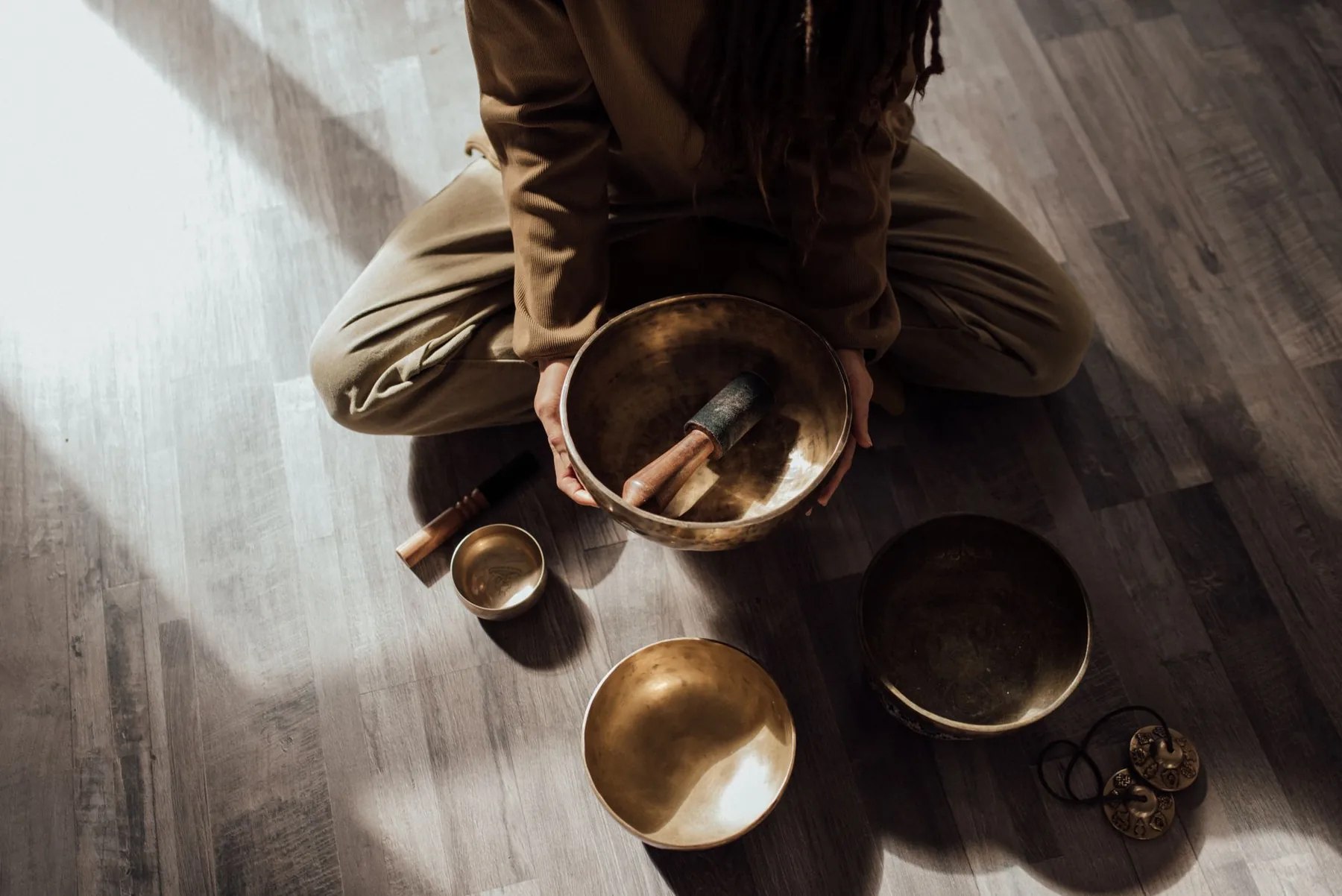
Between legends and established facts, the truth about these objects deserves clarification. Several common claims do not stand up well to scientific and historical scrutiny.
Contrary to popular myths, material evidence before the 1970s is rare. Metallurgical analyses mainly reveal bronze (copper + tin), with no trace of the seven sacred metals.
The oldest authenticated specimens date back about 800 years. This radically contradicts the idea of a millennia-old origin often promoted by sellers.
Three common marketing strategies:
- The invention of “ancestral” manufacturing techniques
- The exaggeration of metallurgical properties
- The excessive association with ancient Tibetan practices
“Modern bowls are often mechanically cast, then artificially aged to create an impression of authenticity.”
Even so, their therapeutic effectiveness is not called into question. The vibrations produced really do act on:
- Stress reduction
- Improved concentration
- Energetic balancing
This scientific reality offers a stronger foundation than marketing legends. It allows these instruments to be appreciated for their true qualities.
Where to buy an authentic Tibetan bowl
Finding a true traditional instrument requires careful attention to detail. Several criteria help distinguish artisanal creations from industrial reproductions.
Genuine Nepalese models show irregular hammer marks. Their sound offers complex harmonics, unlike cast versions, which produce flat notes.
To buy with confidence, choose specialized shops such as Instruments du Monde. Their rigorous selection guarantees unique pieces tested for vibrational quality.
In France, some events are worth visiting:
- Salon Zen in Paris (November)
- Festival de l’Éveil in Lyon (May)
- Instrument exchange fair in Marseille (September)
Always ask for a certificate of authenticity specifying:
- The exact metallic composition
- The geographic origin of manufacture
- The name of the artisan or workshop
“Our bowls are individually tested for resonance. Each piece tells a story through its imperfections.”
A good buying experience includes a minimum 14-day return policy. This allows you to check compatibility with your personal practice.
Small family forges often offer the best value for money. Their artisanal process preserves the vibrational soul of these unique objects.
Conclusion
The magic of these instruments lies in their simplicity and power. They combine well-being and depth, whether for meditation or everyday relaxation.
Regular practice opens a path toward balance. Stress reduction, better sleep, or recentering: the effects are tangible.
To go further, explore local workshops or specialized books. Every experience is unique: it is up to you to find yours.
FAQ
How do you use a singing bowl for meditation?
What are the benefits of Tibetan bowls for the body?
How do you choose the ideal size for a singing bowl?
Can a Tibetan bowl be used for sleep?
What is the meaning of the symbols engraved on bowls?
Should you clean your singing bowl regularly?
Are crystal bowls more effective than metal bowls?
How can you check the authenticity of a Tibetan bowl?
Source Links
- https://instruments-du-monde.com/en-us/blogs/tibetan-singing-bowl/tibetan-singing-bowl-symbols
- https://instruments-du-monde.com/en-us/blogs/tibetan-singing-bowl/everything-you-need-to-know-about-tibetan-singing-bowls
- https://www.britannica.com/topic/vajra
- https://tricycle.org/buddhism-vajrayana/#mantras-dharanis
- https://www.verywellmind.com/sound-bath-8406029
- https://en.wikipedia.org/wiki/Standing_bell
- https://instruments-du-monde.com/en-us/blogs/tibetan-singing-bowl/everything-you-need-to-know-about-tibetan-singing-bowls
- https://www.arhantayoga.org/blog/7-chakras-introduction-energy-centers-effect/
- https://instruments-du-monde.com/en-us/blogs/tibetan-singing-bowl/tibetan-singing-bowl-symbols
- https://instruments-du-monde.com/en-us/blogs/tibetan-singing-bowl/everything-you-need-to-know-about-tibetan-singing-bowls
- https://instruments-du-monde.com/en-us/blogs/tibetan-singing-bowl/everything-you-need-to-know-about-tibetan-singing-bowls
- https://www.learnreligions.com/om-mani-padme-hum-449932
- https://pmc.ncbi.nlm.nih.gov/articles/PMC5871151/
- https://www.healthline.com/health/sound-healing
- https://instruments-du-monde.com/en-us/blogs/tibetan-singing-bowl/everything-you-need-to-know-about-tibetan-singing-bowls
- https://www.metmuseum.org/essays/buddhism-and-buddhist-art
- https://www.britannica.com/topic/music-therapy
- https://www.masterclass.com/articles/singing-bowl-guide
- https://instruments-du-monde.com/en-us/blogs/tibetan-singing-bowl/everything-you-need-to-know-about-tibetan-singing-bowls
- https://www.mindbodygreen.com/articles/sound-bath
- https://instruments-du-monde.com/en-us/blogs/tibetan-singing-bowl/everything-you-need-to-know-about-tibetan-singing-bowls
- https://www.britannica.com/topic/chakra
- https://instruments-du-monde.com/en-us/products/tibetan-chakra-bowl
- https://instruments-du-monde.com/en-us/blogs/tibetan-singing-bowl/everything-you-need-to-know-about-tibetan-singing-bowls
- https://www.crystalvaults.com/crystal-encyclopedia/quartz/
- https://en.wikipedia.org/wiki/Standing_bell
- https://www.mindful.org/how-to-meditate/
- https://instruments-du-monde.com/en-us/blogs/tibetan-singing-bowl/tibetan-singing-bowl-accessories
- https://instruments-du-monde.com/en-us/blogs/tibetan-singing-bowl/everything-you-need-to-know-about-tibetan-singing-bowls
- https://en.wikipedia.org/wiki/Singing_bowl
- https://www.nccih.nih.gov/health/meditation-and-mindfulness-effectiveness-and-safety
- https://health.clevelandclinic.org/sound-bath
- https://www.verywellmind.com/what-is-sound-healing-5222625
- https://instruments-du-monde.com/en-us/blogs/tibetan-singing-bowl/everything-you-need-to-know-about-tibetan-singing-bowls
- https://www.smithsonianmag.com/smart-news/flying-snakes-need-wriggle-glide-180975237/
- https://www.britannica.com/topic/standing-bell
- https://www.britannica.com/place/Tibet
- https://www.worldhistory.org/search/?q=tibetan+buddhism
- https://www.lionsroar.com/how-to-meditate/